
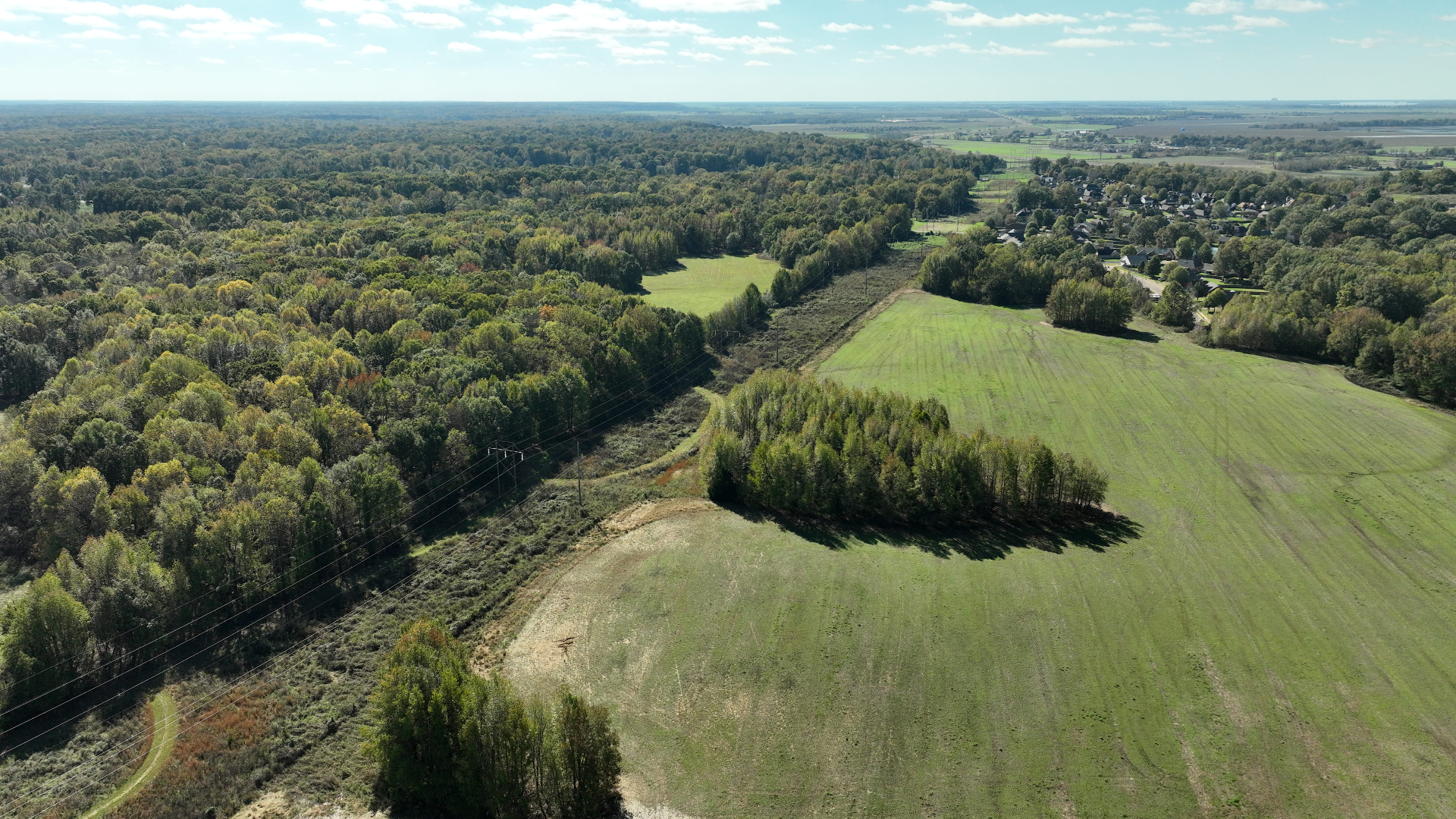
Hinds County is a different kind of timberland market — the Jackson metro dominates everything from haul patterns to neighbor expectations, and a tract here doesn't sell or harvest the same way one out in the country does. Suburban edge tracts around Clinton, Raymond, and Byram have access constraints that don't show up on a county map, and rural ground out toward Edwards and Bolton trades more like west-central Mississippi pine country.
I work with Hinds landowners on cruises, sale layout, and harvest oversight, with most volume moving to the Jackson-area mill cluster or west toward Vicksburg. The recurring issue here isn't whether the timber is worth something — it usually is — it's whether the sale is set up to control noise, neighbors, road wear, and what the property looks like the day after the loggers leave.
What Hinds County Landowners Often Miss Until It Costs Them
Hinds County ownership decisions aren’t only about timber. They’re often about land use conflict and competing priorities:
- Timber + hunting + family recreation
- Timber + future homesites
- Timber + road systems + access rights
- Timber + boundary questions and old lines that “everybody knows” but nobody has documented
The unasked question is usually:
“What’s the one thing on my place that can blow up a future timber sale?”
Common culprits:
- Access that looks fine until wet weather
- Boundary uncertainty
- A stand that needs thinning but is held too long
- A tract that’s “ready” but is not operable without damage
Those are tract-specific problems — and they’re solvable if caught early.
Example from the field: On a suburban-edge tract outside Clinton, the original offer was a flat number with 'we'll work it out' language on neighbor access and noise. The sale was restructured with a smaller crew, daytime-only operations, and binding road-repair terms — the bid was lower per ton on paper but the property and the neighbor relationships were intact when the job ended.
A Consulting Forester’s Job: Turn a Property Into a Plan
A real forestry plan starts with two things landowners rarely do on their own:
- Define objectives clearly (income, legacy, wildlife, recreation, long-term growth)
- Match actions to the stand reality (density, health, species, access, market timing)
That helps you avoid the two most expensive mistakes:
- spending money on the wrong improvement
- selling at the wrong time for that specific tract
What an On-the-Ground Timber Assessment Should Answer
A professional stand assessment is not just “what species are here.”
It should answer questions like:
- Is the stand improving in value each year — or stagnating?
- Are you one thinning away from a much better final harvest?
- Is vegetation competition stealing growth you’re paying taxes on?
- Does access work when it’s wet, not just when it’s dry?
- What is the highest-risk part of the tract during harvest?
From there, a management plan becomes practical rather than academic.
When Selling Timber Makes Sense in Hinds County
If a sale is on the table, the goal isn’t “find a buyer.”
The goal is control the outcome.
That means:
- Establishing fair-market value before offers matter
- Structuring buyer exposure correctly
- Using a contract that protects roads, soils, streamside areas, and boundaries
- Monitoring harvest to prevent “it happens to everybody” damage
For landowners who want to understand how planning, valuation, and harvest oversight fit together before making decisions, our forestry consulting services explain the process in more detail:
Regional Context That Helps Hinds County Landowners
Markets and harvest realities don’t stop at county lines. For landowners who operate across central Mississippi or share overlapping buyer zones and haul corridors, our Warren County, MS page provides additional context on harvest risk and disciplined planning:
Loess Hills vs. Pearl River Bottoms — Two Very Different Tracts in One County
Hinds County land does not behave like one market. The loess hills west of Jackson give you a rolling upland profile — mixed pine-hardwood, hardwood drains, and access lanes that follow ridgelines rather than crossing them. The Pearl River bottoms on the east side and the Big Black drainage on the northwest carry a different set of considerations: seasonal wetness, streamside management zones that widen out where drainage feeders come together, and haul routes that can shut down for weeks in a wet winter.
A cruise and sale plan built for the upland side of the county rarely fits a bottomland tract, and the reverse is just as true. That is why the walk-through matters before any number gets attached to the property — Hinds County terrain changes across short distances, and pretending it does not is where value gets left behind.
Smaller Tracts, Family Ownership, and Estate Decisions
A lot of Hinds County timberland shows up in smaller family tracts and estate properties around Jackson, Clinton, Raymond, Byram, Bolton, and Edwards. That ownership pattern shapes the work: parcels may be under 100 acres, boundaries can be inherited rather than surveyed, and multiple heirs often need to see the same set of numbers before anyone signs anything.
For those situations, the appraisal and management plan usually matter as much as the sale itself. Landowners handling recently inherited ground benefit from a documented stand assessment for tax-basis purposes, a clear read on operability, and a written management plan that keeps the property productive whether the family harvests this year, in five years, or holds through the next rotation.
Start With a Conversation
Most Hinds County landowners I talk with aren't sure whether the timber is ready, what it's worth, or whether the property is set up for a clean sale. None of that takes a commitment to find out.
If you own timberland in Hinds County and want a straight read before any decisions get made, the first step is just a walk-through and a conversation — no pressure on either side.
Contact Southeast Forestlands to talk through your property, your goals, and your options.
Related Services and Nearby Counties
Most Hinds County work threads through the same core service stack — Timber Sale, Timber Appraisal, Management Plan, Reforestation, and Timber Stand Improvement. When a tract straddles county lines or a neighboring landowner has the same questions, we work across the line into Madison County, Rankin County, Copiah County, Warren County, Yazoo County, and Claiborne County.

