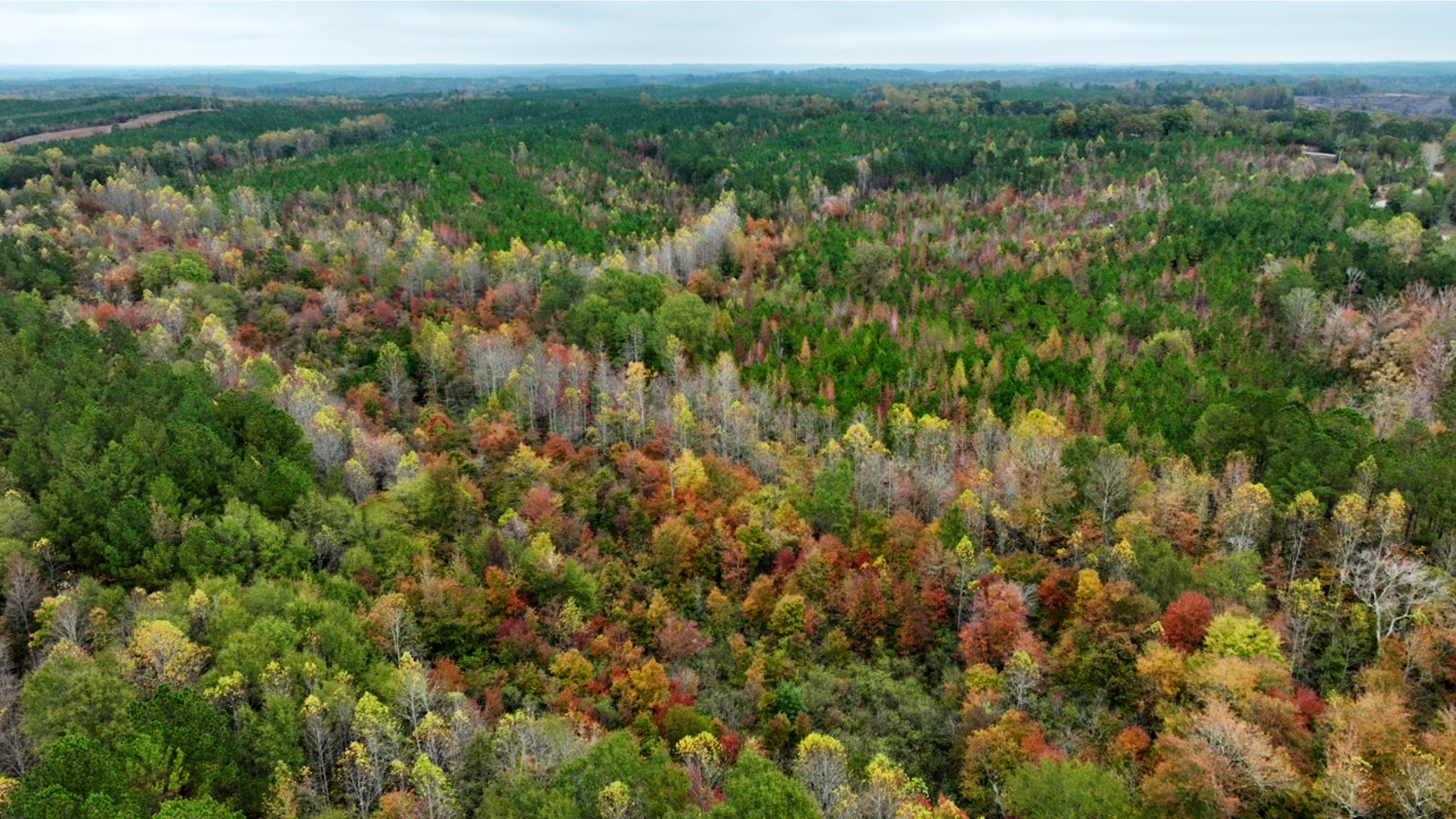
Attala County is hill-country timber ground sitting between three different mill draws — Winona to the north, Louisville to the east, and the Philadelphia/Forest cluster to the south. Where a tract sits on that map matters as much as what is growing on it. A loblolly stand off MS 12 east of Kosciusko does not bid the same as one off MS 35 toward the Choctaw line, even when the wood is identical.
I work with Attala landowners around Kosciusko, Ethel, Sallis, and McCool — mostly loblolly plantation and natural pine on the red-clay rolling ground, with hardwood drains running into the Yockanookany and Big Black headwaters. The piece most owners need help with here is not the cruise number. It is figuring out which mill ring to push the wood into, and whether the tract is ready for a sale at all.
Understanding Timberland in Attala County
Example from the field. An Attala landowner south of Kosciusko had inherited a mixed-age tract and was being pressed to sell the whole thing at once. After we cruised it, we split it into a thinning on the younger plantation and a deferred decision on the sawtimber block. The thinning sold competitively into the Winona/Louisville haul ring, and the better wood stayed standing to grow into the price class it belonged in.
Every tract in Attala County behaves a little differently, and a current tract-level appraisal is what tells you which mill ring will actually pay the most for your specific wood, not the regional average.
You’ll see:
- productive pine ground in some areas
- mixed timber with a variable history in others
- differences in access, layout, and operability
- shifting buyer interest depending on location
Those factors influence whether timber should be thinned, held, improved, or sold.
Before any decision is made, it helps to step back and look at the full picture:
- what’s actually there
- what it can become
- and what the market will realistically support
That’s where structure replaces guesswork.
Why Local Forestry Guidance Makes a Difference
Attala County offers real opportunity — but it rewards disciplined decisions.
Without guidance, it’s easy to:
- take the first offer that comes along
- sell timber before it reaches better product classes
- overlook contract details that protect the land
- or allow a harvest to leave long-term damage
None of that shows up clearly at the beginning — but it shows up later.
Working with a forester shifts the process from reactive to intentional.
You’re not guessing. You’re making decisions based on real conditions.
Timber Sales, Appraisal & Market Exposure
A timber sale here needs to be approached with purpose.
It starts with understanding the tract:
- timber volume and product class
- access and logging conditions
- how the tract fits into surrounding markets
From there, the focus shifts to positioning:
- identifying the right buyers
- creating competition where possible
- structuring the sale to reduce discounting
The contract becomes the landowner’s protection.
That includes:
- haul routes and access control
- wet weather limits
- SMZ protection
- cleanup expectations
- accountability during harvest
In Attala County, a well-structured sale can perform well.
A rushed one usually underperforms.
Learn more about the full process: Southeastforestlands Services
Harvest Supervision — What It Looks Like on the Ground
This is an active timber harvest in Attala County. In a directional market like this, how the job is handled matters just as much as the price. Oversight helps ensure the contract is followed, protects roads and soils, and prevents damage that can affect the property long after the harvest is complete.
Reforestation and Long-Term Management
A timber sale is only one point in the life of the property.
What happens after matters just as much.
In Attala County, that often includes:
- Reforestation Planning based on site conditions
- selecting species that match the ground
- Timber Stand Improvement
- Prescribed Burning and vegetation control
Those steps influence future growth, future value, and how the land performs over time. On the red-clay rolling ground east of Kosciusko, modest timber stand improvement between rotations is usually the highest-return spending an Attala County owner can do.
Looking Beyond County Lines
Attala County doesn’t operate in isolation.
Markets, buyers, and conditions shift across surrounding areas, and understanding those differences helps landowners make better decisions.
For comparison with a nearby county that operates under different conditions:
That broader view often changes how a sale is timed and structured.
Talk With Southeast Forestlands
If you're thinking about a timber sale in Attala County — or just trying to figure out what the property is carrying and what it's worth — the right first step is a conversation, not a contract.
No pressure, no push toward a sale. Just a straight read on your timber, your options, and what makes sense for the ground you own.
Whether you're:
- trying to decide if now is the right time to sell or thin
- weighing a clearcut against another thinning rotation
- or working through inherited timberland with family
We'll help you get grounded in the actual numbers before any decision gets made.
Call: (601) 527-5349
The Attala County mistake I see most often is treating the property like one stand. It almost never is — the wood off MS 12 east of town and the wood off MS 35 toward the Choctaw line will not draw the same buyers, and lumping them together hands the price difference to whichever logger gets there first.
A single offer in Attala is not a market. Three or four real bids on the same cruise, on the same terms, in the same week — buyers from the Winona side, the Louisville side, and the Philadelphia side all looking at the same prospectus — that’s a market. The difference between those two situations is almost always the difference between fair money and full money.