Improving Timber Value Before the Sale
Timber value is built long before a harvest ever takes place.
Timber Stand Improvement (TSI) is one of the most effective ways to increase the long-term value, health, and performance of your timberland — but only when it’s applied correctly.
Pine TSI vs. Hardwood TSI
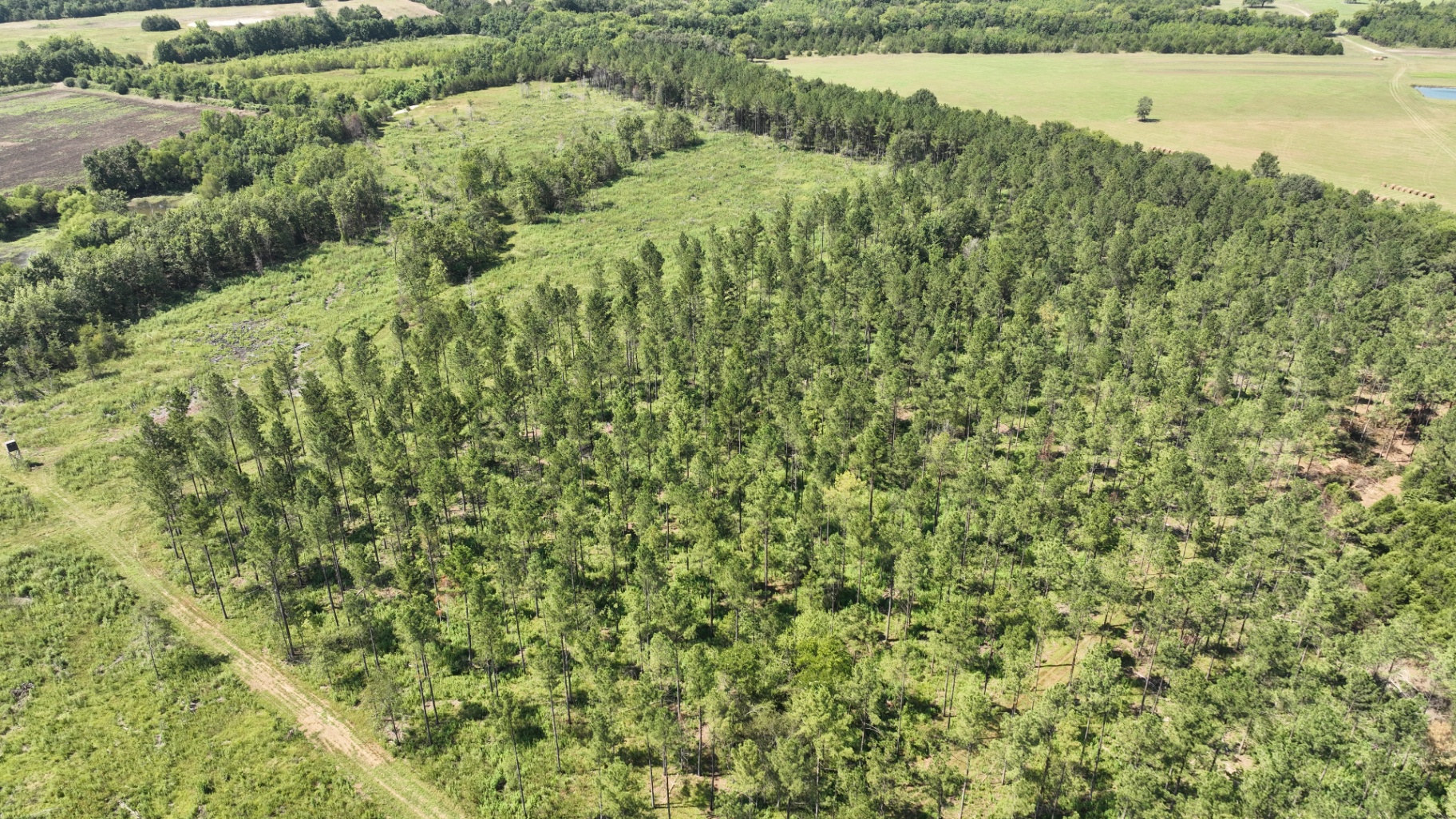
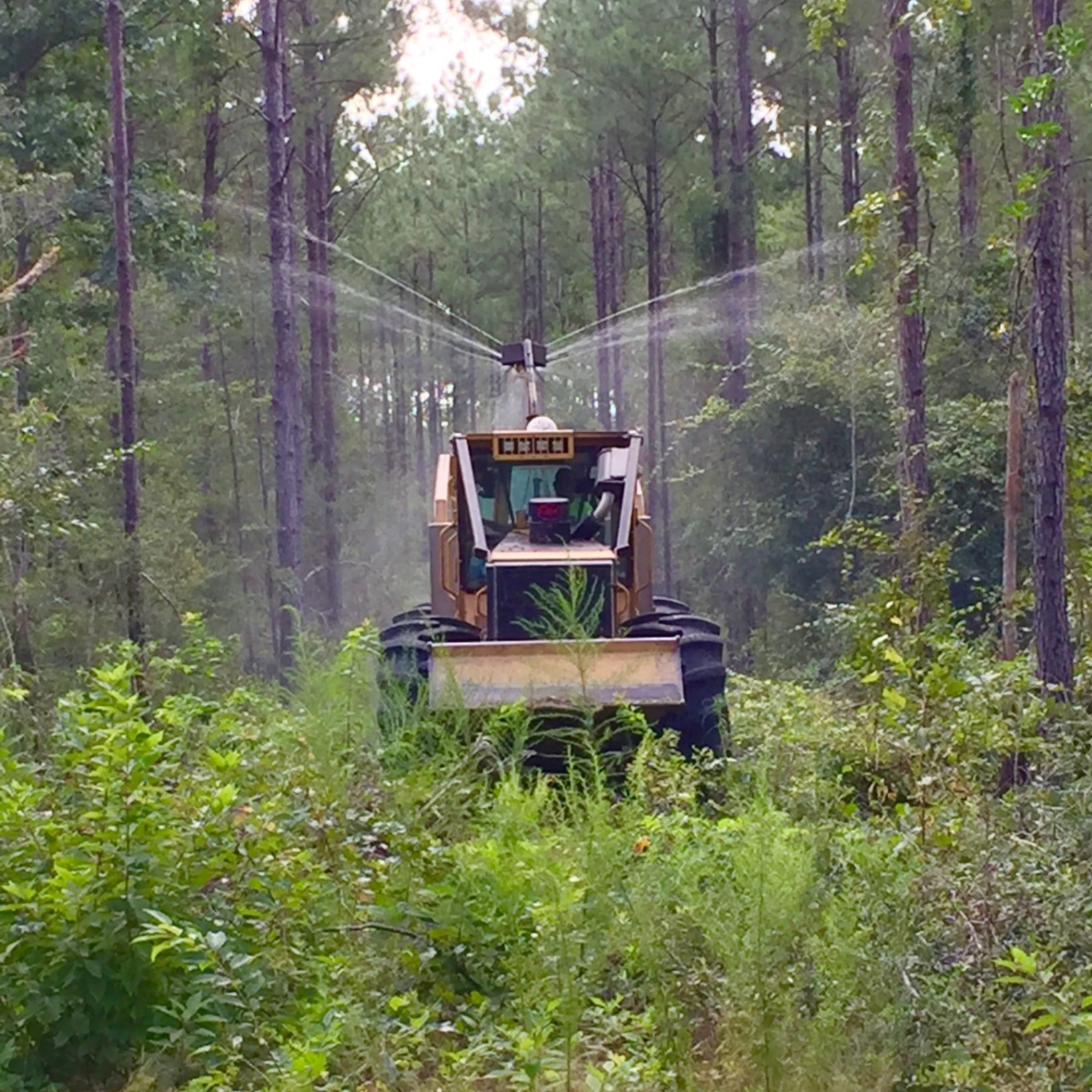
The two look nothing alike on the ground. Pine TSI is usually a release treatment — an aerial or backpack herbicide application that takes hardwood competition off young loblolly or longleaf. Done right, it shortens the time to a first thinning and increases the volume that thinning produces. Done late, it is wasted money.
Hardwood TSI is a crop-tree release. We walk the stand, mark the white oak, cherrybark oak, water oak, or sweet pecan we want to keep, and treat the competing low-value stems with a hack-and-squirt application. There is no logging. The released crowns fill in over the next three to five growing seasons and the residual stand starts to look like the future sawtimber stand the landowner wants.
When TSI Pays and When It Does Not
The honest answer is that TSI does not always make sense. On a tract that is two years from a final harvest, the money is better spent somewhere else. On a young plantation losing the race to sweetgum and yellow poplar, TSI is one of the highest-return decisions a landowner can make. The difference is age, stand condition, and how long the owner plans to hold the property. We evaluate each tract before recommending treatment.
Counties Where We Often Run TSI
A short list of counties where we have done this work recently.
Across this region, many properties carry more potential than they appear to have. The difference often lies in how the stand has been managed over time.
Evaluating a Timber Stand Improvement Release Decision
Educational exampleExample forestry scenario for local landowners. In a young pine stand, a forester may compare crop-tree stocking, competing hardwoods, vine pressure, access, site conditions, and the landowner’s objectives before recommending a release treatment. Depending on those findings, options may include selective cutting, a forestry-labeled herbicide treatment, prescribed fire at an appropriate stage, or no immediate action. Treatment choice, timing, and expected response vary by stand, and any herbicide use must follow the product label and applicator requirements.
What Is Timber Stand Improvement?
Timber Stand Improvement is the process of managing an existing stand to favor the best trees and remove those that limit growth, quality, or long-term value.
The goal is simple:
Put your best trees in a position to grow.
Without intervention, many timber stands become:
- overcrowded
- slow-growing
- lower in quality
TSI corrects that by focusing resources on trees that will produce higher-value products in the future.
TSI and Cost-Share Opportunities
In many cases, Timber Stand Improvement work may qualify for cost-share assistance through USDA programs.
As a Technical Service Provider (TSP), Southeast Forestlands can assist landowners with:
- Forestry management plans
- Practice planning and implementation
- Guidance on eligible improvement practices
Programs such as EQIP and CSP can help offset the cost of:
- Timber Stand Improvement
- herbicide application
- Prescribed Burning
- forest management planning
These programs are not automatic, and not every property qualifies, but when available, they can help improve timber while reducing out-of-pocket costs.
Common Timber Stand Improvement Practices
Each property is different, but TSI often includes a combination of:
- Selective thinning
- Targeted herbicide application
- Prescribed Burning
- Crop tree release
The right approach depends on:
- species mix
- stand age
- site conditions
- long-term goals
Why TSI Matters for Timber Value
TSI directly impacts future timber value.
Properly managed stands can:
- grow faster
- produce higher-quality logs
- reach more valuable product classes
- reduce risk from pests, disease, and wildfire
Understanding Market Conditions
Timber markets shift based on local demand, mill activity, and regional supply.
See current timber market conditions across Mississippi and Alabama
How TSI Fits Into the Bigger Picture
TSI is one part of a larger strategy.
It works alongside:
- forest management planning
- timber sale preparation
- long-term property goals
Explore forestry consulting services
From Improvement to Sale
TSI often sets the stage for a stronger timber sale.
Learn more about timber sale representation
Regional Timber Considerations
A timber stand improvement prescription depends on stand composition, stocking, tree quality, competing vegetation, and the landowner’s objectives. The stand must be inspected before the treatment is selected.
We work with landowners in places like Lauderdale County, Mississippi; Newton County, Mississippi; Pickens County, Alabama; and Sumter County, Alabama, where factors such as access, tract size, and buyer competition all influence outcomes.
Many landowners we work with see their management plans reviewed and approved through USDA programs when conditions qualify.
Work With a Forester Who Represents You
Southeast Forestlands provides independent forestry consulting and timber sale representation for landowners across this region.
We do not buy timber.
We do not log timber.
We help you:
- evaluate your timber
- improve stand performance
- position your timber for future value
Before You Make Changes to Your Timber Stand
Timber Stand Improvement can add value — but only when applied correctly.
If you’re considering improving your timber, start with a clear evaluation — a timber thinning assessment is usually the first step when the stand may also be ready for a thin.
Call (601) 527-5349 or reach out through our contact page to get started.
No pressure. Just clear information so you can make the right call.
TSI is recognized as a stand-alone NRCS practice — see EQIP Practice Code 666 (Forest Stand Improvement) — and is covered in landowner-facing detail by Mississippi State Extension Forestry and the Auburn University College of Forestry, Wildlife and Environment. Walk-throughs and written TSI prescriptions on Southeast Forestlands tracts are conducted by Eric Entrekin, Registered Forester (MS & AL).
Related Field Note: Crown classes in forest management.
Working an Alabama tract? See our timber-stand-improvement service page for Alabama landowners.