
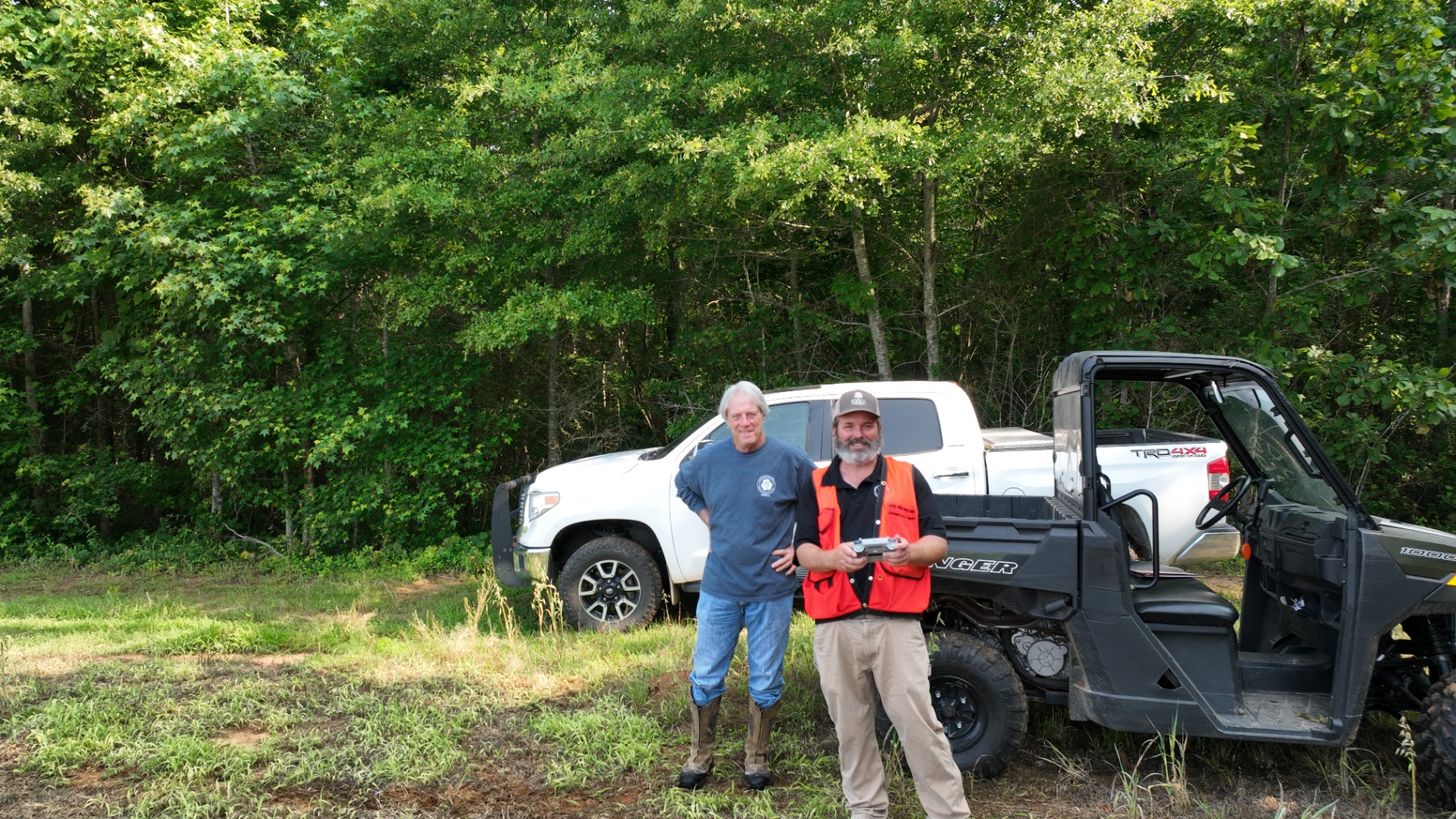
Fayette County lies in the west-Alabama hill country where Sipsey-Tombigbee headwaters cut through the ridges. On many tracts, upland loblolly holds the higher ground while bottomland white oak, cherrybark, and hickory concentrate in the drains — a split that generally decides whether a tract is marketed as one product or as several.
Southeast Forestlands runs Fayette County tracts with that split in view: pine to the pine mills, hardwood sawlogs and veneer to the buyers who pay for grade. When a mixed tract is sold as one line item, the hardwood may be valued as pulp; when it is cruised and marketed as its own product class, it may draw interest from an entirely different buyer pool.
Terrain, Drainage, and What They Mean for a Fayette Tract
Fayette County land is in the west-Alabama hills and Sipsey-Tombigbee headwaters, anchored around Fayette and communities like Berry, Bankston, and Glen Allen. Drainage runs through the Sipsey River, North River, and Luxapallila Creek. Soils include rolling sandy loams on the ridges, narrower hardwood draws, and rich Sipsey bottomland flats.
Example forestry scenario for local landowners. Consider a hypothetical Fayette County plantation an owner has inherited without a clear record of past thinnings. A cruise may show whether the stand has been thinned, whether stocking indicates readiness for another entry, and whether product mix is trending toward CNS or pole material. If the cruise supports a second entry, a sealed-bid sale exposed to the regional mill pool may return per-acre stumpage that reflects each buyer's mill fit and current demand. Actual outcomes depend on the specific stand, current mill activity, and the buyer pool available on the day the tract is offered.
Standing timber may reflect that geography — loblolly plantations on the uplands, mature shortleaf pockets, mixed upland hardwood, and Sipsey-bottom hardwood carrying cherrybark, white oak, and sweetgum. Because what grows on a Fayette tract may differ from what grows elsewhere, pricing generally has to follow the tract rather than a regional average.
Who May Bid on Fayette County Timber
Buyer demand on a Fayette County tract may be shaped by Tuscaloosa-area mills, the Fayette and Berry mill cluster, and Mississippi-state-line cross-bidders within a modest haul window. Since no single buyer typically wants every product class, the range between a low and a high qualified bid on a properly exposed sale may decide a large share of tract value.
The practical read on this county is that the Sipsey hardwood market may support separate grade-hardwood buyers alongside Tuscaloosa pulp-and-chip demand, and a walk-up offer from a single buyer may not reflect that combined pool.
Value That May Be Left on the Table on a Fayette Tract
Preventable losses on Fayette County sales tend to follow a short, recurring pattern:
- rolling Sipsey-bottom cherrybark and white oak into a pine-pulp average when they might otherwise be marketed as graded hardwood
- offering a tract to a single Tuscaloosa-area buyer without inviting Mississippi mills that may otherwise participate
- overlooking riparian-buffer commitments on Luxapallila and North River tributaries during contract drafting
None of these outcomes are mysterious. They often follow when a tract is sold without independent representation — one of the situations an Alabama sealed-bid timber sale is designed to address.
Independence as the Whole Product
In many timber transactions, the party valuing the timber may also be the party buying it. On a Fayette County tract with the buyer mix described above, that conflict may be worth meaningful money — often the range between the floor and the top bid in a properly exposed competitive sale.
Southeast Forestlands does not buy timber, log timber, or take referral fees from buyers or loggers. That independence is our product.
Separating Ridge Pine From Drain Hardwood in Fayette County
Fayette's rolling sandy-loam ridges, hardwood draws, and Sipsey-side bottoms may place several stand types on the same tract, and those stand types may appeal to different qualified buyers. Planning can begin with a stand-type map so the marketing structure follows what the ground and cruise data show.
A possible consulting scope may include:
- tract inventory and stand mapping by ridge, slope, and drain
- product-class segregation across pine sawtimber, CNS, pulpwood, pole where applicable, and hardwood grade and pulp
- a written prospectus invited to Hamilton–Winfield and cross-line mills
- a full contract addressing haul roads, drain crossings, and SMZ buffers
- independent settlement review across loads and products
Product Separation on a Mixed Sipsey-Bottom Tract
On a mixed Fayette tract with ridge pine and Sipsey-bottom hardwood, product separation is generally the largest decision. A pine-focused buyer offering one number may value grade hardwood at pulp; a cruise plus a bid package that presents pine and hardwood on their own terms may draw distinct buyer pools to the same sale. Whether the pattern fits a specific tract depends on stocking, grade, and access — a cruise is what tells the landowner which situation they are in.
A current timber appraisal may help keep a Sipsey-bottom hardwood tract from being priced as ridge-top pine when a decision must be made under a compressed timeline.
The Right Time to Call
The most useful time to call is generally not the day a buyer knocks. By that point the negotiating position may already have narrowed. A better time is when a landowner is first thinking about the property — a planned harvest, an inherited tract near Fayette, a tract that has not been walked in a decade, or a question about whether to harvest at all.
A sealed-bid sale prepared for real bidding generally takes time to expose to the market, and compressing that timeline may cost more than it saves. The tract, product mix, and season generally decide how much time is enough.
Landowners With Ground in More Than One County
Mill draws, buyer participation, and haul economics in Fayette County may cross county lines into Marion County, Lamar County, and Tuscaloosa County. For landowners with ground in more than one of these counties, one coordinated marketing package may perform more consistently than separate sales.
Next Steps
If you own timberland in Fayette County, the first step is a conversation — no obligation, no buyer in the room, and a straight read on whether selling, holding, or thinning may be the right move for your tract.
The pattern that recurs most often is selling bottomland hardwood the same way ridge-top pine is sold; marketing them as distinct product classes may change how the sale is exposed.
Reach out when you are ready, or read more about our independent Alabama forestry consulting services.

