Southeast Forestlands logoSoutheast Forestlands
County Coverage

Forestry Consultants & Timber Sales — Clarke County, AL

Independent registered foresters representing landowners in Clarke County, AL. Sealed-bid timber sales, cruises, appraisals, reforestation, and Prescribed Burning.

"I would recommend Southeast Forestlands to anyone looking to remove timber. Mr. Eric was very professional, helpful and kind. You feel the friendliness and the passion he has for the work he does."
Don Coleman · 4 years ago · Google review
"Eric was knowledgeable and professional as he assessed the land. He provided aerial photos — current and historical — and offered guidance on the optimal time frame for the next harvest. A great representative of Southeast Forestlands."
Gregory Lacey · 2 years ago · Google review
  • Registered Forester — MS & AL
  • Independent Landowner Representation
  • USDA Technical Service Provider
  • Sealed-Bid Timber Sale Representation
  • Serving Mississippi & Alabama Landowners

Clarke County is one of the densest sawtimber and pulp clusters in the state, and that's both the opportunity and the trap. Grove Hill, Thomasville, Jackson, Coffeeville — you can stand on a hill east of US 43 and count the mill smokestacks. The Tombigbee on the west and the Alabama on the east frame the county, and the bottomland hardwood between them is a different product from the upland loblolly on the ridges.

I treat a Clarke County tract as two or three jobs in one: price the pine right, price the bottomland hardwood separately, and don't let either one drag the other down at the sale table.


What Clarke County Timber Actually Looks Like

Clarke County land sits in the Southwest Alabama, Tombigbee-Alabama River interfluve, anchored around Grove Hill and communities like Jackson, Thomasville, Coffeeville, Fulton. Drainage runs through the Tombigbee River, the Alabama River, Bassetts Creek, Salt Creek, and the soils are sandy-loam uplands, broad alluvial flats along both major rivers, and chalk and clay influences from the lower Black Belt edge.

Example from the field. Worked a Clarke County tract between Jackson and Grove Hill where a buyer had pitched a fast lump sum with a one-page contract. A measured cruise on the stand showed a meaningful pole-grade component plus solid sawtimber, and the sealed-bid sale split poles, sawlogs, CNS, and pulp into a structured offering. Four bidders, four markets, and a final number well above the original offer.

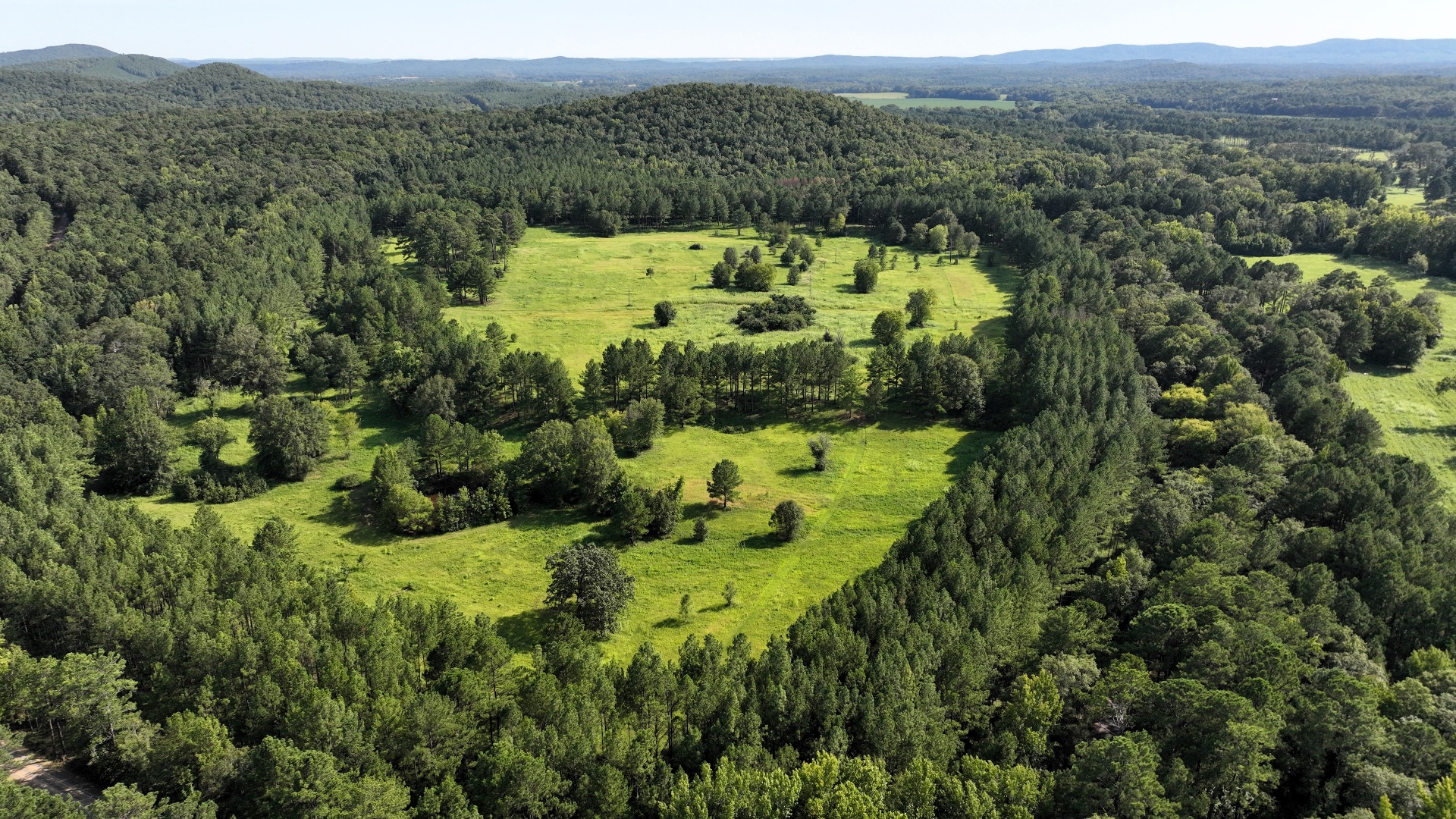
The standing timber reflects that geography: loblolly plantations across the uplands, longleaf restoration stands in pockets, and exceptional Tombigbee and Alabama River bottomland hardwood. What grows here is not what grows fifty miles in any direction, and pricing has to follow.


Market Pull on a Clarke County Tract

Buyer demand on a Clarke County tract is shaped by the Thomasville and Jackson mill cluster, Tombigbee and Alabama River barge markets, plus Mobile-area and Demopolis-area buyers. The narrow point is that no single buyer wants every product class — and the wide spread between the lowest and the highest qualified bid is exactly where most landowners lose money.

The core insight for this county is straightforward: two-river barge access (Tombigbee and Alabama), one of the densest pine-mill clusters in southwest Alabama, and significant longleaf-restoration potential. A direct, walk-up offer almost never reflects that reality.


The Short List of Clarke County Sale Mistakes

Most preventable losses on Clarke County sales follow a short, repeatable list:

  • selling to one local pine mill when six are within an hour and two barge markets are within reach
  • ignoring longleaf-restoration premiums where they apply
  • treating Tombigbee and Alabama River bottomland as one undifferentiated hardwood zone

None of these are mysterious. They all come from selling timber without independent representation in a market this specific.


Independence Is the Product

The structural problem in most timber transactions is that the person valuing the timber is also the person buying it. On a Clarke County tract, with the specific buyer mix described above, that conflict is worth real money — typically the difference between the floor and the top bid in a properly run competitive sale.

Southeast Forestlands does not buy timber, log timber, or take referral fees from buyers or loggers. That independence is the entire product.


What an Engagement Looks Like in Clarke County

On a Clarke County engagement, the work is concrete:

  • tract inventory, stand mapping, and product-class segregation across the sandy-loam uplands and bottomland zones
  • independent timber sale design — bid package, buyer invite list, and exposure window calibrated to the Thomasville and Jackson mill cluster and the wider regional pool
  • contract terms that protect the residual stand, the road system, riparian buffers along the Tombigbee River, and payment timing
  • on-the-ground harvest supervision and post-harvest inspection
  • reforestation, Prescribed Burning, and Timber Stand Improvement planning for the next rotation

You receive an independent set of eyes on every step — paid by you, working for you, with no buyer relationship in the background.


The Right Time to Call

The right time to call is not when a buyer knocks. By then, the negotiating position has already narrowed. The right time is when you are first thinking about the property — whether that is a planned harvest, an inherited tract near Grove Hill, a tract you have not visited in a decade, or a question about whether to harvest at all.

Tracts in Clarke County typically run a 60-to-120 day cycle from cruise to closing when the sale is structured for real bidding. Compressing that timeline almost always costs more than it saves. Stands that have been left unmanaged for a rotation usually need a timber stand improvement pass before a thinning sale will pull the prices Clarke County is capable of.


Cross-County Coordination

Mill draws, buyer participation, and haul economics in Clarke County routinely cross county lines into Wilcox County, Monroe County, Washington County and Choctaw County. If you own land in more than one of those counties, a single coordinated marketing package usually outperforms separate sales.

Where to Go From Here

If you own timberland in Clarke County, Alabama, the first step is a conversation — no obligation, no buyer in the room, and an honest read on whether selling, holding, or managing makes more sense for your situation.

Contact Southeast Forestlands to start that conversation, or read more about our independent forestry consulting services.


About Clarke County, Alabama for Timberland Owners

Clarke County, Alabama centers on Grove Hill and is reached by US 43 and US 84, with timber moving through the Thomasville, Jackson, and Mobile-area pulp and sawtimber cluster. Drainage across the county follows the Tombigbee and Alabama rivers, which join at the southern county line, and most working timberland is managed loblolly on the uplands with longleaf and hardwood bottomland between the two rivers.

For landowners managing tracts here, the recurring practical issues are bottomland operability in wet years and long hauls on the northern tracts. Thinning timing, sale design, and reforestation calls all need to be made against those local conditions, not from a generic regional template — that's the work I do on the ground in Clarke County.

Common questions

Common Questions From Clarke County, AL Timberland Owners

Site Prep Burning — Field Video

Nearby markets

Adjacent counties we also represent

Mill access, haul rates, and timber buyers often span county lines. These are the counties touching this one where we actively manage sales, cruises, and reforestation for landowners.

Alabama coverage

Part of our Alabama forestry coverage

View every Alabama county we represent, browse the services most requested by Alabama landowners, or read the overview of how we work in Alabama.

Serving Clarke County, AL

Request a Forestry Consultation in Clarke County, AL.

MS / AL Registered Forester #2175

Whether you have ten acres or ten thousand, our team works for the landowner — never the mill. Based in Meridian, MS and serving timberland across Mississippi and western Alabama.