
Southeast Forestlands logoSoutheastForestlands
County Coverage

Forestry Consultants & Timber Sales — Washington County, AL

Independent consulting foresters representing landowners in Washington County, AL — sealed-bid timber sales, management plans, and appraisals. We work for you, not the mill. Independent registered foresters representing landowners in Washington County, AL. Sealed-bid timber sales, cruises, appraisals, reforestation, and Prescribed Burning.

"Eric did a great job putting together a Forestry Management Plan for our family farm. He came to our farm, toured the property, assessed the different stands of timber and flew his drone to capture pictures and video. Very professionally done!"
Phil Maughan · 2 years ago · Google review
"Incredibly knowledgeable in a variety of ways. Incredibly responsive (which is hard to find in this field). Polite, patient… very patient. Even in pandemic situations he kept things moving forward. Highly recommend."
Jessica BG · 4 years ago · Google review
  • Registered Forester — MS & AL
  • Independent Landowner Representation
  • USDA Technical Service Provider (TSP #20-23350)
  • Sealed-Bid Timber Sale Representation
  • Serving Mississippi & Alabama Landowners

Washington County occupies the Lower Tombigbee corner of southwest Alabama, and the tract map here is unusually varied for a single county. Planted loblolly shares ridges with longleaf-restoration acreage, and lower-Tombigbee bottomland hardwood and cypress fill the alluvial flats. Mill draw runs south toward Mobile and inland along the Tombigbee, so mill fit on a given tract may depend as much on product class as on distance.

Communities like Chatom, Leroy, McIntosh, Millry, and Sunflower anchor the county. Southeast Forestlands works Washington County tracts with those characteristics in mind: sale decisions today should not foreclose the longleaf and management options that make some of this ground distinct from cut-and-replant pine elsewhere.


Ground Types That Shape a Washington County Sale

Three broad ground types tend to appear on Washington County tracts, sometimes on the same property. Sandy-loam uplands, often well-suited to longleaf and loblolly, hold the higher ridges. Broad alluvial flats along the lower Tombigbee carry bottomland hardwood and cypress-tupelo, with wetland-planning considerations that should be reviewed tract by tract. Pockets of poorly-drained flatwoods sit between them. Drainage runs through the Tombigbee River, Bassetts Creek, and the Escatawpa River headwaters, and where a tract sits in relation to those systems tends to determine which sale considerations apply.

Example forestry scenario for local landowners. Imagine a Washington County longleaf stand that an owner has assumed is too young for separate marketing. On some tracts, longleaf may reach a size at which stems can be cruised as pole material rather than sawtimber, and marketing poles as their own product on a sealed-bid sale may draw interest from a different buyer pool than a lump-sum pine offer. Whether any given stand carries merchantable pole material depends on species, size, form, and stocking; only a cruise will confirm whether that product class is present.

Because tract composition here varies within a short distance, pricing generally has to be built up from the specific stand rather than borrowed from a regional average.


Longleaf Restoration and Wet-Ground Planning

On sandy Washington County ridges, longleaf restoration may be worth modeling before defaulting back to loblolly on a replant. Some landowners may qualify for reforestation cost-share assistance to offset part of site-prep, seedling, and planting cost, depending on current program availability, funding, and eligibility — a decision generally made stand by stand rather than for a county as a whole.

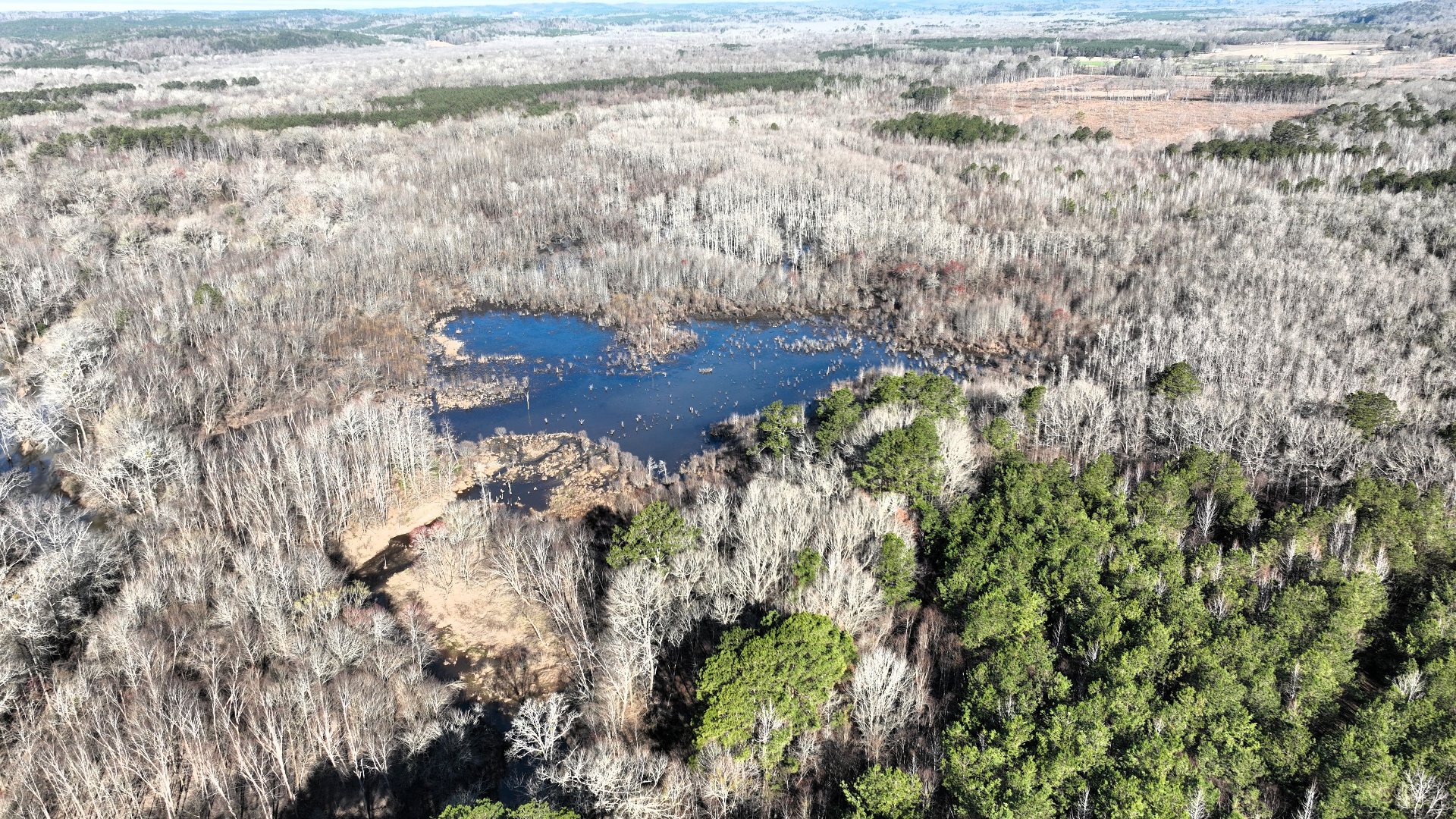
On lower-Tombigbee bottomland, wetlands, stream crossings, and streamside management zones should be reviewed before the sale so applicable permits, forestry BMPs, access limitations, and contract protections can be identified for the specific tract. On larger river-bottom tracts, drone-based stand mapping may help update a stand inventory that has aged since the last cruise.


Buyer Pools a Washington County Sale May Reach

Several buyer pools may participate in a Washington County sale when it is properly exposed. The McIntosh industrial complex and Mobile-area pulp and chip-n-saw mills tend to be primary demand for pine pulp and sawtimber. Tombigbee barge markets and cypress and grade hardwood buyers may participate when the tract carries merchantable bottomland volume. Mississippi-state-line buyers may cross east into the county depending on mill fit and haul distance.

Since few buyers pursue every product class a mixed tract carries, the gap between low and high qualified bids when the sale is exposed may capture a meaningful share of realized value. A single walk-up offer is unlikely to represent that combined pool on the day the tract is offered.


Sale-Preparation Problems to Address in Washington County

A short pattern of preventable problems recurs on Washington County sales. Clearcutting a longleaf-suitable tract and replanting loblolly may leave cost-share value unclaimed. Marketing a tract to a single local buyer without inviting Mobile-area or state-line participants may narrow the price range. Selling lower-Tombigbee hardwood without cruising it as a separate grade product may value those stems as pulp. In each pattern, the fix generally happens upstream — during cruising and bid-package design — rather than after the harvest starts. That is the role an Alabama sealed-bid timber sale is designed to fill.


Independent Representation on a Washington County Tract

A recurring problem in timber transactions is that whoever prices the standing timber is often also the party buying it. On a Washington County tract with the buyer mix described, that overlap may cost the landowner the difference between the floor bid and the top qualified bid on a competitive sale.

Southeast Forestlands does not buy timber, log timber, or take referral fees from buyers or loggers. Independent Alabama forestry consulting is the entire offering.

What a Washington County engagement generally covers

A Washington County engagement generally begins with tract inventory, stand mapping, and product-class segregation across uplands, longleaf-suitable ridges, and bottomland zones. It continues with independent timber-sale design including bid package, buyer invite list, and exposure calibrated to the McIntosh industrial complex and the wider regional pool; contract terms addressing the residual stand, road system, riparian buffers along the Tombigbee River, weather-related work restrictions, and payment timing; on-the-ground harvest supervision and post-harvest inspection; and follow-on reforestation, Prescribed Burning, and Timber Stand Improvement planning for the next rotation.


Timing a First Conversation

The productive moment to open a conversation is generally before a buyer arrives. Once an offer is on the table, negotiating room may already have narrowed. Earlier stages — a planned harvest, an inherited tract near Chatom, a property that has not been walked in years, or a question about whether to harvest at all — leave more options open. Because a sealed-bid sale needs preparation and market exposure, compression tends to be counterproductive; how much time is enough depends on the tract, the product mix, and the season.


Multi-County Ownership and Regional Mill Draw

Buyer participation, mill draw, and haul economics in Washington County may reach across county lines into Clarke County, Choctaw County, and Mobile County. When a landowner holds acreage in more than one of those counties, a single coordinated marketing package may hold up better than a sequence of separate sales.

Next Steps

If you own timberland in Washington County, the first step is a conversation — no obligation, no buyer in the room, and a straight read on whether selling, thinning, or holding may be the right move for your tract this year.

Reach out when you are ready, or read more about our independent Alabama forestry consulting services.

Common questions

Common Questions From Washington County, AL Timberland Owners

Site Prep Burning — Field Video

Nearby markets

Nearby counties and timber markets

Timber buyers, mill access, and haul economics often cross county lines. These nearby counties are part of the broader area where we represent landowners.

Alabama coverage

Part of our Alabama forestry coverage

View every Alabama county we represent, browse the services most requested by Alabama landowners, or read the overview of how we work in Alabama.

Serving Washington County, AL

Discuss Your Timber Management Goals in Washington County, AL.

MS / AL Registered Forester #2175

Whether you have ten acres or ten thousand, our team works for the landowner — never the mill. Based in Meridian, MS and serving timberland across Mississippi and western Alabama.