I work Baldwin County the way the county actually behaves on the ground — Bay Minette north, then Stockton and the Tensaw delta on one side and Loxley, Robertsdale, Daphne, Fairhope, and Foley pulling south toward the bay. One of Alabama's fastest-growing counties, Baldwin does not have a single timber market; it has a real-estate market layered on top of a Mobile-area pulp and sawtimber market, with Florida buyers across the line in Escambia and Santa Rosa.
What that means in practice is that the highest and best use of a Baldwin County tract is not always a harvest. Sometimes the standing timber is the cheapest part of what's on the ground.
The Eastern Shore and Gulf Coast Alabama — and What It Means for Your Timber
Baldwin County land sits in the Eastern Shore and Gulf Coast Alabama, anchored around Bay Minette and communities like Foley, Daphne, Fairhope, Robertsdale, Loxley, Stockton. Drainage runs through Mobile Bay, Perdido Bay, the Tensaw River, Styx River, and the soils are sandy Coastal Plain uplands, broad pine flatwoods, river-bottom alluvium along the Tensaw, and coastal sands with high water tables.
Modeling a Coastal Baldwin Timber-and-Position Decision
Example forestry scenario for local landowners. Consider a landowner east of Bay Minette whose adjacent parcels are transitioning from timberland to residential and light-commercial use. The planning question is not only what the standing pine and longleaf are worth as fiber today, but whether a near-term harvest, a delayed harvest, or a timber-plus-position-for-sale path best fits the owner's timeline. A walked cruise across the flatwoods and coastal ridges can size current sawlog, CNS, pole, and pulpwood components, and a written prospectus can then reach the regional mill pool and Florida-line buyers. The exercise compares qualified sealed bids against a hold-and-reposition scenario — not any assumed price or buyer.
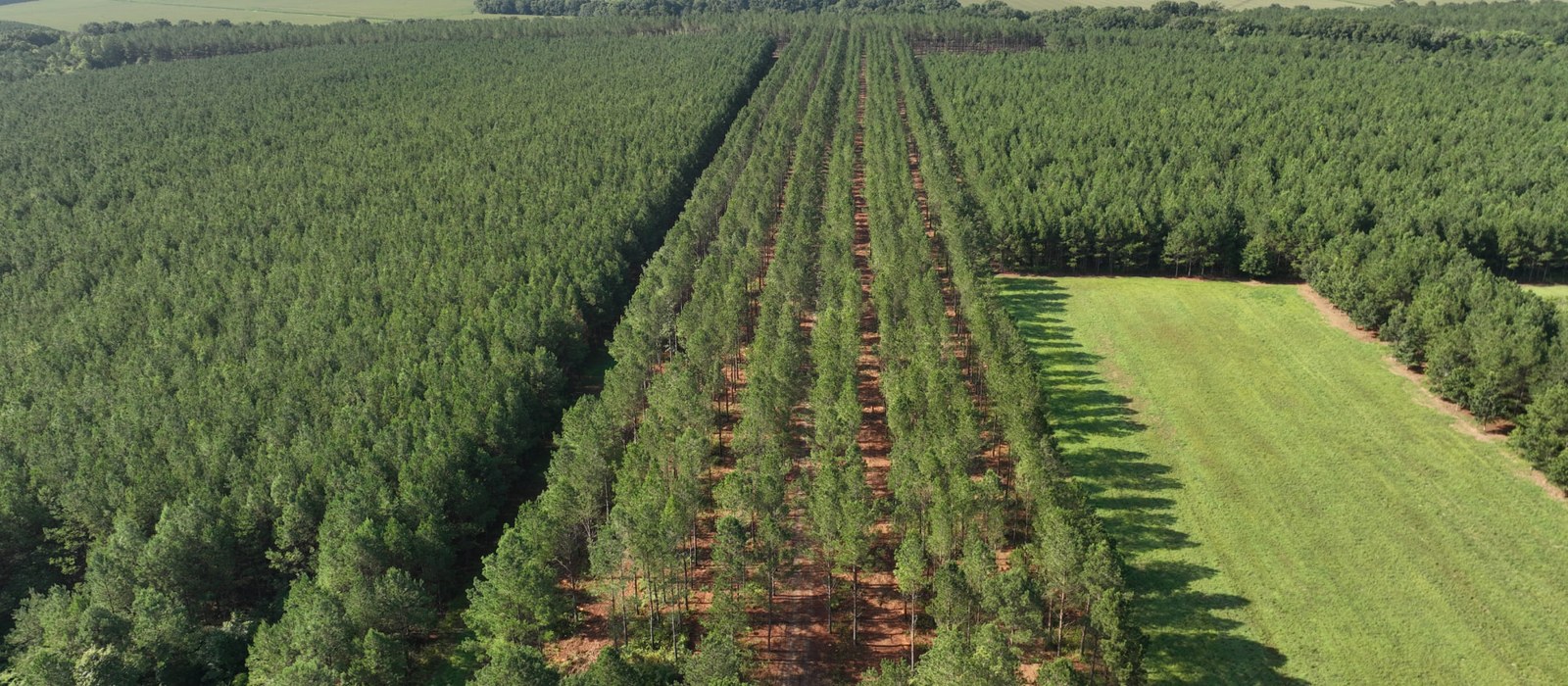
The standing timber reflects that geography: loblolly and longleaf plantations, slash pine in pockets, and swamp hardwood and cypress in the river-delta margins. What grows here is not what grows fifty miles in any direction, and pricing has to follow.
Where the Bids Come From in Baldwin County
Buyer demand on a Baldwin County tract is shaped by the Mobile-area industrial complex, Pensacola-area and Florida-line buyers, and deepwater port access. Coastal loblolly, longleaf pole-quality stems, slash pine, and delta-margin hardwood tend to be evaluated by different buyer subsets, so how those product classes are separated in the cruise and how the prospectus is circulated can shape which bidders even see the tract.
The county-specific overlay is coastal-development pressure: on many Baldwin tracts the underlying real-estate trajectory sits alongside the fiber question, and the harvest-versus-hold-versus-reposition decision benefits from being framed before a single-buyer conversation begins.
The Conflict-of-Interest Problem in Timber Sales
When the party estimating volume is also the party writing the check, the landowner has no independent read on whether coastal pine, longleaf, or delta hardwood is being priced against the buyer pool that actually competes for it. On a Baldwin County tract, that gap can be amplified by the mix of Mobile-area, Florida-line, and port-adjacent bidders — each with a different appetite for a given product class.
Southeast Forestlands does not buy timber, log timber, or take referral fees from buyers or loggers. Working only for the landowner keeps the cruise, the sale prospectus, and the independent consulting analysis anchored to what the tract holds.
The Short List of Baldwin County Sale Mistakes
Most preventable losses on Baldwin County sales follow a short, repeatable list:
- harvesting a tract that's actually worth more standing as residential or commercial real estate within 5-10 years
- overlooking Florida-state-line buyers, whose mill fit and haul economics can let them bid competitively on coastal tracts
- harvesting delta and wetland tracts without proper wetland review and SMZ planning
None of these are mysterious. They all come from selling timber without independent representation in a market this specific.
How Coastal Access and Development Pressure Shape a Baldwin Sale
Planning may begin with two overlays before a cruise is designed: a haul-and-access review that accounts for coastal soils, causeway routes, and seasonal wet ground along the Tensaw margins, and a land-use review documenting which adjoining parcels are transitioning away from timberland use. Those findings can shape what the cruise needs to measure and how a prospectus may be timed.
Using those findings, a landowner and consulting forester may prepare a cruise separating loblolly, longleaf, slash, and delta hardwood; a sealed-bid package for the regional pine pool and Florida-line buyers; and a contract covering access, seasonal, and reclamation terms. Timber-only and timber-plus-position-for-sale paths can then be modeled against the same cruise data.
Sale Timelines and What to Expect
The right time to call is not when a buyer knocks. By then, the negotiating position has already narrowed. The right time is when you are first thinking about the property — whether that is a planned harvest, an inherited tract near Bay Minette, a tract you have not visited in a decade, or a question about whether to harvest at all.
Tracts in Baldwin County typically run a 60-to-120 day cycle from cruise to closing when the sale is structured for real bidding, and a current timber appraisal is what sets the floor you defend against a walk-up offer from the bay-side developer pool. Compressing that timeline can cost more than it saves.
Cross-County Coordination
Mill draws, buyer participation, and haul economics in Baldwin County can extend across county lines into Mobile County. If you own land in more than one of those counties, coordinating multiple tracts may broaden the qualified buyer pool when timing, products, and haul geography align.
Getting Started in Baldwin County
If you own land in Baldwin County and you're trying to decide whether to harvest, hold, or sell, the first call doesn't cost you anything. I'd rather walk a tract once and tell you to wait than rush a sale that leaves money — or development value — on the table.
Baldwin County land is being asked to do two jobs at once — grow timber and hold its place against development pressure moving up from the bay. The owners who do both well are the ones who manage the woods like they intend to keep them, not flip them. The market for standing timber is patient. The market for cleared dirt is not.
The one Baldwin County mistake I see most often is treating a tract as either pure timber or pure development dirt. It is generally both, and the order you decide in — cruise first, then talk to a developer, not the other way around — is what protects the larger number. Reach out when you want an independent read, or learn more about how my forestry consulting work is structured.

