
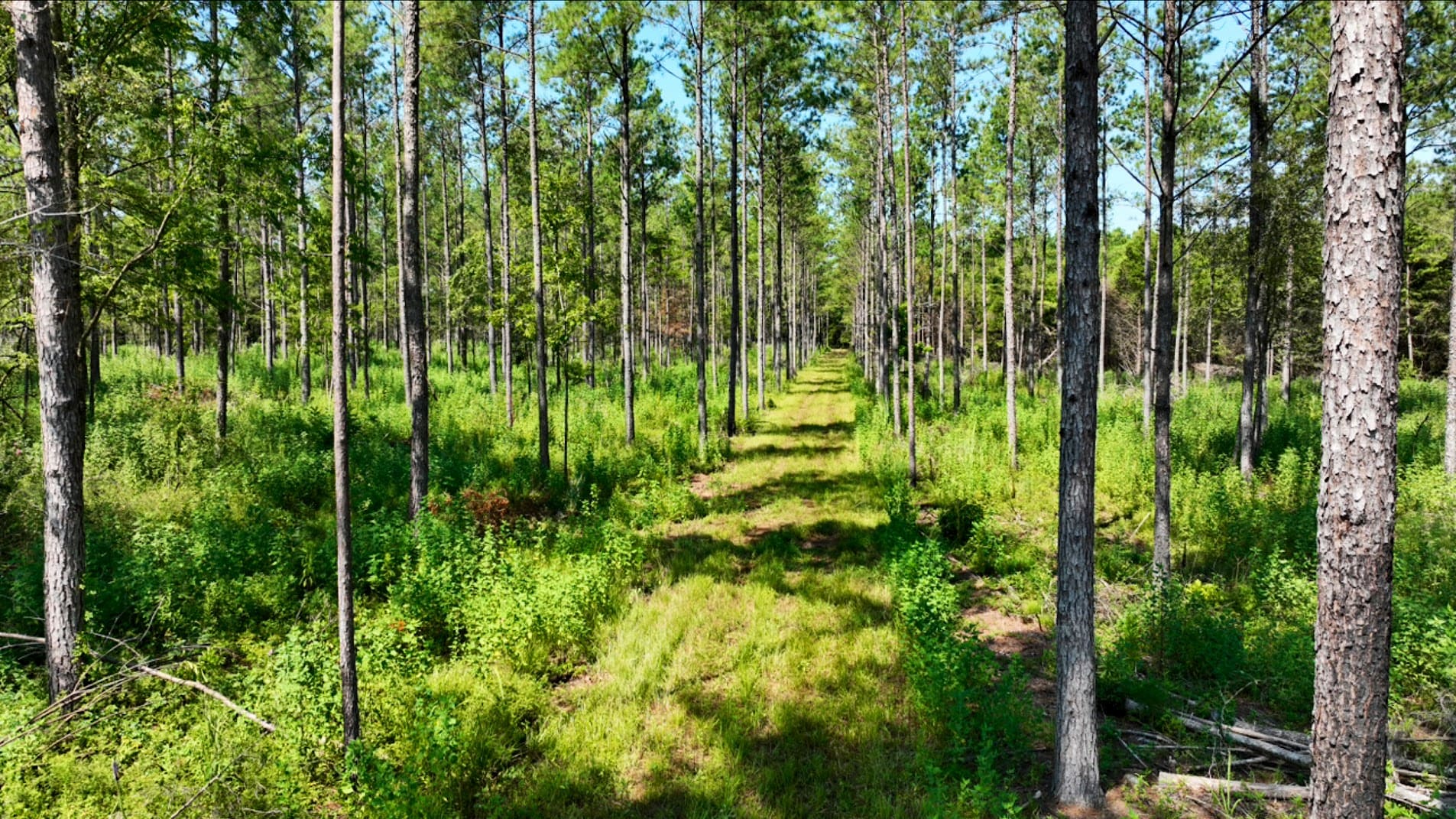
Jones County is Pine Belt country in southeast Mississippi, with two county seats — Laurel in the first judicial district and Ellisville in the second. The Leaf River, Tallahala Creek, and Bogue Homo drain the county, and the timberland between them is mostly planted loblolly with hardwood following the water.
Southeast Forestlands is hired by landowners. The firm buys nothing and sells nothing on its own account. It counts the timber, spells out what the numbers mean, and oversees the harvest on the owner's behalf.
No two tracts in the county call for the same decision. Age, stocking, soil, road frontage, and what the owner wants the place to look like in ten years all pull on the answer.
Pine Belt Soils in Jones County
Much of the county is rolling upland with sandy surface soils over clay, the classic Pine Belt site that loblolly took to when the original longleaf forest was cut a century ago. Site quality is good enough that stands here regularly hit merchantable size on schedule.
The Leaf and the Tallahala change that picture where they run. Those bottoms are broad, they carry hardwood, and they flood. An acre of river bottom and an acre of ridge on the same deed are two different management problems.
What Landowners Near Laurel and Ellisville Deal With
Jones County has more people in it than most timber counties in the state, and tracts often sit close to houses, subdivisions, and pavement. That proximity changes how a job has to be run.
Questions that come up on tracts near town
- Where trucks can enter without crossing a residential street
- How much of a screen stays standing along the road frontage
- Hours of operation where neighbors are close
- Keeping utility right-of-way crossings clear and undamaged
- Which bottomland acres along the Leaf stay out of the sale
- Whether an older plantation gets one more thinning or a final harvest
Measuring Before Deciding
A cruise is a sample, done to a standard. Plots are placed systematically across the stand, trees are tallied by species and diameter class, and heights are measured to convert the tally into volume.
Volume alone does not tell the story. The split between small pine, chip-and-saw, and sawtimber is what separates a stand worth harvesting now from a stand worth holding three more years, and only a real cruise shows that split.
Appraisals are used in Jones County for pre-sale decisions, for estate and division work, and for documenting basis on inherited timberland.
Offers, Terms, and the Contract
Timber is offered in writing with a defined tract, a cruise summary, and a deadline. Written offers received by that deadline are compared side by side.
Contract language does the quiet work: deposit, payment terms, the operating window, cleanup expectations, road restoration, and liability. A landowner should be able to read those clauses and know exactly what has been promised.
Protecting Water and Ground During the Job
Best Management Practices are Mississippi's written guidance for protecting water quality on a harvest. A Streamside Management Zone is the strip of standing timber kept along a stream for the same purpose.
Along Tallahala Creek and the Bogue Homo, the wet season decides the schedule more than the calendar does. Buffers get flagged, crossings get located, and a wet-weather stop rule is written down before the crew ever moves in.
First and Second Thinnings
Plantations on good Pine Belt sites often support two thinnings before a final harvest. The first opens the stand and removes the culls; the second concentrates growth on the trees that will carry the most value at the end.
An overstocked stand that never got its first entry is the common problem. Crowded pine slows down, crowns shrink, and the stand becomes more vulnerable to beetles and to ice.
Putting the Next Stand In
Regeneration is planned before the harvest closes, not after. On most Jones County uplands that means replanting improved loblolly at a spacing chosen for the owner's intentions — wider if thinning and burning are planned, tighter if the goal is volume.
Bottomland hardwood is usually left to come back on its own, which it does reliably when the residual stand is protected during the job.
Jones County, Mississippi
Laurel and Ellisville are the county seats. Jones County lies in the Pine Belt of southeast Mississippi, drained by the Leaf River, Tallahala Creek, and Bogue Homo.
Landowners in Jasper, Wayne, Covington, and Forrest counties are served as well. Scheduling depends on tract location, weather, and current fieldwork.
Get a Second Opinion First
Before signing anything on a stand of timber, have someone measure it who has nothing to gain from the outcome. Contact us to arrange a walk over the property.

