Scott County is right in the middle of the central Mississippi mill cluster — I-20 cuts straight through, Forest is one of the most active pine-mill towns in the state, and the Bienville National Forest takes up a serious chunk of ground south of the interstate. That mill density is good for landowners, but it also means buyers move fast and most landowners I talk to have already had an offer.
I work with landowners around Forest, Morton, and Sebastopol on stand evaluations and sale structuring before that first offer turns into a signed contract. Most Scott County tracts are loblolly plantation on rolling uplands with hardwood draws through Tuscolameta Creek and the Strong River — and the biggest swings in value out here come from when you sell, not just what you sell. A short look at current Mississippi timber prices usually frames the timing conversation faster than any pitch will.
Why Forestry Expertise Matters in Scott County
Example from the field. A Scott County landowner near Forest had three buyers calling on a 70-acre tract before I ever set foot on it. We slowed the process down, cruised the stand, and marketed it as a sealed-bid sale into the Forest/Newton mill cluster with clear product specs and a written contract. The winning bid came in well above the first verbal offer — same wood, very different outcome.
Scott County timberland is productive but not simple. Tracts here commonly include loblolly pine, mixed hardwood drains, variable access, and soils that can become sensitive under wet conditions.
With Interstate 20 running through the county and multiple haul routes feeding surrounding mills, timber value is directly influenced by:
- Stand maturity and species composition
- Access and operability during different seasons
- Haul distance and active mill demand
- Market timing and buyer competition
Without guidance, landowners often:
- Sell timber before it reaches its optimal value
- Accept convenience offers without competitive exposure
- Sign contracts that fail to protect roads, soils, and SMZs
- Experience rutting or residual stand damage that affects future rotations
A consulting forester helps identify these risks before they turn into permanent loss.
How Southeast Forestlands Helps Solve Timberland Problems
We do not represent mills or loggers.
That independence matters — because our role is to represent you.
We help Scott County landowners:
- Determine true timber value through professional cruising
- Decide if selling now is the right move — or not
- Structure timber sales to create competition between buyers
- Use contracts that protect your land and your payment
- Supervise harvesting to prevent avoidable damage
You remain in control of every decision. We provide clarity, structure, and protection.
Local Market Knowledge That Reduces Risk
Timber markets in Scott County are tied closely to surrounding counties and shared mill corridors. Buyer competition, haul distance, and timing all affect the value of your timber.
Because we work in these markets daily, we help landowners account for:
- Real-time stumpage values — not outdated averages
- Differences between pine and hardwood markets
- Logging feasibility based on tract layout and weather
- Buyer behavior across county lines
For landowners with property extending east or north, or where shared markets influence pricing, our work in Newton County, MS, Smith County, MS, and Leake County, MS often overlaps and provides additional context.
This level of local awareness helps prevent rushed decisions and missed value.
Forestry Services Designed to Solve Real Problems
Our forestry consulting services in Scott County are built to address issues at every stage of ownership:
- Timber cruising and valuation
- Competitive bid timber sales
- Seller-focused timber sale contracts
- BMP and SMZ planning
- Harvest supervision and quality control
- Reforestation Planning and implementation
Additional services include:
- Forestry management plans (CPA-106 / NRCS ready)
- Timber Stand Improvement (TSI)
- Prescribed Burning and herbicide programs
- Timber trespass assessment
- Aerial drone inspections and mapping
- Tree Farm Certification assistance
Each service is designed to solve a problem — not create pressure to sell.
What Happens When You Call
Most conversations start with a simple question.
We’ll talk through your property, what you’re seeing on the ground, and what you’re trying to accomplish. If it makes sense, we’ll walk the tract, evaluate conditions, and give you a clear picture of where things stand.
Sometimes that leads to a timber sale.
Sometimes it leads to a plan.
Sometimes it confirms you should wait.
The goal is clarity — not pressure.
Prescribed Fire in Scott County, Mississippi — Managing Timberland the Right Way
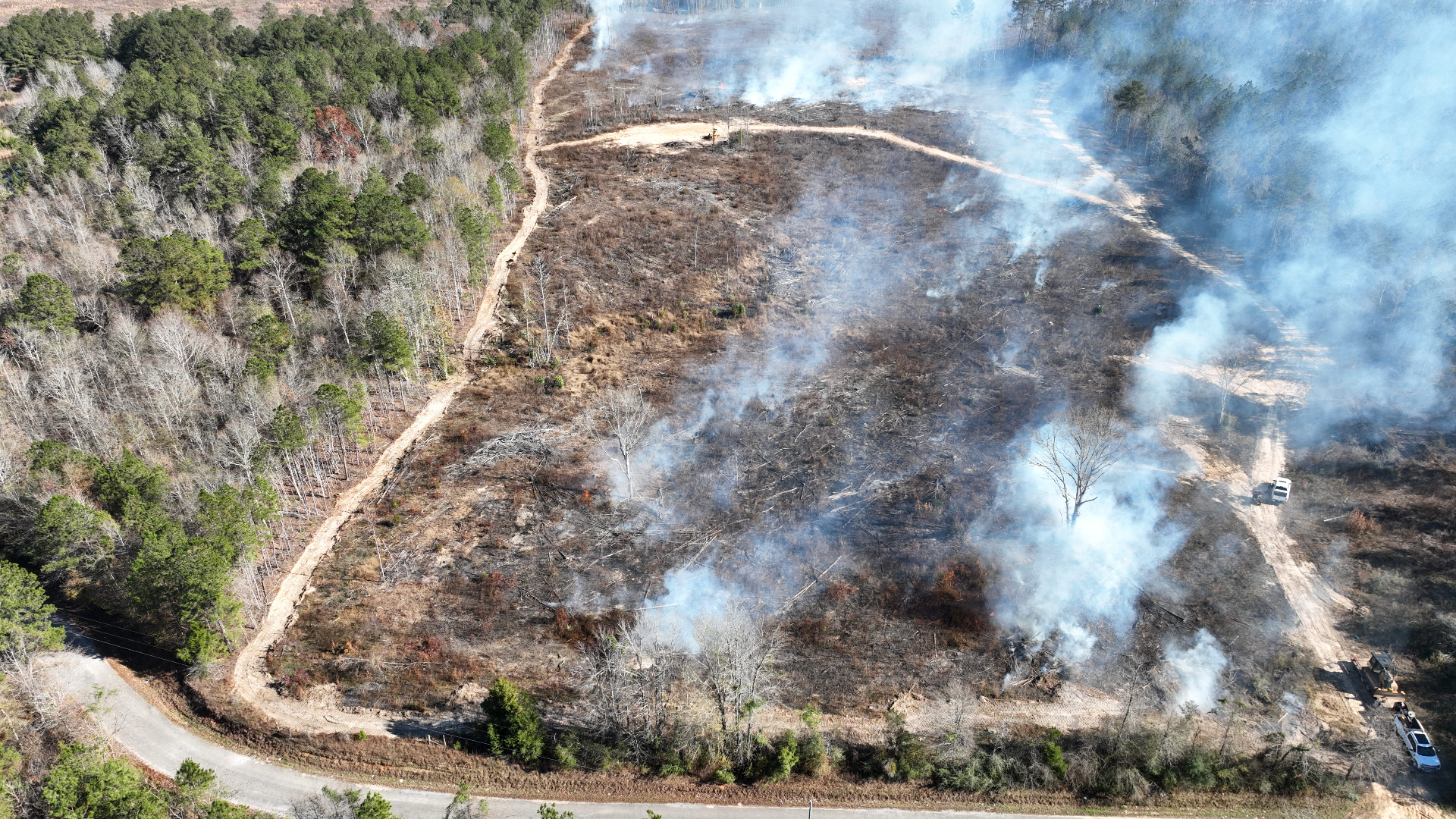
Prescribed fire is one of the most effective tools available for managing timberland in Scott County. When applied correctly, it improves stand health, reduces competing vegetation, enhances wildlife habitat, and lowers future risk.
In areas with pine production and mixed understory pressure, fire helps maintain control without relying entirely on mechanical or chemical treatments. It’s not just about burning — it’s about timing, conditions, and understanding how fire fits into the long-term plan for your property.
This short video gives a real-world look at how Prescribed Burning is used as part of a disciplined forestry strategy.
Prescribed Burning is not a one-size-fits-all practice. It has to be timed correctly, planned around site conditions, and integrated into the broader management goals of the property.
Done right, it supports timber growth, improves access, and protects long-term value. Done wrong — or ignored altogether — it can lead to heavier fuel loads, reduced stand quality, and more expensive corrective work later.
For Scott County landowners, prescribed fire is often one piece of a larger strategy that includes timber valuation, stand improvement, and future harvest planning.
If you’re considering burning or want to understand whether it makes sense for your property, Southeast Forestlands can help you evaluate timing, conditions, and how it fits into your overall plan.
Solve the Right Problems First
Most of the bad outcomes I see on Scott County timberland trace back to solving the wrong problem first — chasing a price before anyone's measured what's actually standing, or signing a contract before the access and SMZs were figured out.
The first call is a conversation, not a pitch. I'll ask what you own, what you're trying to do with it, and what's already on the table. From there we walk the tract, look at stocking and product mix, and lay out whether a sale, a thinning, or another year of growth fits the property best.
Contact Southeast Forestlands about your Scott County timber and start with a clear-eyed look at the property before any decisions get locked in.