
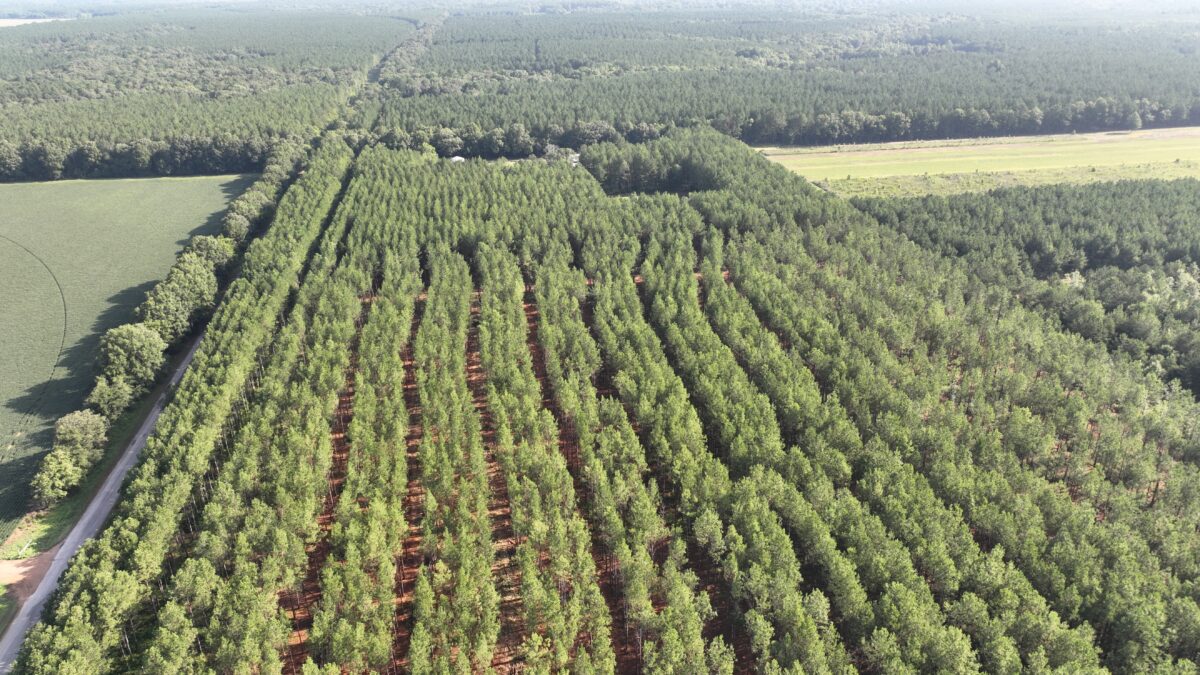
If you’re a timberland owner in Mississippi, you are most likely familiar with the necessity of staying abreast of local current timber prices. This information can help guide your decision-making and ensure you achieve the highest possible return on your investment. The latest trends in Mississippi's timber market significantly affect your actions, and navigating this complex landscape can be daunting. Enter Southeast Forestlands. Having a knowledgeable and experienced professional timber management team on your side can be just what you need to have success in this industry. Drawing on decades of experience, we offer valuable insights into the local timber market and can help you identify the right solution for your specific needs. Let us do what we do best: ease your mind and increase your profitability, which is all possible with Southeast Forestlands as your timber partner.
Quick Guide to Regional Timber Prices in Mississippi
Knowledge is power! Being well-versed in the timber production and timber prices of the various Mississippi regions can significantly impact your longevity in the timber industry. While timber prices vary by season, a helpful starting point is to assess trends in each region. This begins with understanding the tree species and production value of each region.
Mississippi’s Coastal Plain
The dominant timber species in this area of the great Magnolia state include Longleaf Pine, Sweetgum, Bald Cypress, and, most importantly for timber, Loblolly Pine and Slash Pine.
Mississippi Hills Region Timber
Mixed pine-hardwood forests abound here, offering plentiful Shortleaf Pine. Also found are upland forest oaks, including Southern Red Oak, White Oak, and Post Oak. Hickory, maple, and dogwood are a mainstay of the Hills region.
MS Delta Region Timber
Bottomland hardwood forests abound in this region, offering ample timber opportunities. Swamp Tupelo, Bald Cypress, and various oaks, including Overcup, Willow, and Nuttall, to name a few.
Mississippi Timber Price Report Regions
When determining profitability and production, timber product classes in Mississippi are typically broken down by:
- Quarter: Annually
- Region: Northwest, Northeast, Southwest, and Southeast
- Type: pine or hardwood
- Product: poles, saw timber, pulpwood, crossties, ply logs, T-wood, chip-n-saw, etc.
Timber prices in Mississippi, per ton, are the usual way they're reported. Overall trends indicate that timber profitability and production in Mississippi vary significantly by region, primarily driven by product mix. That said, Southern areas tend to produce the highest-grossing timber producers and the highest overall profits.
Factors Affecting Current Timber Prices
As with any industry worldwide, various factors affect prices at any given moment. In the Mississippi timber industry, these factors fluctuate in their influence, but many remain consistent.
- Demand for wood products & current suppliers
- Construction & real estate trends
- Natural disasters
- Environmental & weather concerns
- Current season
- Transportation costs (shipping & trucking)
- Harvesting costs
- Fuel prices
Selling Timber in Mississippi
If you’re selling timber in Mississippi and are searching for the best way to stay updated on Mississippi’s timber prices, consult with a forester. The professional advice of a registered forester, like those at Southeast Forestlands, will provide you with personalized insights into your specific timber stand and local timber market conditions. This guidance offers valuable tips on staying consistently profitable through market fluctuations and on implementing a sustainable forestry management plan to enhance the long-term viability of your timberland. Contact us today!
How These Prices Are Compiled (Methodology)
The Mississippi stumpage figures published on this page are compiled from a small set of independent reference points and cross-checked against Southeast Forestlands’ own closed-bid sales across the state. The intent is a directional read on the market for landowners — not a quote for a specific tract.
Source mix
Regional benchmarks are drawn from the Timber Mart-South quarterly stumpage reports, supplemented by the USDA Forest Service Southern Research Station price work and the quarterly summaries published by Mississippi State Extension Forestry. Where Southeast Forestlands has recent sealed-bid sale data on Mississippi tracts, that data is used to validate the published ranges rather than to replace them.
Why your tract price is not the published average
A statewide average is a blend across products, regions, tract sizes, and seasons. The price your stand actually clears is set by the buyers invited to bid on it — not by any published number. A small, isolated tract two hours from a qualified mill prices very differently from a comparable stand 20 miles from a Bay Springs or Louisville mill, even in the same quarter.
Product classes considered
Pricing on this page covers seven standard Southern product classes: pine pulpwood (small-diameter pulp), pine chip-n-saw (CNS, mid-diameter), pine sawtimber (large, straight, high-grade), pine poles and plylogs (premium straight stems), hardwood pulpwood, mixed hardwood, and hardwood grade (high-quality factory and veneer logs). For a deeper walk-through, see how to read a timber price report.
Geographic variation across Mississippi
Mississippi is not one timber market — it is a set of overlapping local timber markets, each shaped by the mills competing for your timber. The Pine Belt (Jones, Wayne, Perry, Forrest, Lamar) runs against a different buyer list than the Delta hardwood market, the Northeast Hills around the Tombigbee corridor, or the Loess Bluffs of the southwest. Haul distance to a qualified buyer, road class, and bridge weight limits matter as much as standing volume.
Stumpage vs. delivered vs. mill-gate
Three numbers get quoted in the same conversation and they mean different things. Stumpage is what the landowner is paid for standing timber, before logging and hauling. Delivered price includes cutting and trucking to the mill yard. Mill-gate is what the mill pays when wood crosses its scale. Reports on this page are stumpage unless otherwise noted — that is the number that lands in the landowner’s pocket.
Limits of the data
Published quarterly numbers are a directional read on the market. They are not transaction quotes. A measured timber cruise on your specific tract, combined with a properly run sealed-bid timber sale, is the only honest way to know what your stand will clear in today’s market. For tax, basis, or estate work, valuations should follow IRS Form T (Timber) and the guidance maintained at TimberTax.org.
Mississippi Timber Market Conditions This Quarter
The narrative below is updated each quarter alongside the price table. The intent is to give landowners a plain read on what is moving the market right now — not a forecast.
Mill demand
Mississippi sawtimber and CNS demand is driven by a small set of regional buyers: pine sawmills, plywood/OSB plants, and pulp mills across the southern, central, and northeast parts of the state. Quotas tighten and loosen at the mill level, and a single mill taking a maintenance shutdown changes the buyer list a tract sees that month. Current-quarter notes will be posted in the Update History below as each cycle closes.
Export demand
Wood-pellet and chip export volumes moving through Gulf ports (Mobile and Pascagoula in particular) directly affect pine pulpwood pricing in south Mississippi timber markets. Export demand is sensitive to European energy policy and shipping economics; both can shift quarter to quarter.
Weather and ground conditions
Wet bottoms in late winter and early spring close ground to conventional logging crews. When a buyer cannot get a crew to wet ground, bids on those tracts drop or disappear. Drier conditions and a hard freeze expand the working buyer list. See wet-weather logging for how this is handled inside a written contract.
Logging capacity and crew availability
Trucking and crew capacity is the binding constraint as often as price. A mill paying a strong stumpage is not useful if no qualified crew can move the wood inside the contract window.
Fuel and operating costs
Diesel and trucking costs compress the spread between mill-gate and stumpage. A move in diesel of any size shows up at the landowner’s end of the chain within a quarter or two.
Mill yard inventory
When buying mills carry full yards, quotas tighten and stumpage softens. When yards run thin — especially after a wet winter or a long holiday shutdown — the same tract can clear at a meaningfully higher number. Watching yard conditions across the buyer list is part of how Southeast Forestlands times a sale on a client’s tract; the framing is covered in reading a timber market cycle in the Pine Belt.
Mississippi Timber Price Trends
Status: awaiting published data. The chart, product-comparison chart, and quarterly comparison table below will be populated using verified Southeast Forestlands sale data and cross-checked regional benchmarks. They are intentionally empty until verified numbers are available — representative, synthetic, or AI-generated stumpage values are not used on this page.
Awaiting verified Q1 2026 dataset.
Awaiting verified Q1 2026 dataset.
| Product | Prior Q | Current Q | YoY change | Notes |
|---|---|---|---|---|
| Pine pulpwood | — | — | — | Awaiting verified data |
| Pine chip-n-saw | — | — | — | Awaiting verified data |
| Pine sawtimber | — | — | — | Awaiting verified data |
| Pine poles / plylogs | — | — | — | Awaiting verified data |
| Hardwood pulpwood | — | — | — | Awaiting verified data |
| Mixed hardwood | — | — | — | Awaiting verified data |
| Hardwood grade | — | — | — | Awaiting verified data |
Downloadable data. A machine-readable CSV and a one-page PDF summary will be published alongside each quarterly update at /data/ms-timber-prices-current.csv and /data/ms-timber-prices-current.pdf. Both are currently published as schema-only templates — no synthetic values — and will fill with verified numbers as soon as the current quarter’s dataset is finalized.
Update History
- Q1 2026 (build): Added methodology, market-conditions, trends framework, visible FAQ expansion, Dataset/Article/FAQPage schema, and the downloadable CSV/PDF framework. Pricing tables and charts intentionally left empty pending verified data.
- Next entry: first verified quarterly dataset publication. The Update History will be appended to each quarter so the page’s freshness signal is visible to readers and search engines.
Frequently Asked Questions
What are current timber prices in Mississippi?
Stumpage prices vary by product (pulpwood, chip-n-saw, pine sawtimber, poles, hardwood grade), tract size, access, and haul distance to mills. Statewide averages move quarterly; a measured cruise tied to your specific tract is the only honest number for a sale decision.
How often do Mississippi timber prices change?
Pulpwood and sawtimber stumpage shift quarter to quarter with mill demand, weather windows, and inventory at the buying mills. Weekly headline numbers are useful as direction, but the price your tract actually clears depends on the buyer list it goes in front of.
What drives the difference between low and high stumpage offers?
Tract size, access, haul distance to qualified mills, product mix, season, and — most of all — how many qualified buyers were invited to bid. A sealed-bid sale on a properly marketed tract often spreads tens of thousands of dollars between the high and low bid.
Should I sell timber when prices peak?
Sometimes. Overstocked pine past peak diameter growth loses value, so “waiting for the top” can cost more than selling into a reasonable market. A cruise plus a current market read tells you whether your stand will outgrow the wait.
How do I get the current price for my Mississippi tract?
A measured cruise plus a sealed-bid market test — both are what an independent consulting forester delivers. Statewide averages are a starting point; your tract’s number is set by the buyers who bid on it.
How do I read a Mississippi stumpage report?
Stumpage reports publish a low, mid, and high — not a single price. The mid is the most quoted, but the high is what well-marketed tracts actually clear when the right buyers compete. How to read a timber price report walks through this in detail.
Does the published stumpage number reach the landowner?
Yes, when the report column is labeled stumpage. Stumpage is the standing-timber price paid to the landowner before logging and hauling. Delivered and mill-gate numbers include those costs and do not reach the landowner’s pocket.
What does a “premium” on a bid mean?
It means a buyer is bidding above their normal price grid for that tract — usually because the wood profile, access, or timing fits a need on their yard that week. Premiums are one reason a sealed-bid sale spreads bids more widely than landowners expect.
When is the worst quarter to sell pulpwood in Mississippi?
It depends on the year, not the calendar. A wet winter that keeps crews off the ground can tighten supply and lift pulpwood. A dry winter following a strong harvest year can do the opposite. The Update History above tracks the cycle in plain language each quarter.
Does a TSI or first thinning set up a better price later?
Usually yes. A well-timed timber stand improvement or first thinning concentrates growth onto fewer, better-quality stems — which is what the sawtimber and pole markets pay for. The economics of when to thin and what to leave is covered in first thinning vs. second thinning.
Get a Tract-Specific Price
The fastest path from a published statewide average to a number you can actually act on is a measured written timber appraisal followed by a sealed-bid timber sale. For ongoing decisions on the property — thinning windows, replant timing, market timing — an independent consulting forester reads the same data sources used on this page against the specific stands on your tract. Background reading: reading a timber market cycle in the Pine Belt.
Mississippi Counties We Cover
Statewide quarterly stumpage averages are a directional read, not a tract-level number. The only way to know what your specific stand will clear is a measured cruise plus a competitive bid in the local mill pool. The counties below are where we run those cruises and sales every week.
East-central Mississippi (Pine Belt edge to the Black Belt): Lauderdale, Clarke, Kemper, Newton, Neshoba, Scott, Wayne, Attala.
Central and southwest Mississippi: Madison, Hinds, Rankin, Warren, Claiborne, Yazoo, Holmes, Copiah, Franklin, Lincoln, Adams, Wilkinson, Amite, Pike, Walthall.
South Mississippi Pine Belt: Jones, Forrest, Lamar, Marion, Covington, Lawrence, Jefferson Davis, Perry, Greene, George, Stone.
Northeast and north-central Mississippi: Lee, Monroe, Itawamba, Pontotoc, Lafayette, Union, Prentiss, Tippah, Tishomingo, Calhoun, Grenada, Oktibbeha, Noxubee, Clay, Chickasaw, Choctaw, Webster, Montgomery, Winston, Lowndes, Carroll.
Service Stack
The work itself runs through the same core service stack: sealed-bid timber sales, timber appraisals and cruises, written forestry management plans, timber stand improvement, reforestation, prescribed burning, herbicide application, and FAA-certified aerial photography. The right starting point depends on the stand, the goals, and the timing — that read happens on the property walk.
Related Field Note: How a sealed-bid timber sale actually works — why a tract-specific bid is the only true price.