
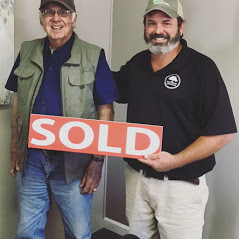
A sealed-bid timber sale is the closest thing a landowner has to a free market for their standing timber. Instead of taking the first number that walks up the driveway, the tract is cruised, advertised to qualified buyers under a written prospectus, and sold to the highest qualified bid opened in front of the seller. Done right, it routinely produces meaningfully higher prices than a single negotiated offer — not because buyers are dishonest, but because no single buyer ever represents "the market."
This Field Note explains, step by step, how the process actually runs in Mississippi and Alabama, why it works, and where landowners most often lose money when it doesn't.
What a Sealed-Bid Timber Sale Is
A sealed-bid sale is a structured competitive bid. The forester representing the landowner cruises the tract, writes a prospectus describing what is being sold, distributes the prospectus to a list of pre-qualified buyers, sets a bid deadline, and opens all submitted bids together — in writing, in front of the landowner — on the same day. The high qualified bidder is awarded the sale, signs a written contract drafted in the landowner's favor, and harvests under oversight.
Everything in that paragraph is doing real work. Strip out any one element — the cruise, the prospectus, the qualified-buyer list, the written sealed bid, the contract, the oversight — and the sale starts to look more like a private negotiation than a market.
Why Buyers Bid Differently on the Same Timber
Two qualified buyers looking at the same stand on the same day will not write the same number. They are reading different inputs:
- Mill orders. One mill may be long on pulpwood and short on sawtimber this week; another may be the opposite. Inventory positions move bids more than landowners realize.
- Haul distance and fuel. A buyer 18 miles from the tract is not paying the same as one 70 miles away.
- Logging crew availability. A buyer with a crew sitting idle next month bids stronger than one whose crews are booked out 90 days.
- Product mix preference. Some buyers chase chip-n-saw; others want straight sawtimber. The same stand reads differently to each.
- Recent contract experience. A buyer who just got burned on a wet tract bids cautious on the next one with similar drainage.
- Operability. Road frontage, decking area, internal woods roads, SMZs, and soil drainage all change what a logger can actually pay.
None of this is visible to the landowner. The sealed-bid process surfaces it by forcing every buyer to put their best read of those inputs on paper at the same time.
Why One Buyer's Offer Is Rarely "The Market"
A single offer is data about that buyer's position on that day. It is not, in any statistical sense, the market for the timber. The most common loss in a private negotiated sale is not that the buyer is dishonest; it is that the landowner has no second data point to compare against. Even a fair-minded buyer cannot bid against themselves.
Reports such as Timber Mart-South are useful for direction and order of magnitude, but a regional average is not what a specific tract is worth. The only way to discover the price of a specific tract on a specific day is to put it in front of multiple qualified buyers and let them bid. See also current timber prices in Mississippi for how regional benchmarks relate to tract-level value.
How the Timber Is Cruised and Valued First
A defensible sale starts with a defensible inventory. The cruise determines:
- Species composition (loblolly, longleaf, slash, shortleaf, mixed hardwoods, bottomland hardwoods).
- Product class breakdown — pulpwood, chip-n-saw, sawtimber, pole, ply-log.
- Diameter distribution and stand quality.
- Volume per acre and total merchantable volume.
- Operability factors: access, decking, SMZs, terrain.
For estate, tax, or partition use, the cruise is paired with a written timber appraisal. For a sale, the cruise becomes the foundation of the prospectus — bidders are told exactly what is being sold and how it was measured. The cruise is also the only way to evaluate the bids that come back: without it, a high bid and a low bid are just two numbers without context.
How the Tract Is Advertised — the Prospectus
The prospectus is the document that goes to qualified buyers. A well-built prospectus contains:
- Tract location, acreage, county, and access description.
- A map (and increasingly, drone imagery) showing the sale boundary, internal access, SMZs, and any exclusions.
- Cruise summary by product class and species.
- Sale terms — lump sum or pay-as-cut, time limit, performance bond requirements, insurance requirements.
- Bid format and deadline.
- Required buyer qualifications and references.
- The draft contract that the winning bidder will sign.
Every bidder gets the same prospectus. That uniformity is what makes the bids comparable.
How Bidders Receive Information and Walk the Tract
Qualified buyers receive the prospectus and are invited to walk the tract on their own schedule before the bid deadline. The forester answers questions consistently — anything material that is said to one bidder is communicated to all of them. There is no separate side conversation that changes one buyer's read of the tract and not another's. This is what keeps the process fair, and it is what keeps the high bid honest.
How Bids Are Opened and Compared
On the bid date, all sealed bids are opened together in front of the landowner. Each bid is read aloud and entered on a tally sheet showing bidder, lump-sum price (or per-ton prices by product class for pay-as-cut), and any non-price terms the bidder attached. The landowner sees the full spread — not just the high number but every number, in writing, with the bidder's signature on it.
That spread is itself information. A tight cluster of bids tells the landowner the cruise and prospectus were read consistently. A wide spread usually points to either a strong outlier mill position or a bidder who is reaching. The forester reviews each bid for qualifications before the award is final.
Why the Contract Terms Matter As Much As the Price
A timber sale contract is what turns a high bid into actual money in the bank and a tract that comes back looking like what was promised. A landowner-protective contract addresses, at minimum:
- Lump sum vs. pay-as-cut payment structure and timing.
- Performance bond amount and form.
- Liability and workers'-comp insurance requirements.
- Harvest boundary, exclusions, and marked-tree treatment.
- Access roads, gate keys, and required road stabilization at closeout.
- Streamside Management Zones and BMP compliance.
- Cleanup standards — slash, ruts, decks, trash, road repair.
- Time limit and extension terms.
- Default and dispute resolution language.
A bid that is $20,000 higher than the next number but comes with a payment structure the buyer can walk away from is not the high bid. The forester evaluates the whole package, not the headline price.
Common Mistakes Landowners Make
- Accepting the first offer. A single offer is one buyer's position, not the market.
- Selling on a verbal agreement. Without a written contract, none of the protective terms above exist.
- Letting one buyer "represent" the tract. A buyer cannot bid against themselves.
- Failing to cruise before selling. Without a cruise the landowner cannot evaluate any offer — high or low.
- Skipping the bond. A performance bond is the only mechanism that compels a buyer to finish what they started on the terms they signed.
- Skipping oversight. Most damage on a tract happens during the harvest, not after. Oversight prevents it.
- Confusing delivered (mill-gate) price with stumpage. Delivered price includes logging and hauling. Landowners are paid stumpage.
- Failing to document timber basis before the sale closes. Once the timber is gone, retroactive basis work is harder and more expensive.
Example From the Field
Frequently Asked Questions
Does a sealed-bid sale really get a higher price?
It gets the market price. On most well-marketed sales that is meaningfully above a single negotiated offer, because no single buyer ever represents the full market. The exact lift depends on tract, product mix, and how many qualified buyers compete.
Do I have to take the high bid?
No. The landowner can reject all bids if the spread or the high number does not meet expectations. In practice this is uncommon when the cruise and prospectus were built honestly, because the bids will reflect what the timber is actually worth that week.
How many bidders do you need?
Enough qualified bidders that the result represents real competition. Two is not a sale. Five or more is healthy. The number depends on the tract, product mix, and active mill demand in the local timber market.
How long does the process take?
Typical sealed-bid sales run several weeks from start to bid opening — long enough to cruise the tract, write the prospectus, get it in front of qualified buyers, let them walk it, and meet the bid deadline. Closing and harvest follow on the contract schedule.
Is lump sum better than pay-as-cut?
Each has a place. Lump sum gives the landowner certainty and a single check at closing. Pay-as-cut shares some price-movement risk and requires more oversight but can be the right structure on long-duration sales or volatile markets. The cruise and the market-cycle position both inform the choice — see reading a timber market cycle in the Pine Belt.
Who decides who is "qualified" to bid?
The forester. Qualification is based on financial capacity, insurance, references on similar tracts, and a track record of finishing harvests under contract. Any bidder can show up on the open market; only qualified bidders get the prospectus.
What about timber appraisals before the sale?
An appraisal is the right tool when a landowner needs a written valuation for estate, tax, basis, divorce, or damage purposes. A pre-sale cruise feeds the prospectus and supports decision-making. The two overlap but are not the same — see timber appraisals.
Related Reading on This Site
For landowners moving from "understanding the process" to "running one on my tract": timber sale representation, timber appraisals, current timber prices in Mississippi, reading a timber market cycle in the Pine Belt, and forestry consulting.
Authoritative references: Timber Mart-South regional stumpage benchmarks, MSU Extension Forestry landowner publications, and the USDA Forest Service — Southern Research Station market analysis library. Written and reviewed by Eric Entrekin, Registered Forester (MS & AL).