
Southeast Forestlands logoSoutheastForestlands
County Coverage

Forestry Consultants & Timber Sales — Clarke County, MS

Independent consulting foresters representing landowners in Clarke County, MS — sealed-bid timber sales, management plans, and appraisals. We work for you, not the mill. Independent forester representation for Clarke County, MS landowners — timber cruises, appraisals, sealed-bid timber sales, harvest oversight, and reforestation.

"Eric did a great job putting together a Forestry Management Plan for our family farm. He came to our farm, toured the property, assessed the different stands of timber and flew his drone to capture pictures and video. Very professionally done!"
Phil Maughan · 2 years ago · Google review
"Incredibly knowledgeable in a variety of ways. Incredibly responsive (which is hard to find in this field). Polite, patient… very patient. Even in pandemic situations he kept things moving forward. Highly recommend."
Jessica BG · 4 years ago · Google review
  • Registered Forester — MS & AL
  • Independent Landowner Representation
  • USDA Technical Service Provider (TSP #20-23350)
  • Sealed-Bid Timber Sale Representation
  • Serving Mississippi & Alabama Landowners

Clarke County is pine country in east Mississippi. The uplands are sandy and roll gently. The Chickasawhay River runs through the county, and its bottom floods and stays soft well after the water drops.

Southeast Forestlands works only for the landowner. We do not buy timber and we are not paid by mills.


Upland Sand Carries Equipment

Sandy upland drains fast and takes a machine on days when low ground will not.

That is why a harvest plan should start on the high ground and work down. That order keeps the crew productive while the low ground drains.


The Bottom Runs on Its Own Schedule

River bottom ground can be dry in September and under water in February.

A contract needs a plain stop-work rule for wet weather. Without one, a crew keeps working through mud, and you are left with ruts, a torn-up road, and a mess to fix.


Sandy Does Not Mean Dry Everywhere

Some flats here hold water at the surface even though the top layer is sand.

You find those spots by walking, not by looking at the timber. They change where a road goes and when the job can run. A road laid across one of them will need work every wet season.


Replanting by Part of the Tract

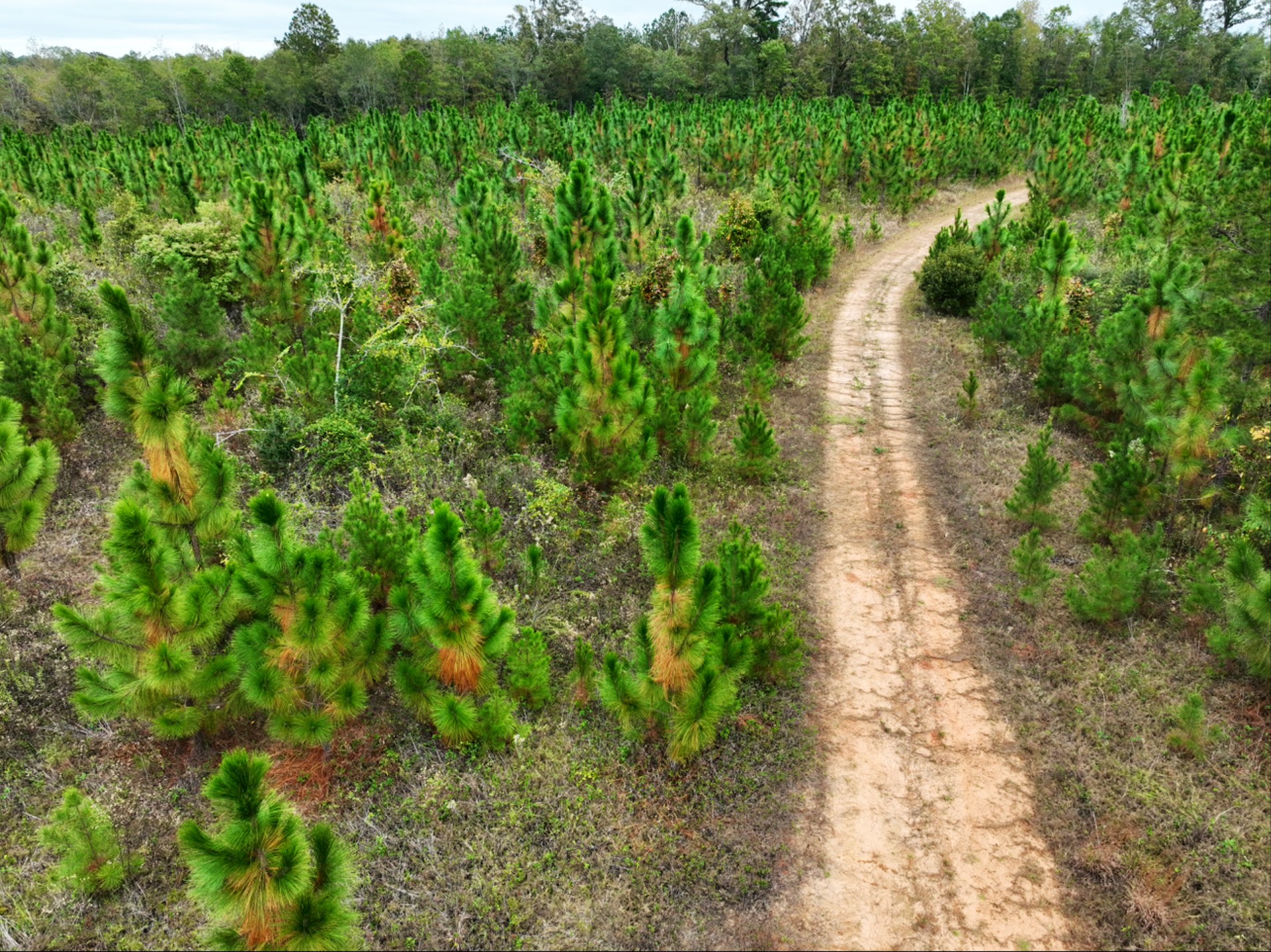
Uplands go back to pine and do well. Wet bottoms are usually left to seed in, and that call holds only after a walk shows seed trees and young stems standing.

Pine seedlings set in a wet bottom survive poorly. Split the tract and treat each part for what it is.


Thinning Keeps the Stand Growing

Crowded pine slows down. Thinning gives the best trees room and brings income years before the final cut.

Have someone look at the stand before you set a date. Tree size, spacing, and the way in tell the story, not age alone. A stand left too thick loses growth on every tree in it.


Nearby Counties

We also work with landowners in nearby counties, including Jasper, Wayne, Lauderdale, Newton, and Jones.


General Guidance

How the work itself is done is explained once, site-wide, rather than repeated county by county:


Talk It Over First

Walk the place with a forester before deciding anything. Contact us to set up a visit.

Timber sale activity in this county

Recently Closed / Under Negotiation

See all current timber sales or the full sale results archive.

Common questions

Common Questions From Clarke County, MS Timberland Owners

Volume first, then price. The cruise establishes how much of each product is standing — pulpwood, chip-n-saw, sawtimber, poles where they exist. The timber appraisal applies current product values and accounts for what the access and haul will cost. Quality and operability shift the result as much as volume does.

Clarke County tracts are mostly loblolly plantations on rolling uplands with hardwood drains and Chickasawhay bottomland on the larger holdings. Day to day the work is cruising, laying out thinnings, marketing a sealed-bid sale, watching the harvest, and writing a forest management plan so the next decision is not made from scratch.

No. Closeout means walking the BMPs, the roads, and the decks, then setting up what comes next: reforestation, a first-year herbicide release, and in time timber stand improvement and prescribed burning.

A day or two of fieldwork on most tracts, longer on big or broken ground, then a few days to run the numbers and write it up. Plot count depends on how variable the stand is, not on a fixed rate per acre.

Yes. Clarke County is in east-central Mississippi along the Chickasawhay River, on the Alabama line, and we also work with landowners in Lauderdale, Newton, Jasper, Wayne, Jones, and Choctaw (AL). Scheduling a property walk depends on current fieldwork, tract location, weather, and access, so contact us to discuss availability.

What Is Pine Decline? — Field Video

Nearby markets

Nearby counties and timber markets

Timber buyers, mill access, and haul economics often cross county lines. These nearby counties are part of the broader area where we represent landowners.

Mississippi coverage

Part of our Mississippi forestry coverage

View every Mississippi county we represent, browse the services most requested by Mississippi landowners, or read the overview of how we work across the state.

Serving Clarke County, MS

Talk With a Registered Forester Serving Clarke County, MS.

MS / AL Registered Forester #2175

Whether you have ten acres or ten thousand, our team works for the landowner — never the mill. Based in Meridian, MS and serving timberland across Mississippi and western Alabama.