
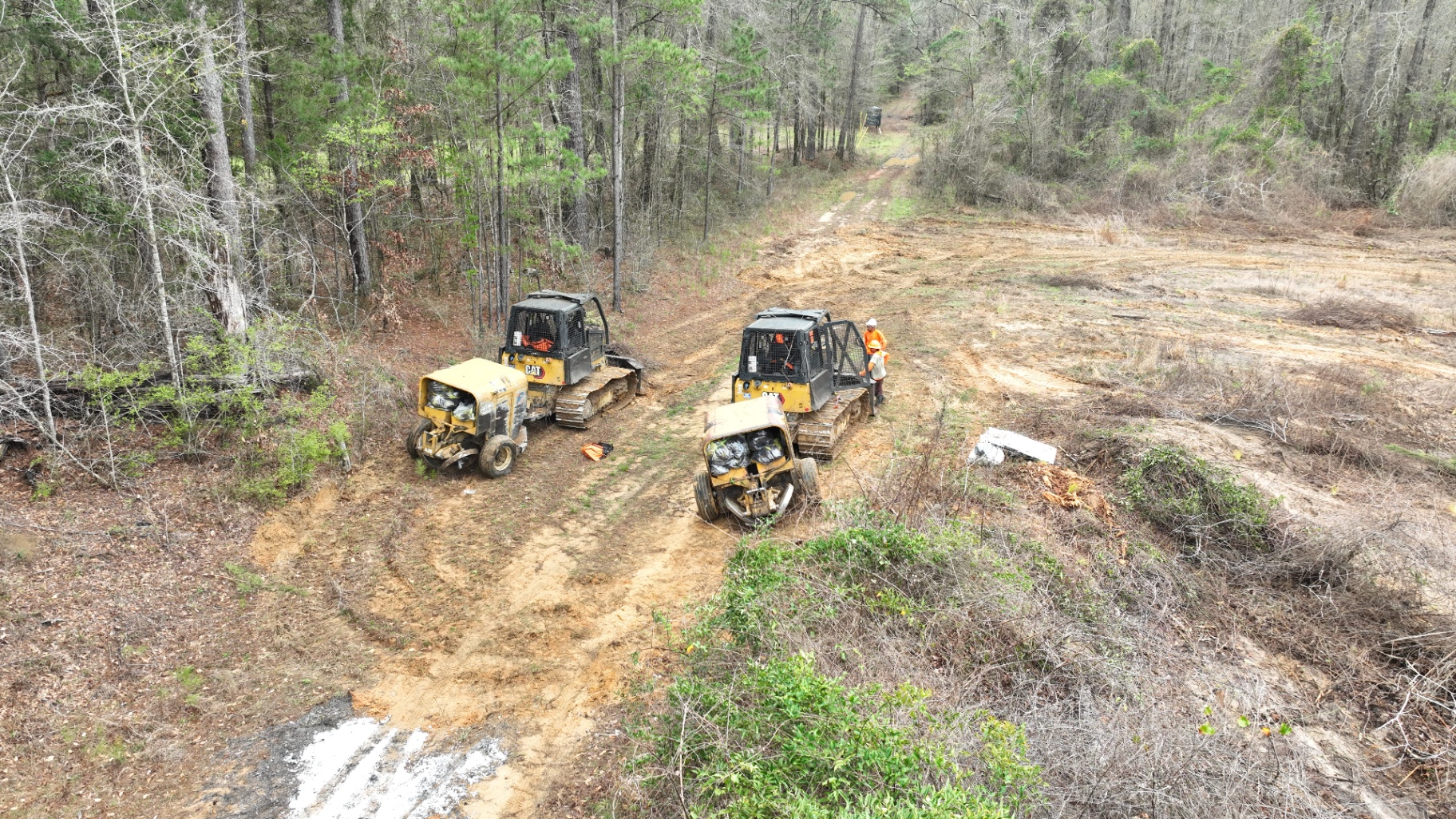
Greene County is some of the most active pine ground in southeast Mississippi. Leakesville sits in the middle of a working mill cluster that pulls north toward Waynesboro and Laurel, east into the Mobile and Lucedale sheds, and south toward the OSB and chip plants near the Alabama line. US 98 and MS 63 keep haul access strong year-round, and most of what I walk here is loblolly plantation on Citronelle uplands with hardwood bottoms running into the Chickasawhay and Leaf drainages.
The recurring question on a Greene County tract isn't whether the timber will move — it will. The question is whether the sale is structured to bring real competition from mills working in three different directions, or whether it's just getting handed to the first crew that drives by. That's the difference between a tract that clears its market value and one that quietly leaves money on the stump.
Pine Belt Conditions That Shape Value in Greene County
Most of the working timberland in Greene County is managed loblolly on sandy Citronelle and McLaurin-series soils — productive ground that responds well to thinning, prescribed fire, and disciplined reforestation. The sandhill ridges south of Leakesville will support longleaf where the site index lines up, and longleaf restoration is real here, not theoretical. The bottomland hardwood along the Chickasawhay and Leaf — sweetgum, water oak, cherrybark, cypress, tupelo — is a separate market that gets undervalued whenever it's rolled into a pine-only cruise.
Operability is the local variable that shows up in every bid sheet. Bottomland tracts along the Chickasawhay turn soft in winter and stay wet long after the storm passes. Loggers price that risk into their offers. Dry-window marketing on the upland Citronelle ridges almost always outperforms a December bid date on a wet-bottom tract, and the difference shows up in the lump sum.
The Greene County Mill Pool — Three Directions, Real Competition
Leakesville-area landowners have a structurally favorable mill picture. Pulpwood and chip-n-saw move into the Pine Belt mills around Waynesboro, Laurel, and Hattiesburg. Sawtimber and poles reach into the larger Hattiesburg and Lucedale operations. South-end tracts pull bids from the Mobile-area pulp and OSB plants across the Alabama line. When a sale is properly marketed to all three corridors, four to six qualified bidders is the norm, not the exception.
That structural advantage gets quietly thrown away on tracts that are sold to the first buyer who calls. A single offer is one number, not a market read. A sealed-bid timber sale across the full Greene County buyer pool routinely clears that opening number by a margin that pays for the cruise and the consulting fee several times over.
Example from the field. On a Leakesville-area tract south of town, the landowner had been talking to one buyer for about a month and was close to signing a verbal lump-sum offer. A measured cruise turned up a real pole-grade component the original buyer wasn't pulling out as its own product, plus a stand of cherrybark and water oak along the Chickasawhay drain that had been priced as pulp. We separated the products, marketed the sale to the Waynesboro / Laurel / Lucedale / Mobile mill pool, and the final sealed-bid number cleared the original offer by a margin that made the cruise pay for itself many times over.
Longleaf Restoration on Greene County Sandhills
The sandhills south and east of Leakesville will grow longleaf as well as anywhere in the state, and there's real cost-share and carbon-program money on the table for landowners willing to put the rotation in. Longleaf isn't a quick payback — the rotation is longer, the seedling cost is higher, and the first commercial thinning sits further out than a loblolly stand. But the pole market on a well-managed longleaf stand at age 22 to 25 is materially better than the same age in loblolly, and the prescribed-burn regime that longleaf demands keeps the stand cleaner, lower-hazard, and worth more at every entry.
If your tract has the site to support it and the goals to justify it, longleaf on the sandhills is the kind of decision a written forestry management plan should capture explicitly — not a default falling out of the seedling order. Reforestation done right starts with the species call.
Thinning Timing on Greene County Loblolly
Most Greene County loblolly plantations are ready for a first thinning between ages 14 and 18 depending on planting density and site index. Miss that window by three or four years and the stand stagnates, basal area climbs past the southern pine beetle threshold, diameter growth stalls, and the residual value at final harvest crashes. A measured timber stand improvement walk-through tells you which window you're in — and on most tracts the per-acre stumpage on a properly timed second entry outperforms the first.
Greene County stands also respond well to mid-rotation prescribed burning. The hardwood midstory pressure here is real, the beetle risk is real, and the grade differential at final harvest between a burned and an unburned plantation is usually visible in the bid sheet.
Contracts That Match Greene County Conditions
Standard one-page logger contracts don't hold up on this kind of ground. The protections that matter on a Greene County tract include explicit wet-weather shutdown thresholds keyed to rutting depth, road-restoration language with a punch-list at closeout, SMZ markers along the Chickasawhay and Leaf drainages, a performance bond proportional to the sale, and clean load-reconciliation reporting so the per-ton math is auditable on the day. A timber appraisal backs the contract with measured numbers rather than verbal estimates.
If You Own Land in More Than One County
A lot of Greene County families also hold tracts in the adjacent counties — Wayne, Perry, George, Jones, and across the line into Mobile and Washington County, Alabama. The mill pool overlaps heavily across that footprint, and running coordinated sales on adjacent tracts almost always strengthens the bid sheet versus marketing each one in isolation.
The Right Time to Call
The right time to call about a Greene County tract is before the sale gets locked in by a verbal handshake, not after. The first walk-through and conversation are free, and we'll give you an honest read on whether the stand is ready, whether the market is favorable, and whether the structure of the sale is set up to bring the competition that Greene County's mill pool actually supports. There's no obligation to list the timber with us — the right answer for some tracts is to wait, thin, burn, and hold.
If you own timber in Greene County and want a clear, independent read on what the property is carrying and what the market will actually pay for it, that conversation is the first step. Contact Southeast Forestlands to schedule a walk.
About Greene County, Mississippi for Timberland Owners
Three things separate the Greene County tracts that perform from the ones that don’t: how the bottomland gets handled when the Chickasawhay’s running high, whether longleaf is actually a fit on the sandhill sites or just a grant-cycle conversation, and whether the sale was exposed to the Waynesboro, Laurel, Hattiesburg, Lucedale, and Mobile-area mills as separate buyer pools instead of one number. Pine plantation on the Citronelle ridges is the easy half of the work here. Getting paid for the rest is the part that takes a written plan.