
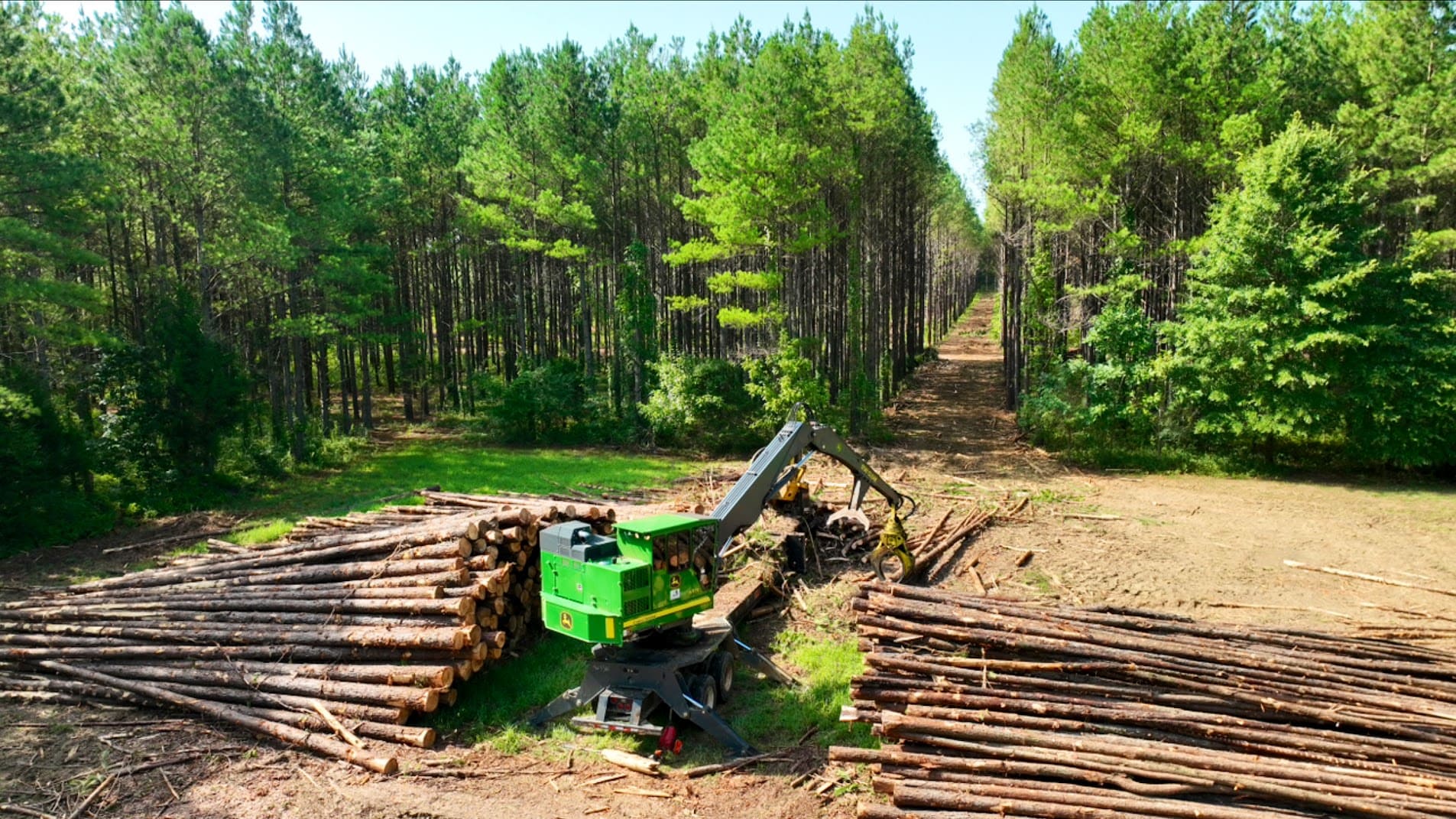
Perry County sits in the southeast Mississippi Pine Belt with the De Soto National Forest wrapping much of the county and Camp Shelby in the middle. Timberland here often runs to planted loblolly and longleaf on sandy Citronelle uplands with hardwood drains and cypress-tupelo bottoms along the Leaf River, Black Creek, and Tallahala Creek. Mill draw pulls from Hattiesburg, Wiggins, and the wider Pascagoula corridor to the south and from Laurel and the Wayne–Waynesboro corridor to the east, so tracts in Perry County generally have more than one shed available if the sale is exposed to both.
The recurring practical questions on a Perry County tract tend to come down to thinning timing on planted pine, whether access can support a wet-weather harvest, whether the stand fits a prescribed-burn rotation, and whether the sale is being exposed to enough buyers to produce a real market read.
Longleaf, Loblolly, and the De Soto Boundary
Perry County stand types vary from planted loblolly on rolling uplands to longleaf on the sandier ground and hardwood drains and cypress-tupelo along the bottoms. A single tract may carry more than one stand type, and management decisions — thinning schedule, prescribed burning fit, regeneration species — generally depend on the specific stand rather than a county-wide default. Tracts adjacent to the De Soto National Forest may involve boundary review before harvest planning starts.
Example forestry scenario for local landowners. Consider a Perry County loblolly tract near the De Soto boundary that has been described as “hard to sell” because the access includes a wet-natured crossing. On some tracts, structuring the sale around a dry-season harvest window and a contract that pins down road, crossing, and BMP commitments may make the tract more attractive to buyers with the equipment and crews to work it responsibly. Whether that approach produces a wider bid range on any specific tract depends on stem quality, product mix, and current buyer activity, and only a cruise and market read will confirm.
How the Hattiesburg–Laurel Corridor Draws From Perry County Tracts
Buyer interest on a Perry County tract is generally shaped by the Hattiesburg cluster to the west, the Laurel and Wayne–Waynesboro corridor to the east, and the Wiggins and Pascagoula-area mills to the south. Pulpwood, chip-n-saw, pine sawtimber, and poles from well-managed longleaf may all find outlets. Which buyers engage depends on the tract's product mix, haul distance, and how far in advance the invitation goes out. A sealed-bid sale that reaches across both sheds generally tests the walk-up offer against a wider buyer pool than a single-shed solicitation.
Access, Wet-Ground Crossings, and Season Fit
Because many Perry County tracts include bottom-ground crossings along the Leaf River, Black Creek, or Tallahala Creek drainages, access is often a first-order decision rather than a last-minute concern. Structuring the sale around a defensible harvest window and mapping road maintenance, gravel commitments, streamside management zones, and BMP requirements into the contract before bid tends to give buyers a known set of conditions to price against. Wet-natured tracts may market better for summer dry-down windows when the landowner's timeline allows.
Prescribed Burning and Longleaf Maintenance
On the longleaf side of the county, a maintained burn rotation generally supports understory condition, wildlife habitat, and the pine stand's response to future thinning. Prescribed burning fit depends on stand type, fuel loading, adjacent ownership, and weather windows rather than a county-wide default. Where a burn rotation is not appropriate, timber stand improvement or other management tools may fit better.
Reforestation Decisions After a Perry County Harvest
Cutover Perry County ground may be a candidate for loblolly, longleaf, or mixed regeneration depending on site index, drainage, and ownership objectives. Sandier uplands often favor longleaf; better-drained loblolly ground may still fit loblolly. Site prep, species choice, seedling source, and planting density decisions generally live inside a written forestry management plan so the next rotation is planned rather than reactive.
Sale Structure and Independent Representation
A well-prepared Perry County sale generally begins with a cruise that segregates product classes across the uplands, drains, and bottoms, followed by a written prospectus, an invite list that spans both the Hattiesburg and Wayne sheds, and an exposure window long enough for qualified buyers to respond. Southeast Forestlands does not buy timber, log timber, or accept referral fees from buyers or loggers. Independent representation is the entire offering — the cruise, the sale prospectus, the bid opening, and the harvest oversight are all run on the landowner's behalf.
Neighbor Counties and Cross-Shed Marketing
Buyer participation, mill draw, and haul economics in Perry County may reach into Forrest County, Jones County, Wayne County, and neighboring Pine Belt counties. When a landowner holds acreage in more than one of those counties, a single coordinated marketing package may hold up better than a sequence of separate sales.
Start the Conversation
If you own timberland in Perry County, the first step is generally a conversation — no obligation, no buyer in the room, and a straight read on whether selling, thinning, burning, or writing a management plan first is the right call for the tract this year.
Reach out when you are ready, or read more about our independent forestry consulting services for Mississippi landowners.
Where a tract borders public land, boundary paint, deeded corners, and prior survey work generally deserve a walk before harvest planning starts so the sale is set up against a known line rather than an assumed one.
Because Perry County tracts sit within reach of more than one mill shed, an invitation list that spans both sheds generally produces a wider range of qualified bids than a single-shed solicitation, especially where the tract carries a mix of pulpwood and merchantable sawtimber.
Regeneration decisions made on the day the last log leaves the tract tend to be reactive; the same decisions made inside a written plan, with site prep, species, and stocking calibrated to the ground, generally produce a stand that performs better through the next rotation. Cost-share program availability may factor in, though eligibility and funding depend on current programs and should be evaluated tract by tract.

