
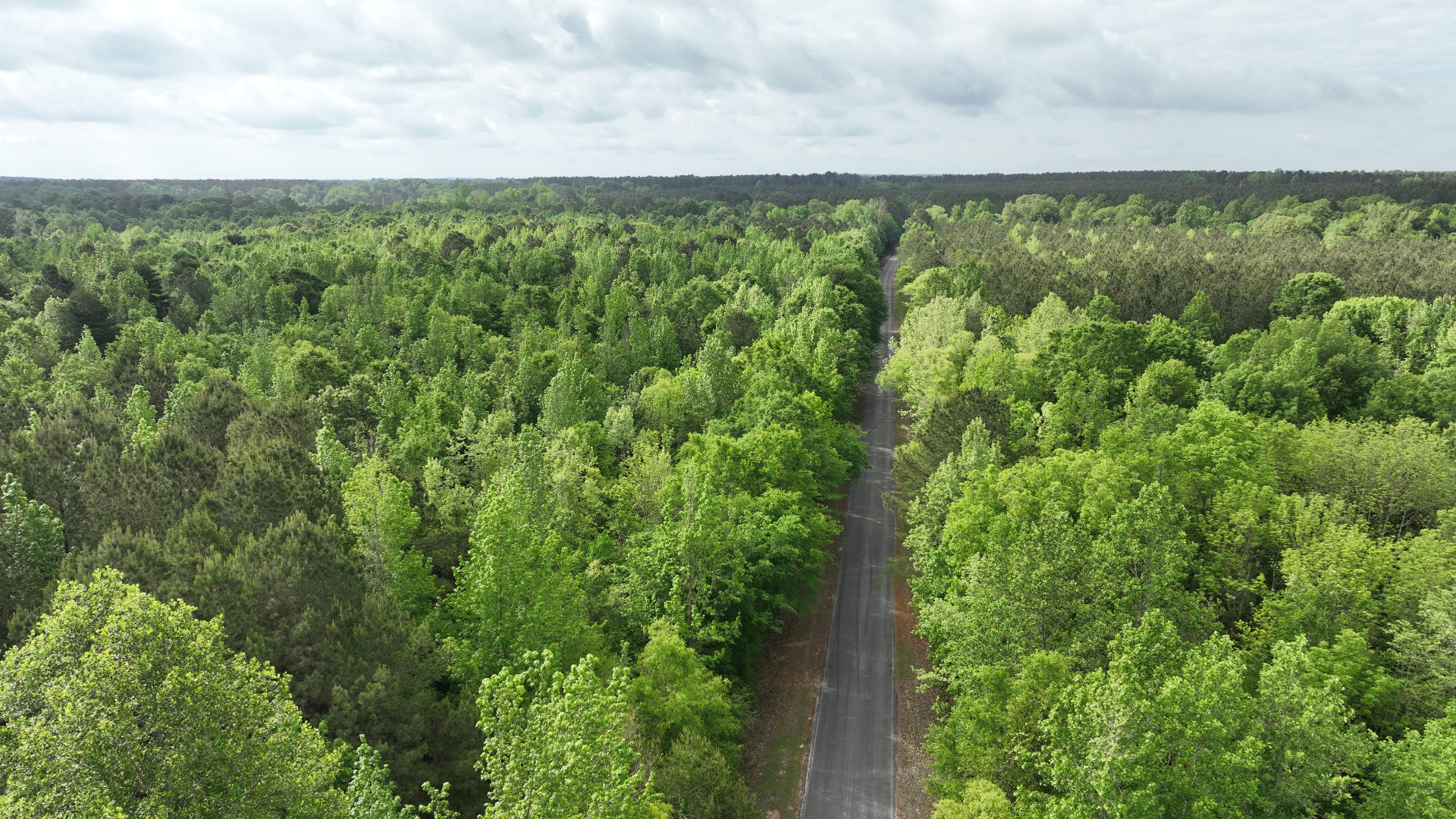
Newton County sits in east-central Mississippi where rolling pine hills meet patches of heavier prairie-type clay. Those two kinds of ground behave nothing alike after a rain, and many tracts here have some of each.
Southeast Forestlands works only for the landowner. We do not buy timber and we are not paid by mills.
Sandy Ridges, Heavy Patches
The sandy loam ridges drain well and hold up under equipment for much of the year. The heavier clay spots dry slowly and stay slick.
Knowing which is which decides where the road goes and which acres get cut first.
Bottoms Along the Creeks
Low ground along the Chunky and its feeder creeks stays wet and grows hardwood. Pine seedlings set there survive poorly.
Keep equipment out of those strips except at planned crossings.
Thinning Decisions
Loblolly on the good ridges here grows quickly and gets crowded. A stand that is too thick puts on less wood every year.
Have the trees measured before you decide. Size and spacing matter more than the planting date.
Plan the Job in Pieces
A tract with both firm ridges and heavy flats should not be logged as one block.
Work the ridges in the wet months and save the heavy ground for a dry stretch. That one choice prevents most rut damage.
Replanting
Pine goes back on the ridges and the drier slopes. The wet bottoms are usually left to restock naturally, which only holds where a walk shows seed trees and young stems already there.
Brush control is usually the main cost, not soil work.
Walk It
Lines, old road beds, and soft spots do not show on a map. They show on foot.
Walk the place with a forester before you commit to a sale.
General Guidance
For more on how we handle each part of the work, start with these guides:
- What a timber cruise measures
- How a sealed-bid timber sale works
- How we sell timber
- Wet-weather logging and BMPs
- Thinning decisions
- Regeneration and replanting
- All forestry services
Talk It Over First
Talk with a forester before deciding anything. Contact us to discuss your goals; the first review of your property generally happens online.