What a Forestry Management Plan Actually Does
A written forestry management plan is the difference between owning timberland and managing it. Most of the value lost on family timberland in Mississippi and Alabama is not lost to one bad decision — it's lost to drift. No record of stand age, no record of the last thinning, no schedule for the next burn, and decisions made one phone call at a time when a buyer shows up at the gate.
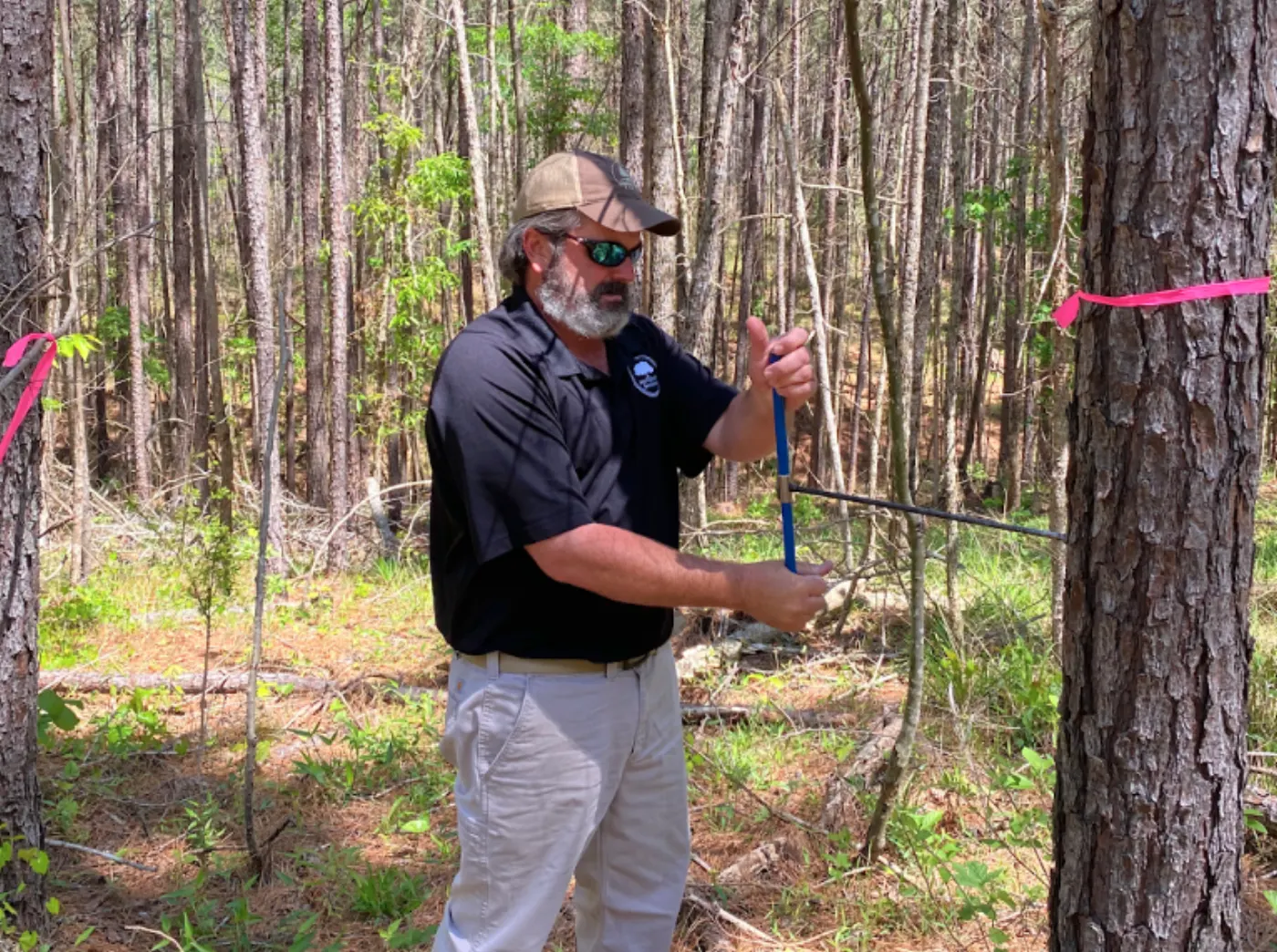
Our plans are written stand by stand for the way the property actually sits today — not from a desk and an aerial photo. We walk the tract, cruise the timber, write down what is there, and put the next ten years on a calendar tied to your ownership goals.
What We Look At On The Ground
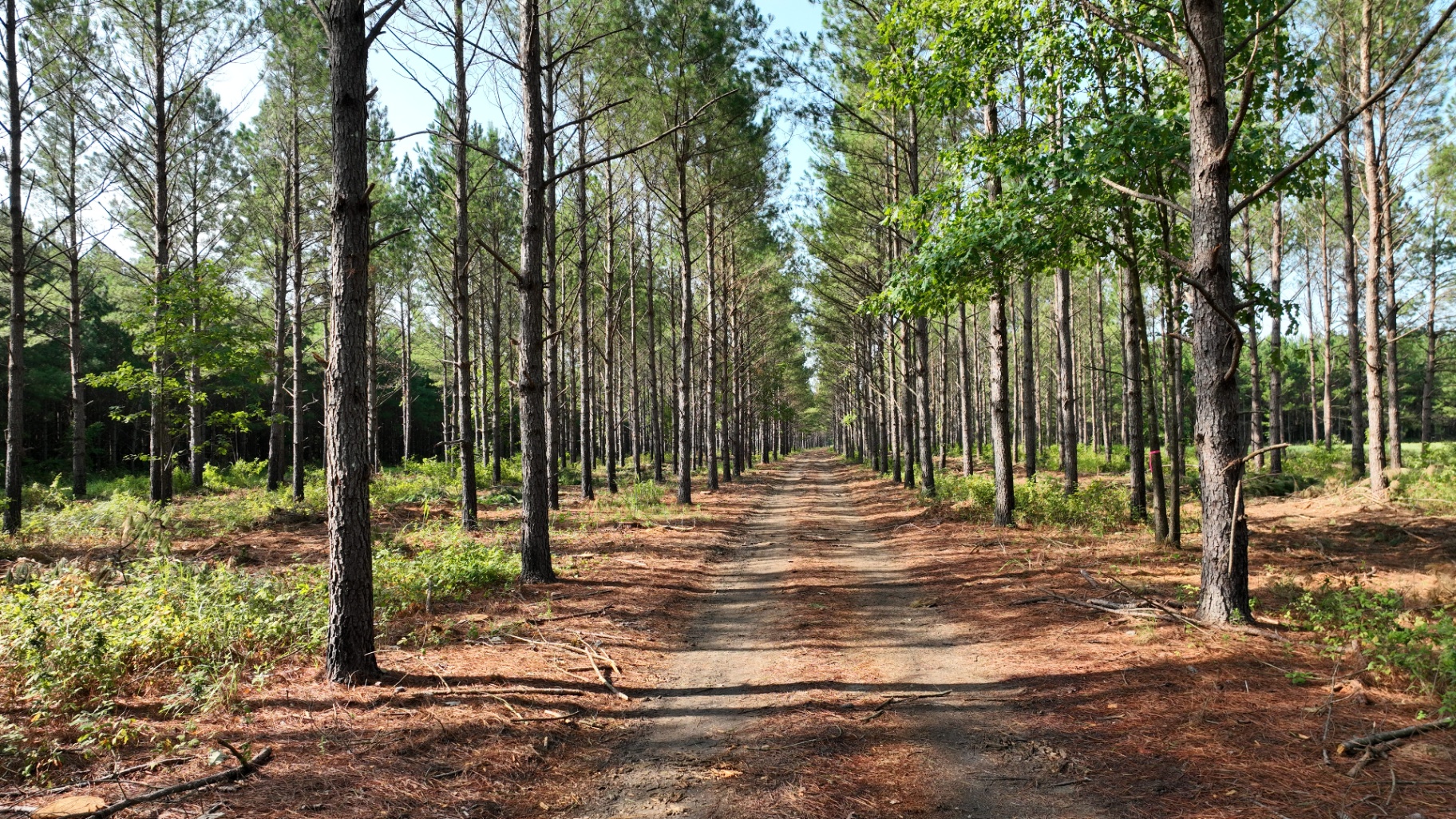
Before we write a single recommendation, we stratify the property into stands and cruise each one. Species mix, basal area, product class breakdown, stand age, stocking, mid-story competition, and the condition of the residual stand after any prior thinnings. We also write down the things a plan often skips and a logger later complains about — road system condition, gate and bridge access, SMZ width along creeks and drains, painted boundary line condition, and any encroachment or fence-line drift on shared boundaries.
When to Commission a Plan
The right time to put a written plan together is almost always sooner than landowners think. Inherited timberland is the most common trigger we see. Other good triggers: the year before a planned thinning, the year after a clearcut, anytime cost-share programs are on the table, and anytime a property is changing hands inside a family. A plan written before those moments is far more useful than one written after.
If a tract has not had a forester on it in ten years, the first plan is rarely fancy. It is a current inventory, a stand map, a five-to-ten-year action calendar, and a short list of decisions that need to be made in the next twelve months. That is enough to stop the drift.
Common Mistakes Landowners Make
The first mistake is treating the plan as a one-time document. A plan that sits in a drawer for fifteen years is a snapshot, not a management tool. Stand conditions change, markets change, and family situations change. We update plans on a schedule, not just when something breaks.
The second mistake is letting whoever is buying the timber write the plan. A management plan and a timber sale should not be authored by the same party. Independent representation matters here for the same reason it matters at the sale — the incentives are not aligned.
The third mistake is skipping the plan to qualify for cost-share programs. NRCS EQIP, CSP, and the Mississippi Forest Resource Development Program (FRDP) all reward landowners who can show a written plan and follow it. The plan often pays for itself the first time a cost-share check clears.
Counties Where We Often Write Plans
A short list of counties where we have done this work recently. If your tract is in or near one of these counties, we can usually be on the ground within a week.
Then we sit down with the landowner. A plan that ignores ownership goals is just a forester's opinion. Some families are managing for top-end timber value at the next sale. Others are managing for deer and turkey, for a long-rotation longleaf restoration, for an heir who will inherit the tract, or for a future estate that needs defensible records. The same tract gets a different prescription depending on which of those is true.
What The Plan Puts On Paper
Every written plan is stand-specific. For each stand we put on paper:
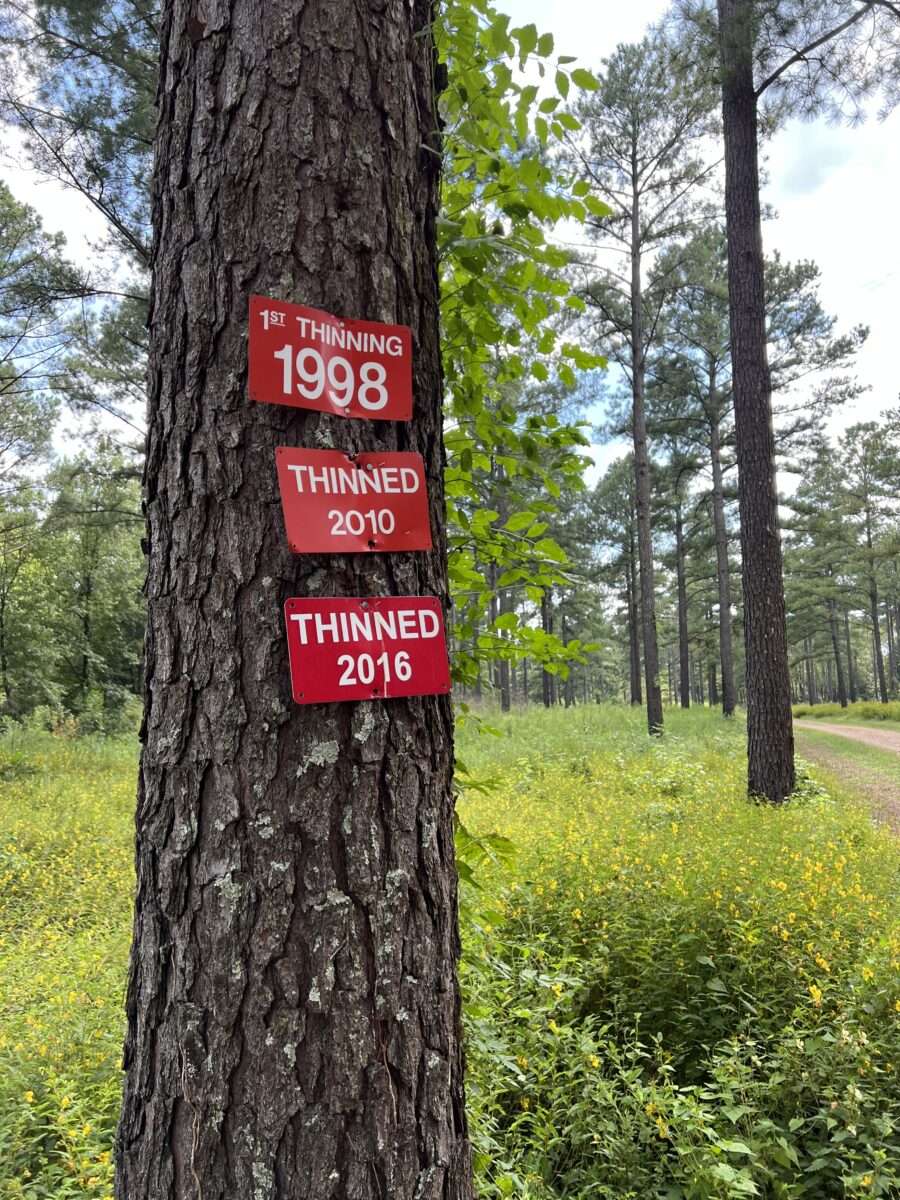
- Thinning timing — first thinning vs second thinning, target residual basal area, and the calendar year it should happen.
- Prescribed burning — dormant-season vs growing-season rotation, fire-line prep, and the 3–5 year cycle once the stand can carry fire.
- Herbicide programs — release sprays in young stands, mid-story control in mature pine, and invasive species work where needed.
- Reforestation prescription — species, site prep, planting density, and the year-two release pass for any stand due to clearcut.
- Wildlife objectives — firebreaks doubled as food plots, hardwood retention along drains, openings, and timing of work around the rut and turkey season.
- Cost-share eligibility — NRCS EQIP, the Mississippi Forest Resource Development Program (FRDP), and Alabama programs that fit the prescriptions already in the plan.
- Timber sale preparation — which stands are next, what product class mix they'll carry, which mills are in range to buy them, and what marketing window fits.
- Road and SMZ maintenance — day-lighting woods roads, culvert work, and the streamside management zone widths to hold the logger to.
Monitoring And Revisions
A management plan is not a one-time document. After a thinning, after a burn, after a wind event, the plan gets updated. We re-walk the affected stands, note the condition, and adjust the calendar for what is now in front of you — not what was true five years ago.
How Sale Decisions Fit The Plan
When a stand inside the plan reaches the sale window, we already know its volume, product class breakdown, the mills in range to buy it, and access constraints. The plan tells us when to test the market — not the other way around. That's the difference between a sale that is planned and timed and a sale that is triggered by a buyer's phone call. We market the sale through a sealed-bid process to the qualified buyer pool that fits the tract, then represent the landowner through contract, harvest inspection, and closeout. See our timber sales page for how that side of the work runs.
Consulting Forester for Forestry Management Plans Near Me
Southeast Forestlands writes management plans for landowners across Mississippi and Alabama. Independent representation, written stand-by-stand prescriptions, and a 10-year calendar you can actually follow. Contact us to schedule a property walk and a written management review.
Plans written for Southeast Forestlands clients are structured to satisfy the American Tree Farm System 2021–2026 Standards and, where applicable, the documentation requirements of NRCS EQIP and the Mississippi Forestry Commission Forest Stewardship program. Each plan is authored by Eric Entrekin, Registered Forester (MS & AL).
Related Field Note: Crown classes in forest management.