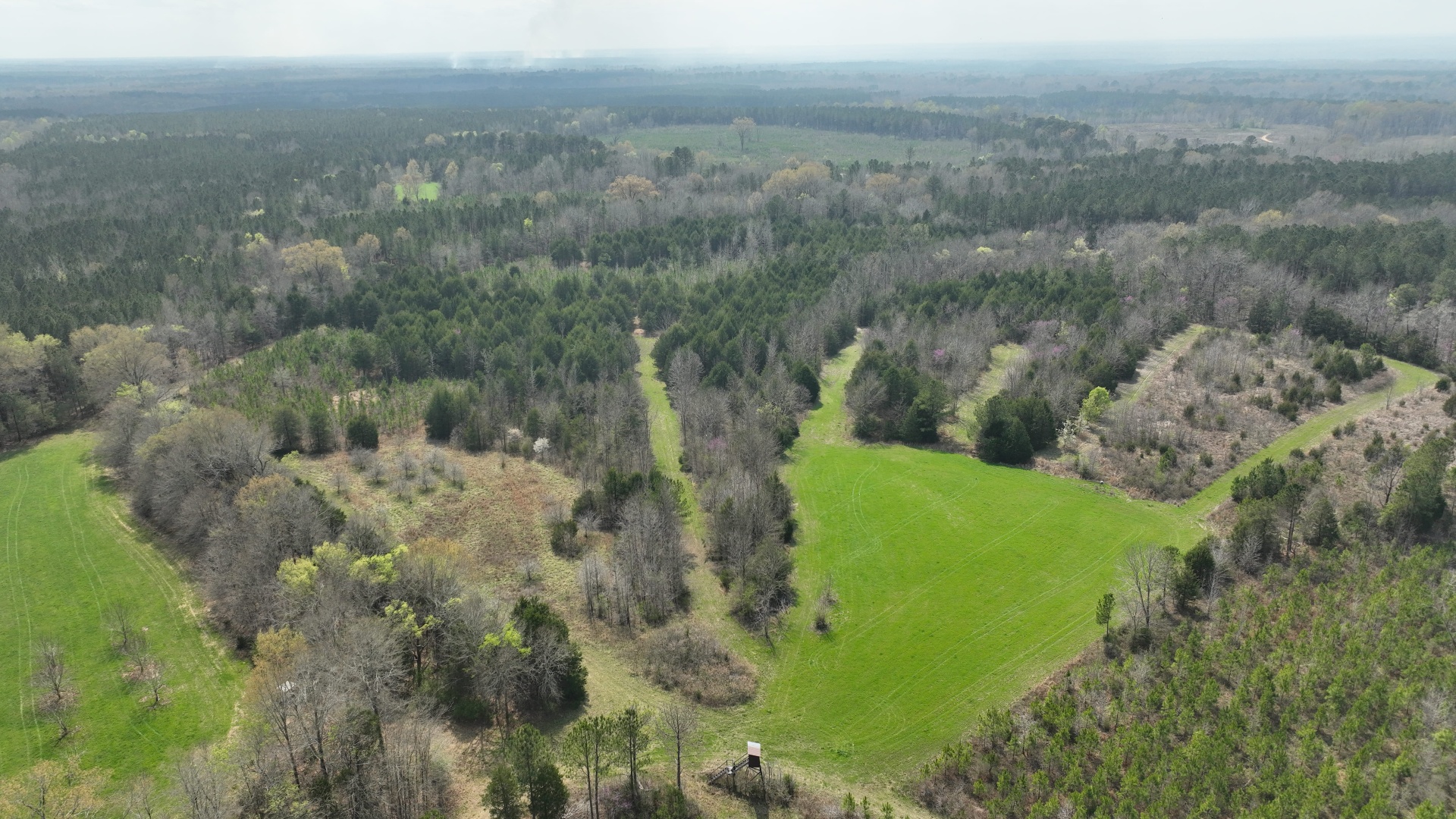
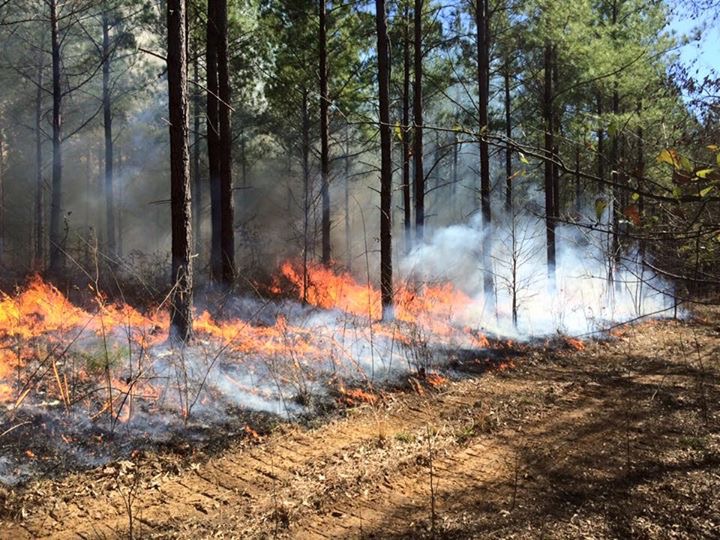
Prescribed burning — sometimes called a controlled burn — is the planned use of fire under a specific weather window to meet a defined forestry objective on a specific tract. It is one of the most useful tools we have for managing pine timberland in Mississippi and Alabama, but only when it is matched to the stand, the season, and the landowner’s goals. As a Registered Forester in Mississippi and Alabama and a USDA NRCS Technical Service Provider, I write a burn prescription the same way I would write a thinning prescription — based on what is actually standing on the tract, not a generic checklist. The objective is almost always the same: protect timber value, set up the next silvicultural step (thinning, herbicide release, or reforestation), and leave the woods in better shape than we found them.
How Prescribed Burning Can Improve Your Timber
Most of the burns we plan for landowners are doing one or more of the following jobs on the ground:
- Reducing hardwood competition in pine stands. Sweetgum, hickory, and oak sprouts pull moisture and nutrients away from your pines. A well-timed growing-season burn knocks back that mid-story without harming a properly stocked pine overstory.
- Preparing stands for first and second thinning. A clean understory makes a timber stand improvement thinning operation safer, faster, and cleaner — which usually translates to better stumpage at the timber sale and less residual damage.
- Lowering fuel loads before wildfire season. Pine needle litter, logging slash, and accumulated hardwood leaves carry fire fast. Reducing that load on a controlled day means a wildfire later doesn’t become a crown fire that takes your sawtimber with it.
- Improving wildlife habitat and hunting property value. Burned stands flush native legumes, broomsedge, and browse within one growing season. Deer, turkey, and quail respond quickly, and so does the appraised value of a property marketed for hunting.
- Supporting EQIP and CSP forestry practices. Prescribed burning is a recognized NRCS practice (338). When it fits your conservation plan, cost-share can offset a meaningful portion of the per-acre cost.
- Protecting long-term timber value. A stand that has been burned on a regular rotation tends to thin cleaner, grow straighter, and sell better at maturity. Buyers notice.
When We Recommend This Service
Burning is not the right call on every tract, every year. These are the conditions where we typically put it on the schedule for a landowner:
- Before first thinning — to clean out understory and improve access for the logging crew.
- The growing season after a thinning harvest — to control hardwood sprouts that explode in the new sunlight.
- Heavy hardwood encroachment in a pine stand that was last burned a decade or more ago.
- Fuel buildup next to homes, barns, food plots, or property lines where a wildfire would be costly.
- Wildlife habitat objectives — especially properties managed for deer, turkey, or quail.
- Forest management plan implementation where a burn rotation was written into the prescription.
- EQIP or CSP practices that include NRCS practice 338 (prescribed burning) in the conservation plan.
- Long-term timber value improvement on tracts being held for a future sawtimber rotation.
What to Expect from a Controlled Burn on Timberland
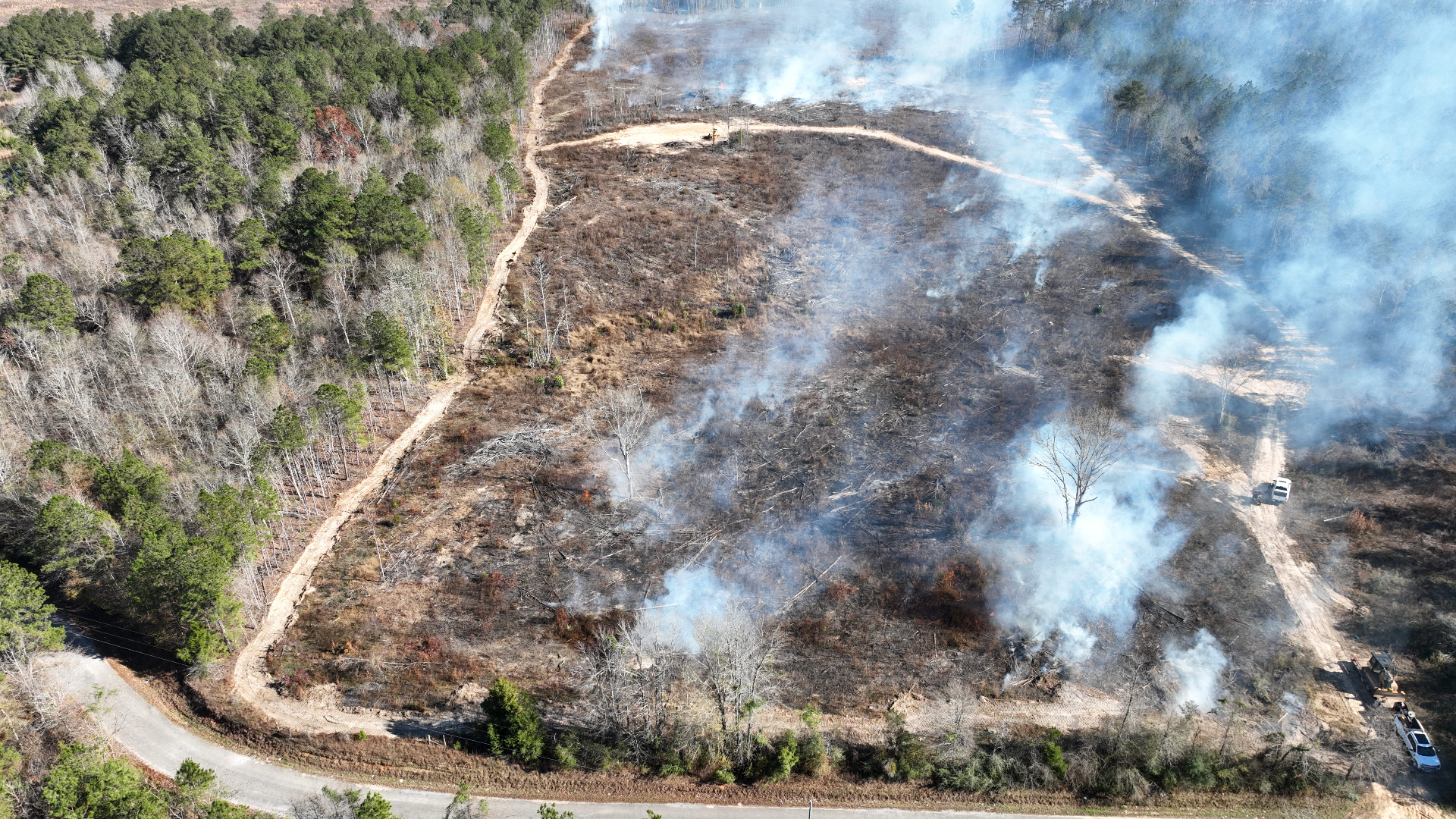
Every burn starts with a written burn plan tied to your specific tract. We walk the unit, measure fuel loading, identify smoke-sensitive neighbors and roads, lay out fire breaks, and define the weather window we can safely burn inside — temperature, relative humidity, wind speed and direction, and mixing height. Notifications go to the Mississippi Forestry Commission or Alabama Forestry Commission, and we coordinate with adjoining landowners when smoke management requires it. On burn day we ignite according to the plan, hold the lines, and stay on the tract until the fire is out and the smoke has lifted. After the burn, we come back to check stand condition, mortality on any retained stems, and how the understory is responding so the next prescription stays on track.
What Landowners Commonly Ask Us
Should I burn before or after thinning?
Usually both, on different rotations. A pre-thinning burn cleans the understory and makes the harvest safer. A post-thinning burn the following growing season knocks down the hardwood sprouts that come up after the canopy opens.
How often should pine plantations be burned?
For most loblolly stands in Mississippi and Alabama, a 2–4 year rotation works well once the trees are tall enough to carry fire safely — typically after age 8–10 depending on stocking and pruning. Longleaf and habitat-focused tracts often burn on a shorter cycle.
Does prescribed fire hurt timber value?
A correctly executed burn does not. Damage almost always comes from burning the wrong stand, the wrong age class, or under the wrong weather. That is why the prescription matters more than the match.
Can burning help with wildlife habitat?
Yes — it is one of the most cost-effective habitat practices available in the Southeast. Within a growing season you typically see a major jump in native browse, soft mast, and brood-rearing cover for turkey and quail.
Can prescribed burning qualify under EQIP or CSP?
Often, yes. NRCS practice 338 is eligible in both programs when it fits your conservation plan. We help landowners line up the prescription, the contractor, and the documentation NRCS requires.
What about smoke and the neighbors?
Smoke management is part of the burn plan, not an afterthought. We pick weather windows that lift smoke away from highways and homes, notify the state forestry commission, and call adjoining landowners ahead of ignition.
Common Mistakes Landowners Make With Prescribed Burning
Most of the prescribed-burning trouble we get called in to fix on Mississippi and Alabama tracts comes from the same handful of decisions:
- Waiting too long between burns. A stand that has gone 10+ years without fire has fuel loading that a routine burn cannot safely carry. The first burn back in usually requires mechanical or chemical pre-treatment first.
- Burning the wrong age class. Putting fire under a young plantation before the trees can carry it — or under a stand that has not been pruned — scorches crowns and kills residual stems that should have made sawtimber.
- Burning without a written plan. No prescription, no documented weather window, no smoke-management plan. That is how an objective burn becomes a liability event.
- Skipping notification. The Mississippi Forestry Commission and Alabama Forestry Commission expect to be notified. Adjoining landowners should be too.
- Hiring on price instead of prescription. The cheapest crew rarely writes the burn plan, monitors stand condition afterward, or fits the burn into a long-term management strategy.
- Ignoring cost-share. NRCS practice 338 is eligible under both EQIP and CSP. Burning out-of-pocket when a cost-share contract was available leaves real money on the table.
From the Field
Situation. A landowner in east-central Mississippi had a 17-year-old loblolly plantation that had been first-thinned three years earlier and never burned. Hardwood sprouts — mostly sweetgum and water oak — were eight to ten feet tall and competing hard with the residual pines.
Approach. We wrote a growing-season prescription targeting the hardwood mid-story while protecting the pine overstory. Fire breaks were re-disked, the burn was coordinated with the Mississippi Forestry Commission, and ignition was held until we had the relative humidity and wind direction the plan called for.
Outcome. The burn carried cleanly, top-killed the majority of the hardwood sprouts, and left the pine overstory intact. The following spring the understory came back in native grasses and legumes instead of sweetgum, and the stand was on a much better trajectory toward second thinning.
Lesson. Waiting too long between burns turns a routine maintenance burn into a difficult one. Putting a burn rotation in writing — in the forest management plan — is what keeps stands on track for the long haul.
Educational example based on real Southeast Forestlands field experience. Individual tract conditions vary.
From the Field
Top Forestry Consultant for Timberland Near Me
If you are weighing a prescribed burn on your tract in Mississippi or Alabama, talk to a Registered Forester who actively walks timber every week. Southeast Forestlands is independent — we represent the landowner, not a mill or a burn contractor — and as a USDA NRCS Technical Service Provider we can fit the burn into an EQIP or CSP contract where it qualifies. We work with landowners on prescribed burning, timber stand improvement, timber sale preparation, reforestation, wildlife habitat management, and the full forest management plan behind it all. Contact us for a straight conversation about whether burning fits your timberland this year.
Mississippi's Prescribed Burning Act and the Certified Prescribed Burn Manager program are administered by the Mississippi Forestry Commission, with fire-effects research from Tall Timbers Research Station and burn-prescription guidance from the USDA Forest Service Southern Research Station. Burns on Southeast Forestlands tracts are planned by Eric Entrekin, Registered Forester (MS & AL) and executed with a Certified Prescribed Burn Manager on the line.