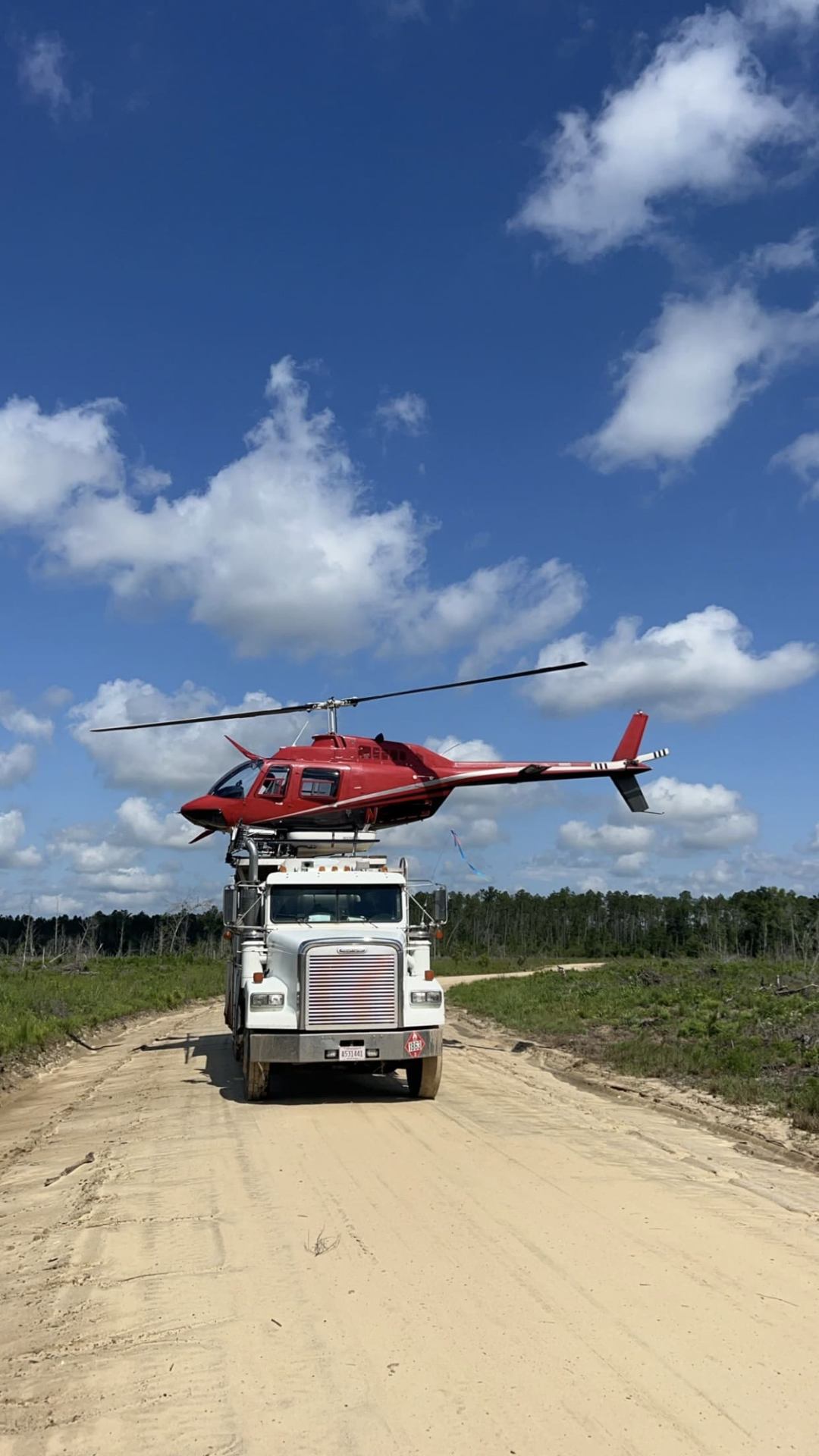
Many of the most successful pine plantations in Mississippi and Alabama receive some form of vegetation control during establishment and early stand development.
Herbicide work is one of the most useful — and most misused — tools in southern forestry. Used at the right time on the right tract, it protects a reforestation investment, releases crop trees, and keeps competing vegetation from quietly eating years of growth. Used carelessly, it wastes money and damages stands the landowner is trying to grow. As a Registered Forester and USDA NRCS Technical Service Provider working timberland in Mississippi and Alabama, Southeast Forestlands represents the landowner — not the chemical company, not the applicator, not the mill — when herbicide decisions are on the table.
Common Vegetation We Target
The competing species on a Mississippi or Alabama tract decide the prescription — active ingredient, rate, timing, and carrier. Two stands ten miles apart can need very different treatments. The species we run into most often include:
- Sweetgum — the most common hardwood competitor in young pine plantations across the region; aggressive sprouter after harvest
- Hardwood sprouts generally — oak, hickory, maple, and others coming back off cut stumps
- Privet — an invasive that takes over understories, bottoms, and old field edges and rarely leaves on its own
- Blackberry and other brambles — heavy herbaceous and semi-woody competition on freshly site-prepped tracts
- Yaupon — dense understory shrub on coastal plain sites that out-competes young pine and complicates burning
- Gallberry — common on wetter flats and longleaf sites, often paired with yaupon
- Chinese tallow where present — invasive, prolific, and difficult to control once established
- Cogongrass, kudzu, and other invasives — site-specific but worth identifying before they take a tract over
- Other woody and herbaceous competition — matched case by case to species, stand age, management goals, and site conditions
Where Herbicide Application Fits in Real Forestry
Most landowners do not need a textbook on herbicides. They need to know when spraying makes sense on their tract, when it does not, and what it is supposed to accomplish. On the ground, herbicide work usually shows up in five situations:
1. Site Preparation Before Planting
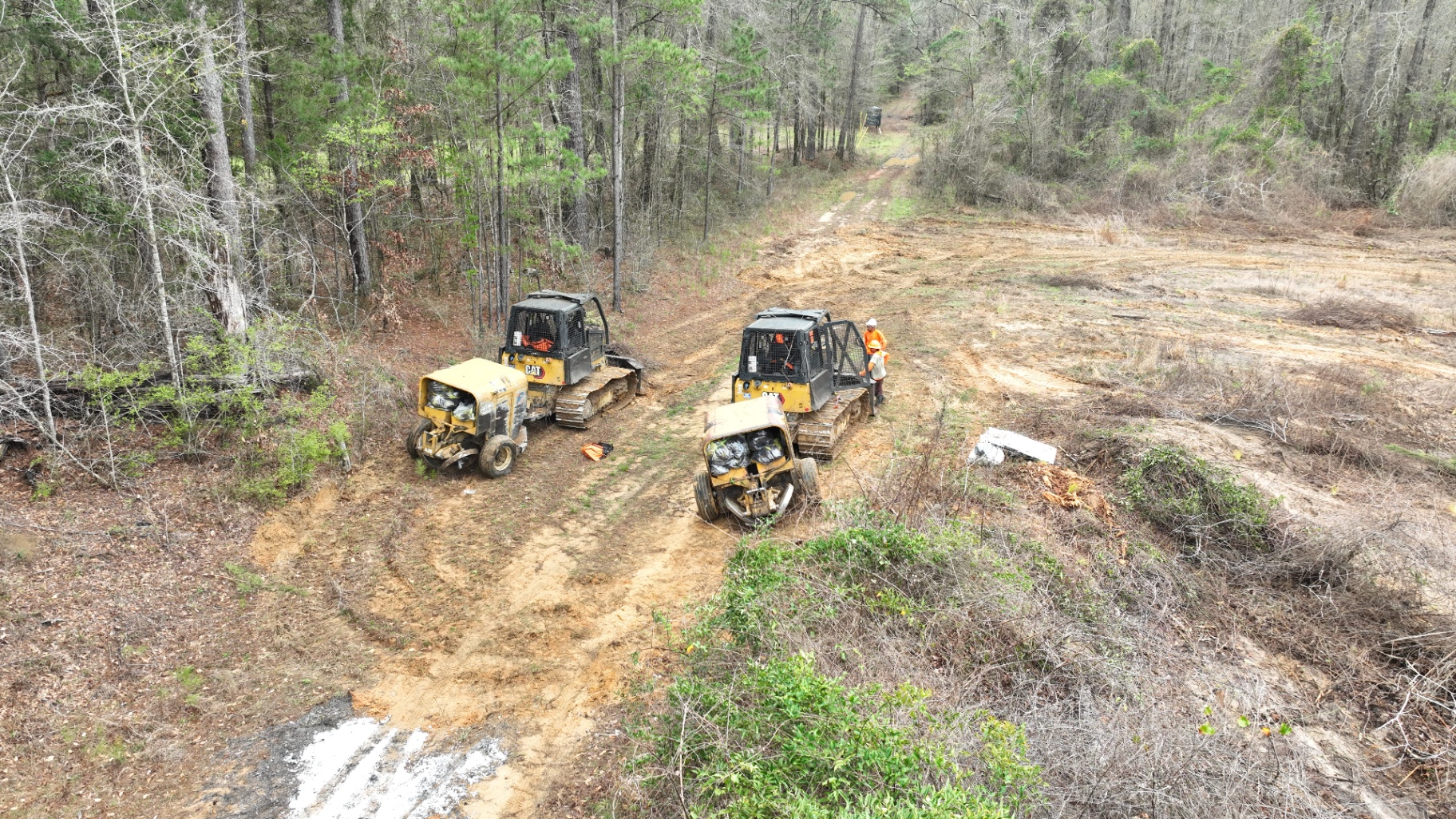
After a clearcut, a tract bound for loblolly or longleaf reforestation is almost always carrying heavy hardwood sprouts, sweetgum, and herbaceous competition. Chemical site prep — sometimes paired with a site-prep burn or mechanical work — knocks that competition back before the planting crew shows up. Skipping it is one of the most common reasons a new plantation underperforms for the entire rotation.
2. Release Spraying After Planting
A young pine stand can lose two to three years of height growth — sometimes more — when hardwood sprouts, sweetgum, yaupon, gallberry, vines, or other competing vegetation overtop the planted seedlings. A properly timed release treatment puts the planted pine back on top of the canopy where it belongs. Timing is everything; waiting until the seedlings are already overtopped is one of the most expensive mistakes a landowner can make.
3. Protecting the Reforestation Investment
Site prep, seedlings, planting labor, and inspections are already sunk costs by the end of year one. A release treatment is almost always far cheaper than replanting a failed stand. The herbicide is not the goal — a healthy, fully stocked, free-to-grow pine stand is the goal.
Protecting the Investment Already in the Ground
By the time a newly planted pine stand reaches its first growing season, the landowner has already spent real money — site preparation, seedlings, planting labor, hauling, and early inspections. Those dollars are sunk. What happens next is what decides whether the investment grows into a productive stand or quietly disappears under competition.
Hardwood sprouts after a clearcut, herbaceous competition in year one, and woody encroachment in years two and three can overtop planted seedlings faster than most landowners expect. A stand that loses two or three years of height growth at the front end rarely catches up — and in worst cases the planting has to be redone.
A properly timed release treatment is almost always far cheaper than losing years of growth or replanting a failed stand. The release is not a separate project; it is part of the same investment as the site prep and the seedlings. Skipping it is how landowners pay for a plantation twice.
4. Timber Stand Improvement
Herbicide also plays a role in timber stand improvement — selective injection or basal treatments on undesirable mid-story hardwood ahead of a first or second thinning, invasive species control (privet, cogongrass, tallow), and prep work before prescribed burning in stands that have gotten away from the landowner.
5. EQIP, CSP, and Cost-Share
Some herbicide site prep, release spraying, and TSI work can fit under USDA NRCS EQIP or CSP when the practice is planned and documented correctly. Eligibility, ranking, and payment rates change — we do not guarantee approval — but we routinely build management prescriptions that line up with these programs as part of a written forestry management plan.
Site Preparation vs Release Spraying
Two of the most useful herbicide applications in southern forestry get confused constantly. They are different practices, done at different times, for different reasons.
Site Preparation
- Conducted before planting, after a clearcut
- Designed to reduce competing vegetation before seedlings ever go in the ground
- Sets up survival, early growth, and stand uniformity for the entire rotation
- Often paired with a site-prep burn or mechanical work depending on slash and species mix
Release Treatment
- Conducted after planting, typically in year one or two
- Designed to protect young seedlings from being overtopped by hardwood sprouts and herbaceous competition
- Buys back the height growth the planted pine would otherwise lose
- Window is narrow — once the competition is above the seedlings, the release recovers less and costs more
Treatment timing is often as important as product selection. A correct product applied at the wrong time can produce little benefit, and the wrong product at any time can damage the stand the landowner is trying to grow.
When Herbicide Application Makes Sense
- After a clearcut, before site prep or replanting
- Before reforestation on a tract carrying heavy hardwood or herbaceous competition
- In young pine stands losing ground to hardwood sprouts, sweetgum, yaupon, gallberry, or vines
- Where invasive species — privet, cogongrass, tallow, kudzu — are taking over
- Before or after prescribed burning, depending on the stand objective
- As part of a written forestry management plan or a USDA practice plan
What We Look For in the Field
Before we ever recommend a spray, we walk the tract. A herbicide prescription written from an office — or from a chemical catalog — is how landowners end up paying for work that does not match the stand. On a typical pre-prescription visit, we are looking at:
- What is actually competing — species, density, height relative to crop trees
- Seedling height, survival, and free-to-grow status in planted stands
- Soil moisture and drainage — wet flats and heavy clays behave differently
- SMZs, drains, ponds, and any sensitive water features that limit product and rate
- Access for ground or aerial applicators, including roads, gates, and landings
- Timing window for the target species and the products being considered
- Whether the right tool on this tract is herbicide, fire, mechanical work — or some combination
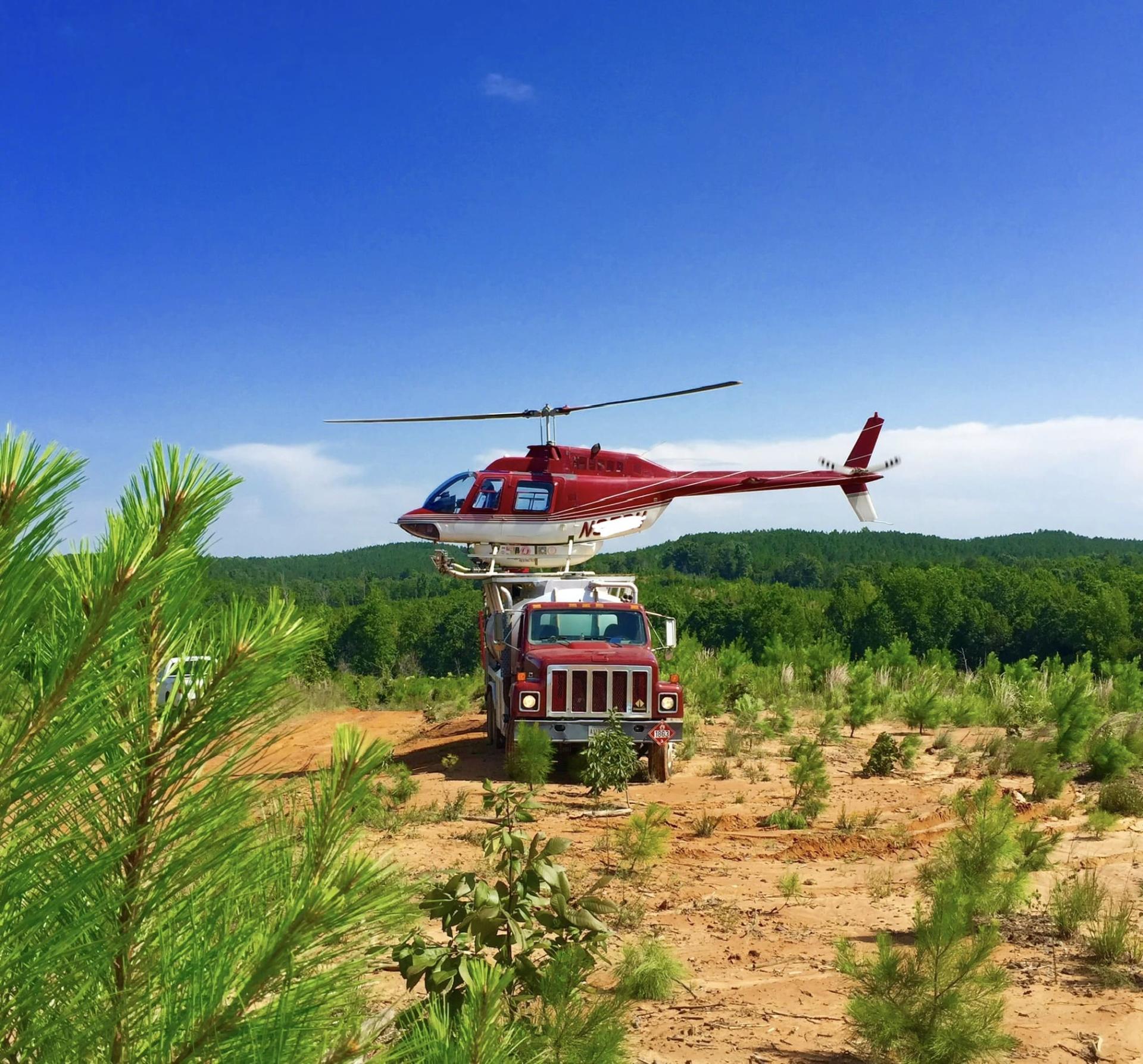
On larger or more sensitive tracts, the choice between ground and aerial application matters as much as the product. Ground rigs work well on smaller tracts, broken terrain, or jobs that need precision near SMZs and property lines. Aerial application — typically helicopter — covers ground efficiently on bigger blocks but demands tighter coordination on buffers, drift, sensitive neighbors, and weather. Wind speed, temperature inversions, humidity, and rain timing all affect efficacy and off-target risk; a treatment scheduled around a bad weather window is money on the ground.
SMZs, ponds, drains, and labeled buffers are non-negotiable. The prescription is built around them, not the other way around — and the access plan (gates, roads, landings, turnaround room for tenders and trucks) is worked out before the applicator shows up, not the morning of.
Common Mistakes Landowners Make
- Waiting until pine seedlings are overtopped. Once the hardwoods are above the planted pine, a release costs more and recovers less.
- Planting before site prep is complete. Putting seedlings into a tract still loaded with competition almost guarantees a release treatment later — or a failed stand.
- Treating every tract with the same prescription. Species, soils, and competition change tract to tract. A copy-paste spray plan is a copy-paste loss.
- Ignoring SMZs, drains, and sensitive areas. Streamside management zones, ponds, and labeled buffers are not optional and are not negotiable.
- Choosing application only by lowest price. A cheap, poorly timed spray on the wrong species is more expensive than no spray at all.
- Skipping the follow-up inspection. The only way to know whether the treatment worked — and whether the stand is on track — is to walk it the next growing season.
Herbicide, Burning, and Reforestation Work Together
Herbicide does not replace prescribed burning, mechanical site prep, or thoughtful reforestation planning. It is one tool. Some tracts need chemical site prep, some need fire, some need a roller chopper or shear, and most need some combination. The right answer is almost never "just spray it." The right answer is a sequenced prescription — site prep, plant, release, burn — built around the stand the landowner is trying to grow.
How Drone Imagery Helps the Prescription
On larger tracts, drone mapping and aerial inspections save windshield time and surface problems the ground cannot see — pockets of hardwood encroachment, gaps in stocking after site prep, beaver flooding on edges of a treatment block, and access issues for ground equipment. Pairing imagery with a ground walk-through usually produces a better prescription than either one alone.
Questions Landowners Usually Ask First
Is herbicide actually worth it on my tract?
It depends on what you are trying to grow, what is competing with it, and where the stand is in the rotation. A walk-through and a written recommendation will tell you more than any general answer.
Should I spray before or after planting?
Often both — site prep before planting to set up the seedlings, and a release in year one or two if competition rebounds. Some tracts only need one. The stand decides, not the calendar.
What is release spraying?
A targeted treatment over a young pine plantation that knocks back competing vegetation so the planted seedlings can stay on top of the canopy and reach free-to-grow.
Can herbicide help with site prep before reforestation?
Yes — chemical site prep is one of the most reliable ways to set up a new plantation, especially when hardwood sprouting is heavy after a clearcut.
Will it hurt wildlife or water?
A correctly prescribed and labeled application, with SMZs and buffers respected, is designed to control specific vegetation without damaging the surrounding habitat. The risk comes from the wrong product, the wrong rate, or ignoring the label — which is exactly what an independent forester is there to prevent.
Can EQIP or CSP help with the cost?
Sometimes. Site prep, release, and TSI practices can fit under NRCS programs when planned and documented correctly. Approval is never guaranteed, but we structure prescriptions with these programs in mind when they fit.
Do I need burning, spraying, or both?
That answer comes from the stand, not the brochure. Some tracts need fire, some need chemical, some need both in sequence. The honest version of this question is what we get paid to figure out.
Independent Representation on Herbicide Decisions
Southeast Forestlands does not sell herbicide, does not own a spray rig, and does not take referral fees from applicators. We write the prescription based on what the stand needs, coordinate with a qualified, licensed applicator, and inspect the work after it is done. If the right answer for the tract is not to spray, that is what the recommendation will say. The standing inventory on a landowner's tract is worth too much to manage from a chemical catalog. For a written prescription, a second opinion on a quote, or a release-vs-replant decision, contact our forestry consultants in Mississippi or request a timber appraisal ahead of your next timber sale.
Every herbicide used in Southern pine forestry is regulated under an EPA-approved label — landowners can verify active ingredients and use restrictions through the EPA Pesticide Product Label System. Site-prep and release recommendations are maintained by MSU Extension Forestry and the Auburn University School of Forestry & Wildlife Sciences. Prescriptions on Southeast Forestlands tracts are written by Eric Entrekin, Registered Forester (MS & AL) and applied by a separately licensed commercial applicator.