Carroll County sits on the loess-hill edge where the Delta meets the hill country, and the timber here trades in both directions. The bottomland hardwood along the Big Black River and its tributaries pulls into the Delta hardwood pool — cherrybark, white oak, sweetgum, cypress, water oak — while the loblolly plantations on the rolling ridges around Carrollton, Vaiden, and North Carrollton move into the Winona, Grenada, and Greenwood mill cluster. The two markets don't speak the same language, and a tract that gets cruised as one product almost always underperforms one that gets marketed as two.
The recurring question on most Carroll County tracts isn't whether to sell — it's how to structure the sale so the pine market and the hardwood market both compete honestly for what's actually there. That decision happens long before the first buyer is called.
Carroll County Conditions That Drive Value
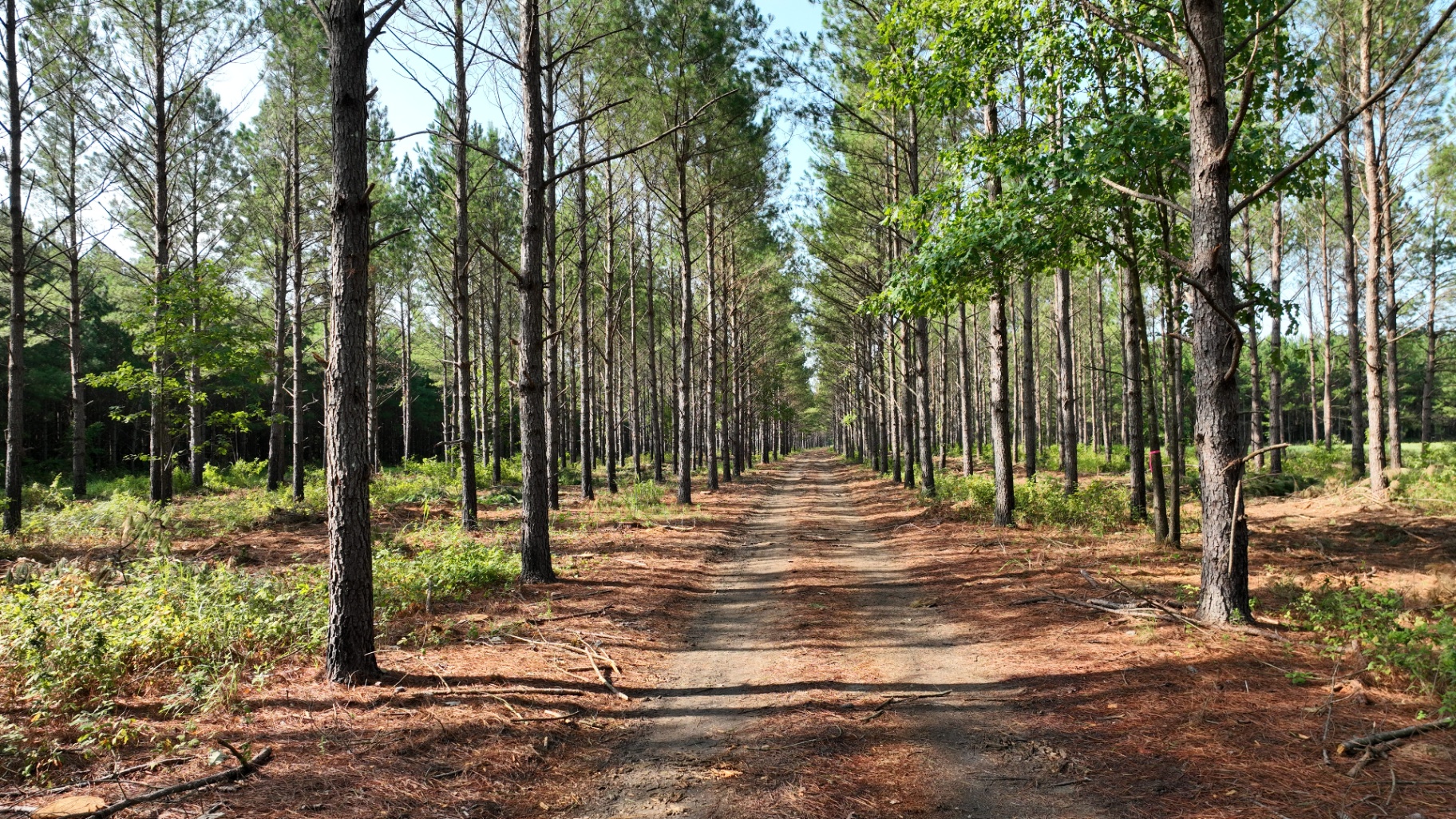
The working ground in Carroll County falls into three loose categories. The rolling loess uplands around Carrollton and McCarley carry loblolly plantation on Memphis and Loring-series soils — productive pine ground that responds well to thinning and prescribed fire. The transition slopes drop into mixed pine-hardwood, with a lot of older naturally regenerated stands that need management decisions rather than another delay. And the Big Black bottoms carry real bottomland hardwood, some of it on the kind of rich alluvial soil that grows grade red oak and cherrybark stems worth marketing on their own.
Erosion is the operating variable on the loess uplands. The same soil that makes Carroll County pine ground productive will gully if a harvest road is cut without thought to grade or drainage. Wet-weather logging on the bottomland will rut for a generation. The contract language that protects against both isn't a formality — it's what keeps the tract worth as much after the harvest as it was before.
The Carroll County Mill Pool — Pine Hills and Delta Hardwood
Carroll County landowners sit on the seam of two materially different timber markets. Pine pulpwood, chip-n-saw, sawtimber, and the occasional pole-grade volume move into mills around Winona, Grenada, Eupora, Ackerman, and the larger operations reaching out of Greenwood. Bottomland hardwood — particularly grade red oak, cherrybark, white oak, and cypress — draws buyers from the Delta hardwood market that don't bid pine ground at all.
Selling both products to one buyer almost always means the hardwood gets priced as pulp and the pine gets priced as a single lump-sum number. Selling them as two structured offerings — pine on a sealed-bid sale to the hill-country mill pool, hardwood to qualified grade buyers — routinely outperforms the single-buyer outcome on the same trees. A competitive timber sale built around that split is where the value lives.
Example from the field. Walked a Carroll County tract east of Vaiden where the owner had a verbal lump-sum offer that priced the whole stand — pine ridges and Big Black bottoms — as one product. A measured cruise broke out the cherrybark, white oak, and water oak sawlog stems in the bottoms from the upland pine pulp and CNS. We marketed the hardwood as a separate offering to Delta-edge grade buyers and the uplands as a sealed-bid pine sale to the Winona / Grenada / Eupora mill pool. The combined number from the two contracts cleared the original whole-tract offer by enough to fund the next round of reforestation outright.
Thinning, Burning, and the Hold Decision
A lot of Carroll County family pine is sitting on the edge of a second-thinning decision that could go either way. The numbers — basal area, diameter response, site index — answer the question more honestly than a calendar does. A measured stand assessment sometimes says thin and hold for another rotation of sawtimber growth; sometimes it says the stand is finished and the right call is a final harvest plus disciplined reforestation. Both are legitimate answers, but they're not the same answer, and the wrong one is expensive.
Mid-rotation prescribed burning on Carroll County pine ground does real work — hardwood midstory control, beetle hazard reduction, and a cleaner butt log at final harvest. The grade differential at the bid sheet between a burned and an unburned plantation is usually visible.
Contracts and Oversight on Carroll County Ground
The protections that matter on a Carroll County sale are specific to the terrain. Erosion-control language on the loess uplands. Streamside management zones along the Big Black and its tributaries that hold up under heavy summer rain. Wet-weather shutdown thresholds for the bottomland, with rutting depth and percent-of-area triggers written in. A performance bond proportional to the sale. Load-reconciliation reporting that lets the math be checked on the day, not three months later. A clear closeout punch list with road-restoration responsibility assigned.
A timber appraisal with measured cruise data is what makes those contract terms enforceable. Without the numbers, the contract is a wish list.
Management Plans for Multi-Generation Carroll County Tracts
A lot of the timberland in Carroll County has been in the same family for two or three generations. The right tool for that kind of ownership isn't a one-off sale conversation — it's a written forestry management plan that captures the species mix, the thinning schedule, the burn rotation, the reforestation strategy, and the timing of the next merchantable entry, all in one document the heirs can read. That plan is what keeps the next decision from being made under pressure.
If You Own Land in More Than One County
Carroll County tracts often share an owner with adjacent ground in Montgomery, Holmes, Grenada, Attala, and the Delta-edge counties to the west. The mill pool overlaps meaningfully, and coordinating sales across adjacent tracts almost always strengthens the bid sheet versus marketing each one in isolation.
The Right Time to Call
The right time to talk about a Carroll County tract is before a verbal offer hardens into a handshake, not after. The first conversation and walk-through are free. We'll give you an honest read on what the stand is carrying, whether the hardwood and pine should be marketed separately, and whether the structure of the sale fits the actual market. Some tracts here ought to be sold this year; some ought to be thinned and held; some ought to have a burn run and the sale put off another season. We'll tell you which one you're sitting on.
If you own timber in Carroll County and want a clear, independent look at what the property is worth and how to position it, that walk-through is the first step. Contact Southeast Forestlands to set it up.
About Carroll County, Mississippi for Timberland Owners
Carroll County, Mississippi has dual county seats at Carrollton and Vaiden and is reached by I-55, US 51, and MS 35, with pine timber moving through the Winona, Grenada, Eupora, and Ackerman mill cluster and bottomland hardwood pulling into the Delta-edge grade buyer pool out of Greenwood and beyond. Drainage across the county follows the Big Black River and its tributaries through the loess hill country, with the western edge of the county dropping toward the Delta.
For landowners managing tracts here, the recurring practical issues are loess-soil erosion on harvest roads, bottomland operability along the Big Black, and the dual-market structure that rewards marketing pine and hardwood as separate offerings rather than rolling them into one cruise. Decisions on thinning timing, sale structure, and reforestation should be made with those local conditions in mind rather than from a generic regional template.