
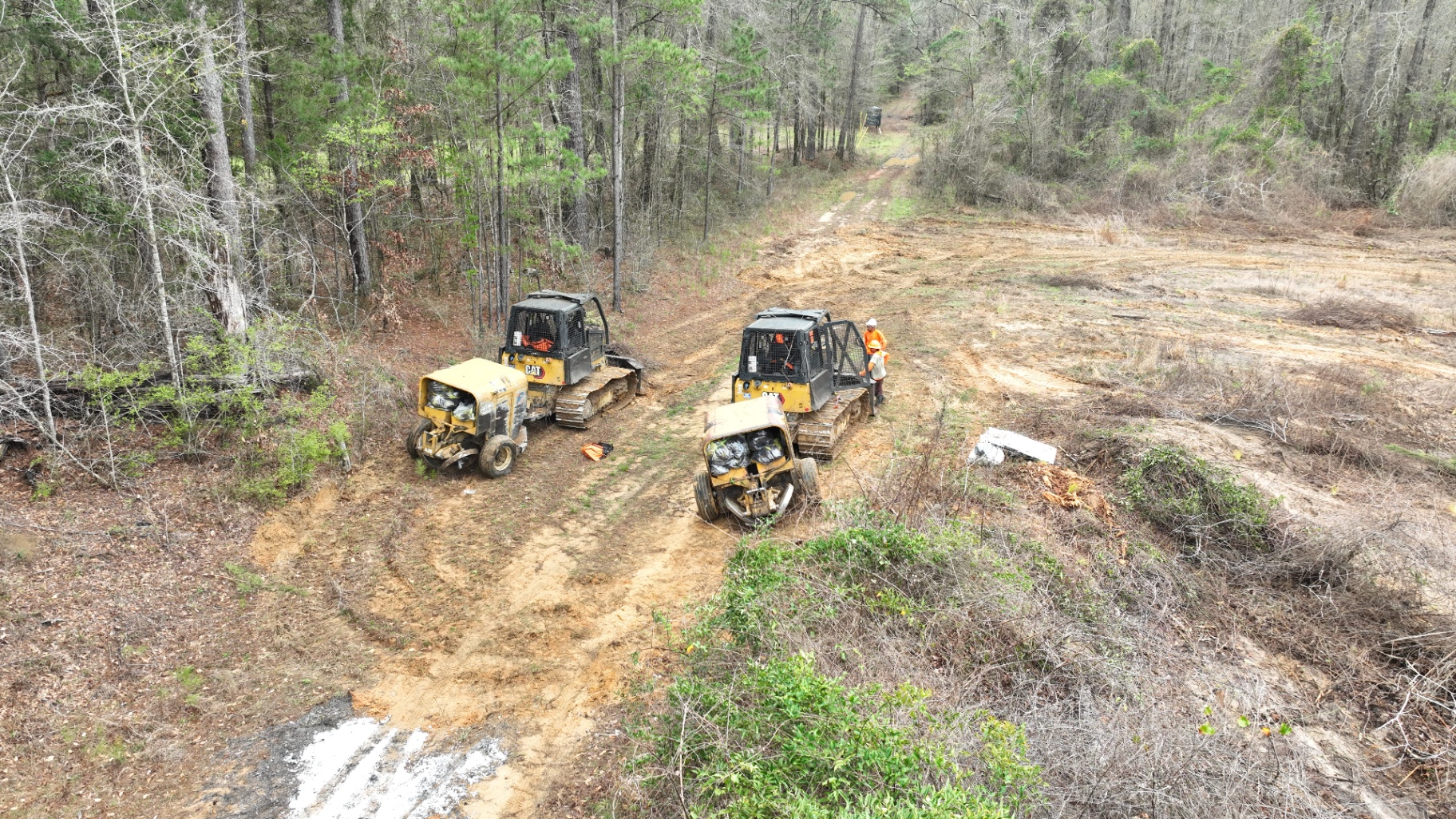
Prentiss County is hill country in the northeast corner of the state, with Booneville sitting close to the Tupelo pull and the Tennessee line not far north. The terrain rolls through hardwood drains running into the Tombigbee and Hatchie headwaters, with loblolly plantation on the uplands and natural pine-hardwood on the steeper ground.
I work with Prentiss landowners on cruises, sale layout, and reforestation. The local mill pool reaches across into northwest Alabama and southern Tennessee depending on haul distance — which means a tract here often has more buyer exposure than the county map suggests, but only when the sale is structured to invite it.
Market Pull on a Prentiss County Tract
Buyer demand on a Prentiss County tract is shaped by Tupelo and Booneville pulp and chip-n-saw mills, pole and pallet specialty buyers, and Tennessee-line hardwood pull from northern Alabama and southern Tennessee. The narrow point is that no single buyer wants every product class — and the wide spread between the lowest and the highest qualified bid is exactly where most landowners lose money.
Example from the field. Took on a Prentiss County tract north of Booneville where the heirs wanted a clean sale before settling the estate. A measured cruise separated the merchantable pine from the unmerchantable storm-damaged stems, and the sealed-bid sale closed inside sixty days with one clear lump-sum check rather than the per-ton, open-ended structure the family had been offered first.
The core insight for this county is straightforward: steep-ground harvest planning, sandstone-ridge oak quality, and Tennessee/Alabama cross-state hardwood buyer competition. A direct, walk-up offer almost never reflects that reality.
Avoidable Losses Specific to Prentiss County
Most preventable losses on Prentiss County sales follow a short, repeatable list:
- letting a flat-country crew bid a steep-ground tract and watching them refuse skid plan changes mid-job
- selling sandstone-ridge oak to a pine pulp buyer who has no grading interest
- not exposing tracts to Tennessee and northern Alabama buyers who routinely outbid Mississippi mills on hardwood
None of these are mysterious. They all come from selling timber without independent representation in a market this specific.
What Prentiss County Timber Actually Looks Like
Prentiss County land sits in the Northeast Mississippi hill country, Tombigbee headwaters, anchored around Booneville and communities like Baldwyn, Jumpertown, Marietta, Wheeler. Drainage runs through the Tombigbee River headwaters, Twentymile Creek, Mackeys Creek, and the soils are steep upland silt loams over Pontotoc-type substrates, with narrow hardwood draws and sandstone outcrops on the eastern edge.
The standing timber reflects that geography: loblolly plantations of all ages, native shortleaf pine pockets, mixed upland hardwood, and oak-hickory on the rocky east slopes. What grows here is not what grows fifty miles in any direction, and pricing has to follow.
Independence Is the Product
The structural problem in most timber transactions is that the person valuing the timber is also the person buying it. On a Prentiss County tract, with the specific buyer mix described above, that conflict is worth real money — typically the difference between the floor and the top bid in a properly run competitive sale.
Southeast Forestlands does not buy timber, log timber, or take referral fees from buyers or loggers. That independence is the entire product.
Inventory, Marketing, Contracts, Supervision
On a Prentiss County engagement, the work is concrete:
- tract inventory, stand mapping, and product-class segregation across the steep upland silt loams over Pontotoc-type substrates and bottomland zones
- independent timber sale design — bid package, buyer invite list, and exposure window calibrated to Tupelo and Booneville pulp and chip-n-saw mills and the wider regional pool
- contract terms that protect the residual stand, the road system, riparian buffers along the Tombigbee River headwaters, and payment timing
- on-the-ground harvest supervision and post-harvest inspection
- reforestation, Prescribed Burning, and Timber Stand Improvement planning for the next rotation
You receive an independent set of eyes on every step — paid by you, working for you, with no buyer relationship in the background.
Regional Timber Markets and Multi-County Ownership
Mill draws, buyer participation, and haul economics in Prentiss County routinely cross county lines into Union County, Tippah County, Tishomingo County, Itawamba County and Lee County. If you own land in more than one of those counties, a single coordinated marketing package usually outperforms separate sales.
The Right Time to Call
The right time to call is not when a buyer knocks. By then, the negotiating position has already narrowed. The right time is when you are first thinking about the property — whether that is a planned harvest, an inherited tract near Booneville, a tract you have not visited in a decade, or a question about whether to harvest at all.
Tracts in Prentiss County typically run a 60-to-120 day cycle from cruise to closing when the sale is structured for real bidding. Compressing that timeline almost always costs more than it saves.
Start the Conversation
If you own timber in Prentiss County and want a straight read on what the property is carrying — and how the regional mill pool will actually price it — the first step is a walk-through and a conversation.
Contact Southeast Forestlands to talk through your tract, your goals, and your options.
About Prentiss County, Mississippi for Timberland Owners
Prentiss County, Mississippi centers on Booneville and is reached by US 45 and MS 30, with timber moving through Booneville, Corinth, and Tupelo area mills with access to Tennessee buyers. Drainage across the county follows the Tuscumbia and Hatchie headwaters, and most working timberland is loblolly plantations on uplands with hardwood drains across northeast Mississippi hill country at the Tennessee corridor.
For landowners managing tracts here, the recurring practical issue is small-tract economics and access constraints on inherited holdings. Decisions on thinning timing, sale structure, and reforestation should be made with those local conditions in mind rather than from a generic regional template.