
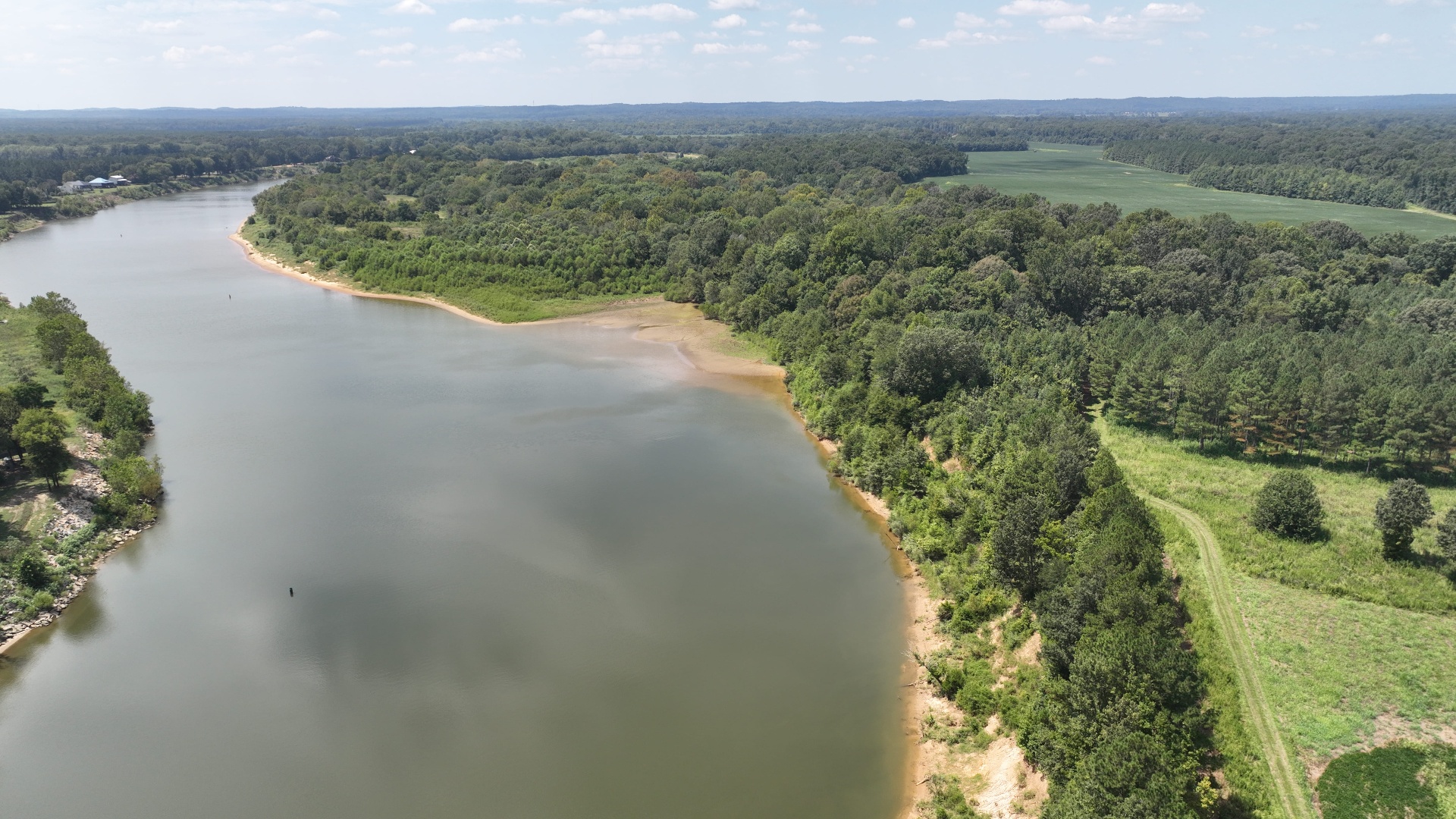
Tishomingo County sits at the northeast corner of Mississippi where the Tennessee River drops into Pickwick Lake and the ground turns from Coastal Plain flats to true Appalachian-edge slopes. A tract here often reads more like east Tennessee than the rest of the state, and the sale planning has to reflect that.
Sandstone Ridges, Cove Bottoms, and Two Different Timber Sales
Most Tishomingo tracts include some combination of sandstone-bluff country, mixed hardwood on the slopes, loblolly plantations on the flatter ridges, and cove hardwood along Bear Creek and the Tennessee River. Those pieces do not sell as one uniform stand. A cruise that averages them into a single number can leave grade hardwood in the pulp column and understate what the cove bottoms may realistically bring.
Separating the cruise by cover type is generally the first step. A pine plantation on a rolling ridge can be evaluated against pulp, chip-n-saw, and sawtimber markets. A cove hardwood stem is graded on its own merits and often draws a different buyer entirely. Presenting both in one bid package, with the components clearly broken out, tends to invite more accurate bidding from more buyers.
Example forestry scenario for local landowners. Consider a hypothetical Tishomingo County tract with a ridge-top loblolly plantation, a hardwood slope face, and a small cove bottom along a Tennessee River tributary. The practical exercise is to cruise each component separately, describe the operable acres against the streamside management zones, and build a bid package that invites both pine and hardwood buyers to evaluate what actually fits their mill. The point is not to guarantee a specific outcome; it is to make sure no product class is quietly under-marketed.
Planning Cross-State Timber Marketing
The county FAQ notes that pulpwood and pine sawtimber may move into the Iuka, Corinth, and Tenn-Tom corridor, along with mills across the line into Alabama and west Tennessee. That cross-state reach is real, but only when the sale is designed to invite those buyers rather than assuming the closest single Mississippi mill will bid for all of them.
A bid package prepared for cross-state exposure typically includes accurate haul-mile estimates from more than one direction, clear product-class breakdowns so grade hardwood and pulp are priced separately, and an exposure window long enough for out-of-state buyers to walk the ground. That preparation does not guarantee more bidders will engage, but it removes many of the friction points that quietly narrow the buyer list before the package is even sent.
Contract Terms to Consider on Steep Ground
The Tennessee River hill country and the Pickwick Lake corner include some of the steeper timber ground in Mississippi. A contract written for flat Coastal Plain logging is generally not sufficient here. Provisions that tend to matter on Tishomingo tracts include contour skidding requirements, heavier water-bar spacing on skid trails, streamside-buffer language along Bear Creek and other tributaries, wet-weather shutdown triggers, and a post-harvest inspection with clearly defined repair obligations.
None of these terms are exotic — they are standard tools adapted to slope and drainage conditions. What matters is that they are written into the contract before the sale rather than negotiated during a shutdown after a hard rain.
Reforestation on North Slopes vs. South Ridges
Post-harvest planning in Tishomingo County often runs into aspect and site-index questions that do not come up on flatter tracts. North-facing slopes and creek bottoms can favor hardwood regeneration, while warmer south-facing ridges may still support loblolly. A single species prescription across a mixed-aspect tract can lock the ownership into a suboptimal outcome for a full rotation.
A written management plan that pairs regeneration decisions with the underlying site — rather than a uniform planting spec — can help the next stand carry more value than the one that came off.
Where to Start on a Tishomingo County Tract
Whether the immediate question is a planned harvest, a stand that has not been walked in a decade, an inherited tract near Iuka, or simply whether to harvest at all, the practical starting point is generally an independent cruise and an honest read on the buyer pool. From there, decisions on timber sale structure, prescribed burning, and timber stand improvement can be made against actual stand data rather than an unsolicited direct offer.
Independent forestry representation keeps the recommendation centered on the landowner's objectives rather than a buyer's purchasing needs.
Contact Southeast Forestlands to start that conversation, or read more about our independent forestry consulting services.
Nearby Counties and Timber Markets
Mill draws, buyer participation, and haul economics in Tishomingo County often reach across county lines into Prentiss County and Itawamba County. For landowners with ground in more than one of those counties, a single coordinated marketing package can generally outperform separate sales.
Evaluating Hardwood Quality in Cove Bottoms
Cove hardwood along Bear Creek and the Tennessee River corridor generally warrants a stem-by-stem look rather than a straight per-ton assumption. Grade buyers may evaluate straightness, sweep, defect distribution, and merchantable log length in ways a pulp buyer does not, and a cruise that captures those attributes tends to invite more informed bidding on the hardwood component. Presenting the hardwood as its own product line inside a sealed-bid package, with the pine described separately, generally gives each buyer a picture that matches how their mill actually prices wood.
SMZ and Water-Bar Detail on Steep Ground
Streamside management zones along tributaries feeding Pickwick Lake and the Tennessee River can require wider buffers and more careful skid-trail placement than a flat Coastal Plain tract. Water-bar spacing on steep skids, seeded haul-road turn-outs, and pre-mapped stream crossings are generally standard tools on this ground rather than optional add-ons. A pre-harvest walk with the operator that documents those requirements on the ground can reduce shutdown risk during the sale itself.

