
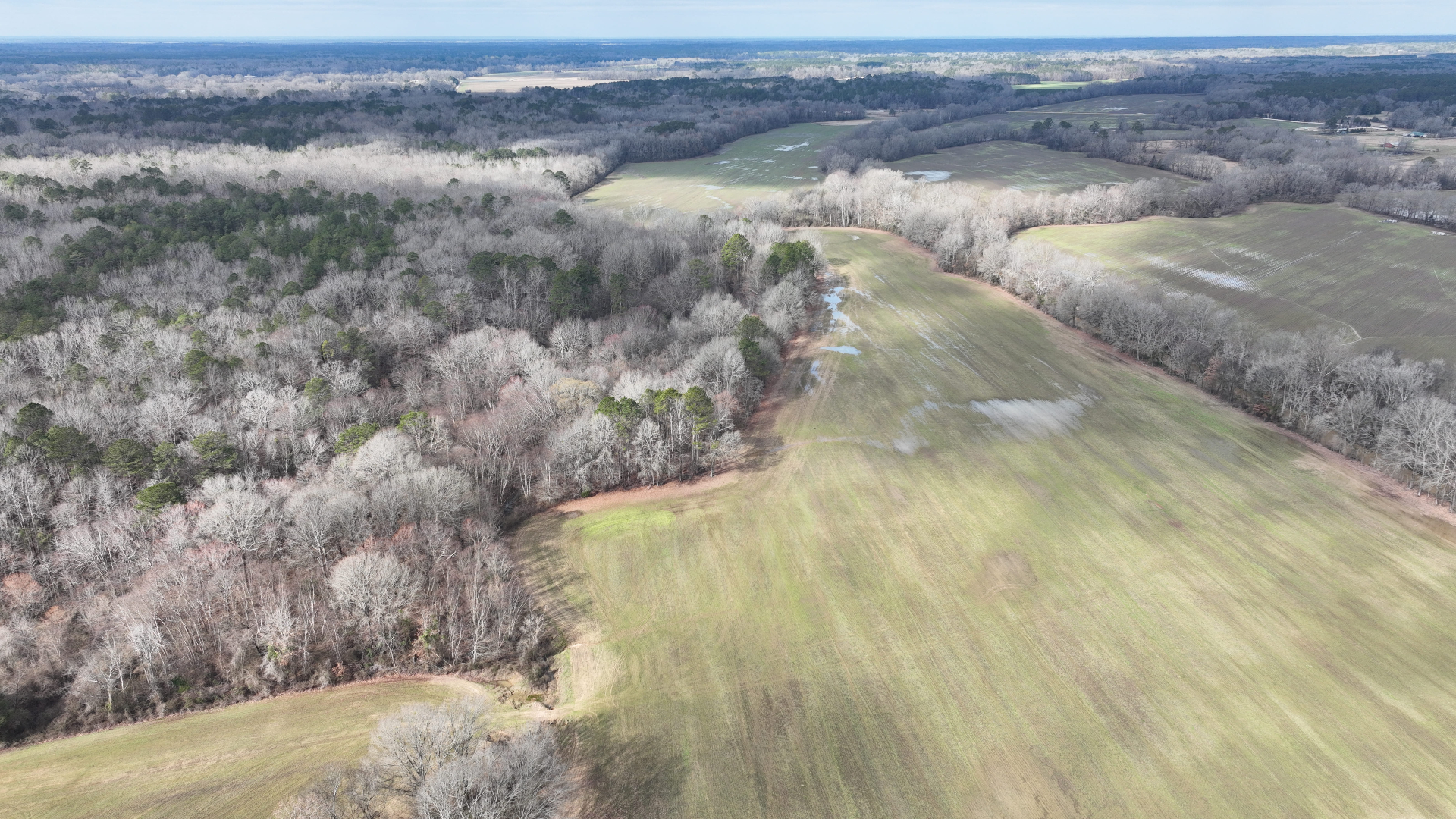
Tippah County borders Tennessee, and the buyer pool reflects it — but only if your sale is structured to invite cross-state bidders instead of just the nearest Mississippi mill.
Why Tippah County Is Not the Same Stand as the County Next Door
Most Tippah tracts we walk are around Ripley, Walnut, Blue Mountain, and Falkner — rolling hill-country ground with silt-loam uplands and clay-bottom drains feeding the Tippah and the Hatchie headwaters. The practical question on a sale here is broader than simply asking what the timber is worth. It’s how many mills are we actually pulling bids from — the Mississippi side, the Memphis-direction haul, or both.
Example forestry scenario for local landowners. A common Tippah County planning question is what to do with an inherited tract that a family has been told is too small or too remote to bother marketing. The starting point on any inherited tract in this county is a cruise and a stepped-up basis appraisal before any harvest conversation. From there, the question is whether the stand's product mix warrants exposure beyond the nearest single mill to the wider New Albany, Holly Springs, Corinth, and Tennessee-side buyer pool the FAQ describes for this county.
The standing timber reflects that geography: loblolly plantations, native shortleaf pine, mixed upland hardwood, and oak-rich Hatchie bottomland. What grows here is not what grows fifty miles in any direction, and pricing has to follow.
Tippah County's Buyer Geography
Buyer demand on a Tippah County tract is shaped by the New Albany, Holly Springs, and Corinth mill pool, together with Tennessee-side buyers just across the state line. The narrow point is that no single buyer wants every product class — and the wide spread between the lowest and the highest qualified bid is exactly where most landowners lose money.
The core insight for this county is straightforward: the approved buyer pool — New Albany, Holly Springs, Corinth, and Tennessee-side mills — gives a landowner several potential market outlets to evaluate instead of relying on a single direct offer.
Avoidable Losses Specific to Tippah County
Most preventable losses on Tippah County sales follow a short, repeatable list:
- treating Tippah as a one-buyer county when Tennessee mills are 20 miles away
- selling Hatchie River bottom timber in winter when the ground is unworkable
- ignoring cross-state Tennessee-side buyers for grade hardwood stems out of the bottoms
None of these are mysterious. They all come from selling timber without independent representation in a market this specific.
How We Run a Tippah County Sale
On a Tippah County engagement, the work is concrete:
- tract inventory, stand mapping, and product-class segregation across the rolling silt loams on the uplands and bottomland zones
- independent timber sale design — bid package, buyer invite list, and exposure window calibrated to the New Albany, Holly Springs, Corinth, and Tennessee-side mill pool
- contract terms that protect the residual stand, the road system, riparian buffers along the Tippah River, and payment timing
- on-the-ground harvest supervision and post-harvest inspection
- reforestation, Prescribed Burning, and Timber Stand Improvement planning for the next rotation
Cross-County Coordination
Mill draws, buyer participation, and haul economics in Tippah County can extend across county lines into Union County and Prentiss County. If you own land in more than one of those counties, coordinating multiple tracts may broaden the qualified buyer pool when timing, products, and haul geography align.
Next Steps
If you own timberland in Tippah County, Mississippi, the first step is a conversation — no obligation, no buyer in the room, and an honest read on whether selling, holding, or managing makes more sense for your situation.
If there is one thing I would tell a Tippah landowner before any other: walk your boundary line before you ever talk to a buyer. A lot of Tippah ground is heir property, and the lines have not been painted since an uncle did it in the 1980s. A clean line, a current management plan, and an honest timber cruise on the hardwood drains feeding the Tippah River are worth more than any negotiating trick at the table.
Contact Southeast Forestlands to start that conversation, or read more about our independent forestry consulting services.
Grade Hardwood From the Tippah and Hatchie Headwaters
The hardwood bottoms along the Tippah and the Hatchie headwaters typically carry a different buyer profile than the upland loblolly on the same deed. Grade hardwood buyers look for clean logs on a stem-by-stem basis and rarely bid the pine at all, while pine buyers priced against pulp and sawtimber numbers may not evaluate grade hardwood carefully. Marketing the two components as distinct product lines, with the cruise broken out accordingly, is generally the way to keep both bidders honest.
Cross-Border Bid Design for New Albany, Holly Springs, Corinth, and Tennessee-Side Mills
A Tippah County bid package that is quietly circulated only to the nearest single Mississippi mill is a fraction of the buyer pool the FAQ describes for this county. New Albany, Holly Springs, Corinth, and Tennessee-side mills are all realistic destinations for the right tract depending on product mix and haul, and a sealed-bid process that invites all of them at once is usually what surfaces the actual competitive number. The additional cycle time to run the process cleanly is small compared with the spread it tends to expose.

