Union County sits at the head of the Tallahatchie River in the north-central Mississippi hill country, and most working tracts here mix loblolly plantations on rolling uplands with hardwood draws and Tallahatchie bottomland. The two halves of that ground do not behave the same way in a sale, and treating them as one is generally the biggest missed opportunity on a Union tract.
The Split-Personality Tract in Union County
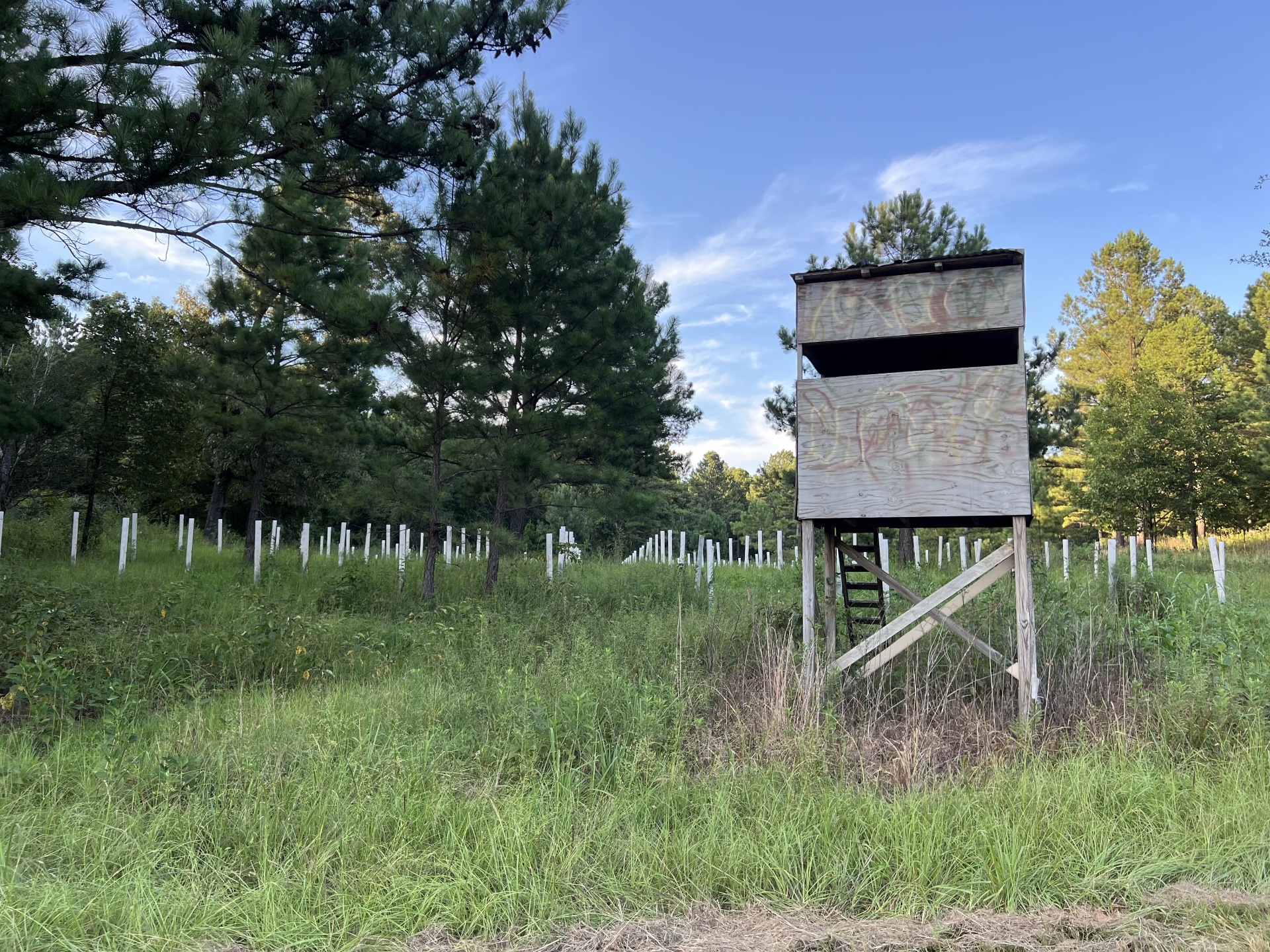
A common Union County ownership includes a planted loblolly stand on rolling silt-loam uplands and a hardwood-draw or bottomland component down along the Tallahatchie or one of its feeder drains. Those two sides of the same deed often have different product mixes, different operability windows, and different buyer profiles.
The uplands can generally support conventional pine-market operations across a broad harvest season. The bottomland components may only be reachable in drier windows and often carry hardwood stems that grade out on their own merits rather than as pulp. A bid package that cruises and prices them together can quietly undervalue whichever half a given buyer is less interested in.
Example forestry scenario for local landowners. Consider a hypothetical Union County loblolly plantation that a family believes is ready for a second thinning. The useful exercise is to walk basal-area plots before committing to a sale window. A stand that reads overstocked on paper may still benefit from another growing season, or from a pre-thin prescribed burn on the right site, before the next entry pays what it can. The purpose of the exercise is to let cruise data set the schedule rather than the calendar.
How the New Albany Manufacturing Corridor Shapes Local Haul
The county FAQ notes that New Albany, Tupelo, and Holly Springs-area mills give Union landowners a competitive pine market with hardwood buyers active when quality justifies it. The New Albany manufacturing corridor also puts a steady industrial traffic pattern through the county, and haul-route selection often matters more here than on quieter rural counties.
A bid package that documents realistic haul routes for each corner of the tract — rather than assuming a single haul distance — gives buyers a clearer picture of true delivered cost and can widen the pool willing to bid seriously.
Bid Package Design When Half the Tract Is Bottomland
Contract terms that tend to matter on tracts with meaningful Tallahatchie bottomland include clearly defined wet-weather shutdown triggers, streamside management zone width and marking, mat-crew requirements for the bottom component when access is soft, and a payment schedule that does not force the operator to work through unsuitable ground to hit a milestone.
Independent representation on those terms is generally worth more on a mixed upland-bottom tract than on a straight pine-plantation sale, because the operator has more places where cutting corners can quietly cost the landowner.
Regeneration Choices on Rolling Silt Loams
Post-harvest planning on Union County uplands often involves species and stocking questions that trace back to the site itself rather than to a generic regional template. A rolling silt-loam ridge may support a densely stocked loblolly rotation, while a hardwood draw may be better left to natural regeneration or planted to a mix. Committing to a single species prescription across an entire mixed tract can leave value on the table for the next rotation.
Pairing reforestation planning with the actual site — rather than the buyer's convenience — is generally where the next stand starts.
First Conversations for a Union County Landowner
For most Union County owners, the useful starting point is a cruise and an honest read on whether the current stand is closer to a thinning, a final harvest, or another growing season. From there, an independent timber sale design and a written management plan can put the next decade on a schedule that fits the ground.
Contact Southeast Forestlands to start that conversation, or read more about our independent forestry consulting services.
Nearby Counties and Timber Markets
Mill draws, buyer participation, and haul economics in Union County often reach across county lines into Lafayette County, Pontotoc County, Lee County, Tippah County, and Prentiss County. For landowners with ground in more than one of those counties, a single coordinated marketing package can generally outperform separate sales.
Reading the Bid Spread on a Union County Sale
On a Union County tract that includes both upland pine and Tallahatchie or Tippah bottomland hardwood, the spread between the low and the top qualified bid can be wide because different buyers value the two components differently. A pine buyer may bid aggressively on the plantation and price the bottoms conservatively; a hardwood buyer may do the opposite. Reading the spread by component — rather than only in total — often clarifies whether one buyer is genuinely strongest on both product classes or whether an award splitting the tract between two buyers may produce a better combined outcome for the landowner.

