
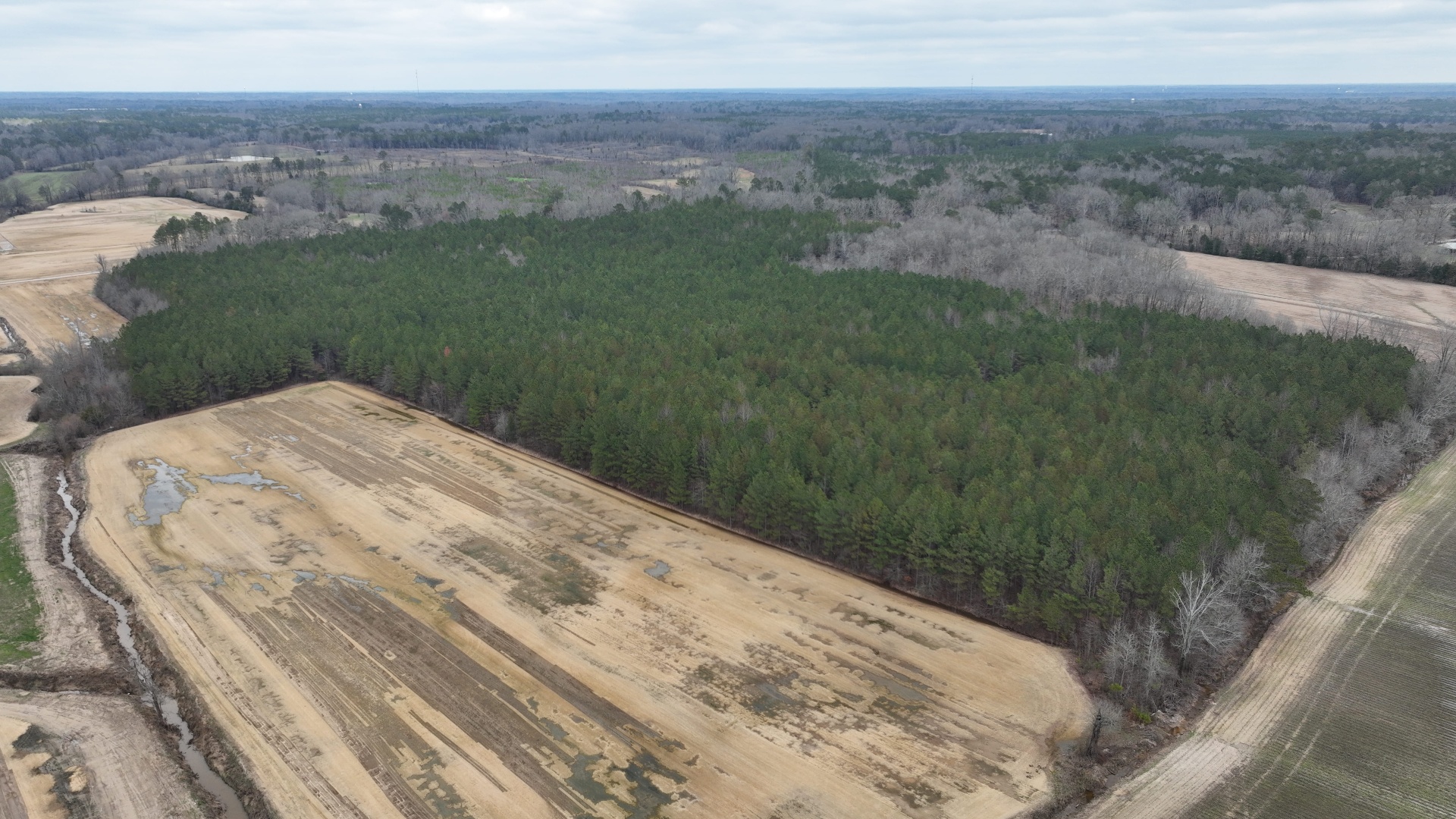
Lee County sits in northeast Mississippi at the crossroads of US 78 and US 45, with Tupelo at the center. Proximity to a deep local mill market shortens haul distances and can widen the qualified-buyer pool a Lee County tract is able to reach.
Work with Lee County landowners generally includes cruises, sale layout, and reforestation planning. Most Lee ground is loblolly plantation on rolling terrain, with hardwood drains feeding the Tombigbee headwaters — and the practical question on many tracts is whether to thin and hold for sawtimber, sell while pulpwood demand is steady, or build a longer plan around what the stand is capable of growing.
The Lee County Timber Landscape
Lee County land is anchored around Tupelo and shaped by the Pontotoc Ridge and the Black Prairie edge. Typical tracts are loblolly plantations on rolling uplands, with hardwood drains feeding the Tombigbee headwaters. Prairie-edge soils can hold water into late spring on parts of the county, while the ridge sites generally drain and log through most of the year.
Standing timber generally reflects that geography: loblolly plantations dominate the uplands, and the lower ground can carry bottomland hardwood — including cherrybark, willow oak, swamp chestnut oak, and sweetgum. Pricing on a Lee tract generally has to follow that mix.
Example forestry scenario for local landowners. Consider a hypothetical Lee County tract near the Tupelo growth corridor. A verbal offer built around a single product class would likely underprice a stand that also carries hardwood sawtimber. A cruise that separates pine and hardwood by product, a sealed-bid package invited to the Tupelo, Houston, New Albany, and Amory buyer pool, and contract language written for a tract close to growing subdivisions would generally allow both the timber value and the operational conditions to be handled together rather than one at a time.
Where the Bids Come From in Lee County
Buyer demand on a Lee County tract is often shaped by the Tupelo, Houston, New Albany, and Amory mill markets, with hardwood graders pulling stems out of the Tombigbee bottoms when quality is present. No single buyer typically wants every product class, and the range between the lowest and the highest qualified bid tends to be where landowners can leave the most value on the table.
The practical read for many Lee ownerships is that a short haul to multiple competing mills only translates into strong stumpage when every relevant buyer is present in the bid. An unsolicited direct offer can be compared with cruise data, product mix, access conditions, and any other sale options the landowner chooses to evaluate.
Common Losses on Lee County Sales
Value loss on Lee tracts tends to cluster around a small set of decisions:
- Selling to the first walk-up buyer when several qualified buyers sit within a short haul
- Letting bottomland cherrybark and swamp chestnut oak be priced as gum-grade pulp
- Weak contract-side protection on tracts near growing Tupelo subdivisions, where dust, noise, and road damage can become liability points
Each of these is manageable with a properly designed sale process. What they share is a lack of independent timber-sale representation at the point the decision was made.
Services on a Lee County Tract
Support on a Lee County tract is often shaped by the local mill density, the Pontotoc Ridge stand types, and the proximity to the Tupelo growth corridor. A typical engagement may involve:
- A walked-and-cruised inventory that separates pine and hardwood by product class before any bid list is built
- Boundary review, road and landing planning, and SMZ layout across the ridge and drain topography
- A sealed-bid package sized to the Tupelo-Houston-New Albany-Amory buyer pool, with exposure timed to a realistic haul window
- Contract review focused on residual-stand protection, road commitments, streamside management, and payment structure
- Harvest oversight and a documented post-harvest walk to close out the sale on the ground rather than only on paper
- A next-rotation read on reforestation, prescribed burning, and timber stand improvement
Every step is handled for the landowner, paid by the landowner, with no buyer or logger relationship on the other side of the table.
When to Bring in a Forester
The right time to begin the conversation is generally when a landowner is first thinking about the property — a planned harvest, an inherited tract near Tupelo, a tract that has not been walked in a long time, or an open question about whether to harvest at all. The time from the initial cruise to closing varies with tract complexity, bidder response, contract review, weather, access, and the landowner's schedule.
On tracts near the Tupelo growth corridor, the development math may also matter. In some cases, landowners may prefer to harvest, hold, or consider other ownership objectives before any timber commitment is signed.
Multi-County Ownership in Northeast Mississippi
Mill draws, buyer participation, and haul economics in Lee County generally cross into Pontotoc County, Union County, Prentiss County, Itawamba County, and Monroe County. Where an ownership includes tracts in more than one of those counties, coordinating multiple tracts may broaden the qualified buyer pool when timing, products, and haul geography align.
Getting Started in Lee County
For a Lee County timber owner who wants a straight read on what the tract is carrying — and how the Tupelo-area mill pool may price it — the first step is generally a walk-through and a conversation.
Reach out to Southeast Forestlands when you are ready — the first conversation is free and carries no obligation to list the timber.

