
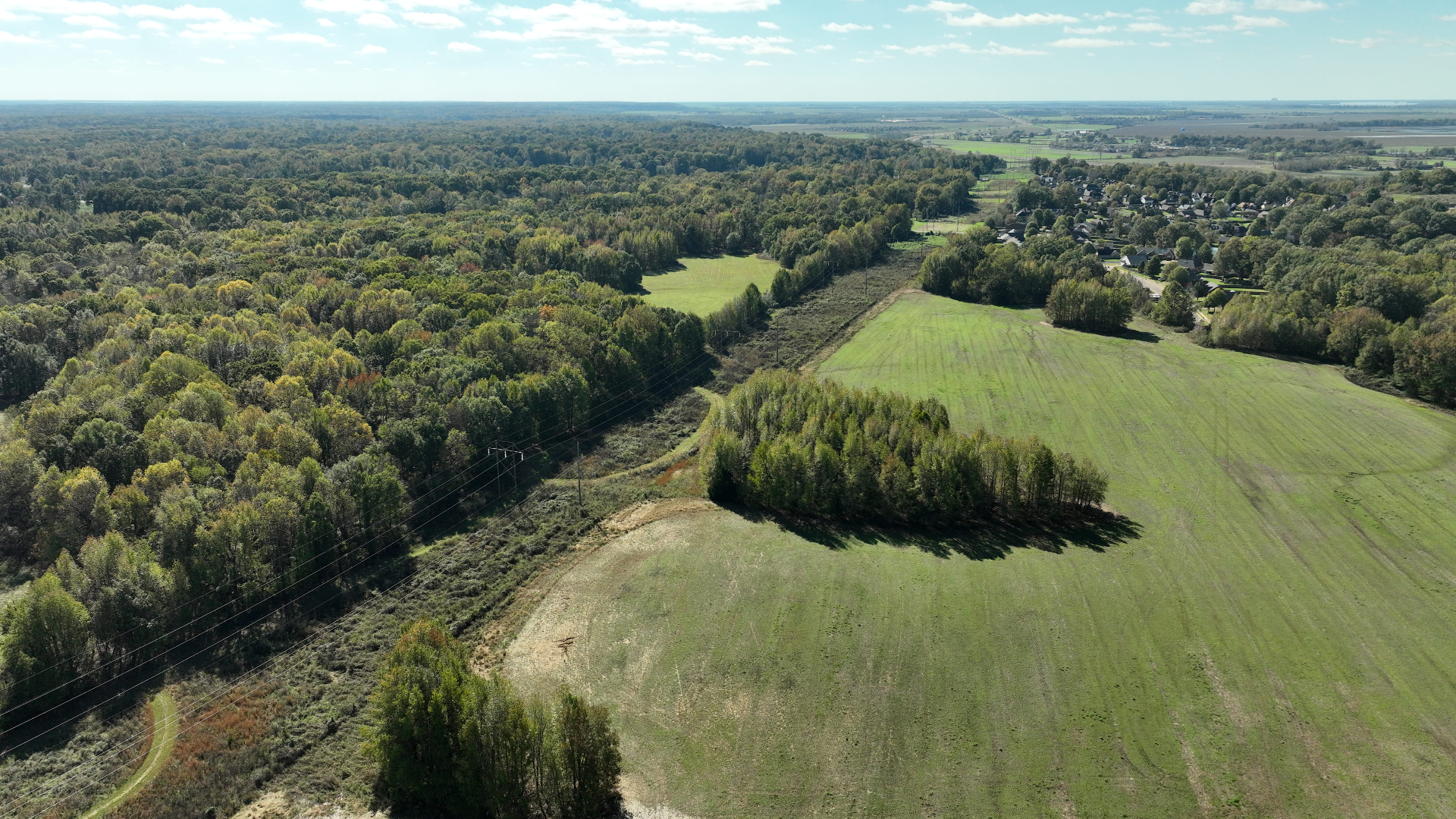
Pontotoc County straddles the Pontotoc Ridge and the flatwoods transition — and That geology can influence access, drainage, and stand conditions across parts of Pontotoc County. The ridge ground around Pontotoc itself drains well and grows pine on a different timeline than the flatter, wetter ground east toward Ecru and Sherman, and the difference affects everything from access windows to product mix at harvest.
The Pontotoc Ridge and Flatwoods transition — and What It Means for Your Timber
Pontotoc County land sits in the Pontotoc Ridge and Flatwoods transition, anchored around Pontotoc and communities like Ecru, Algoma, Sherman, Toccopola. Drainage runs through the Yocona River headwaters, Chiwapa Creek, Tallabinnela Creek, and the soils are Pontotoc Ridge sandy loams that drain quickly, transitioning west into Flatwoods clay that turns to soup after a wet week.
Evaluating a First-Thinning Decision in Pontotoc County
Example forestry scenario for local landowners. Consider a hypothetical Pontotoc County loblolly stand where the owner is deciding whether a first thinning is appropriate. Representative basal-area plots, diameter distribution, crown condition, residual stocking, access, and forest-health observations can guide that decision. Those measurements can also help the owner compare a sealed-bid thinning, a pay-as-cut arrangement, continued growth, or another treatment without assuming that the calendar alone determines the correct next step.
The standing timber reflects that geography: loblolly plantations on the ridge, native shortleaf-hardwood on slopes, and post oak / sweetgum / hickory mixes on the flatwoods.
How Local Mill Demand Sets the Floor — and the Ceiling
Buyer demand on a Pontotoc County tract is shaped by Tupelo-area pulpwood and chip-n-saw mills, the Ecru manufacturing corridor, and Memphis-area hardwood buyers reaching down through Pontotoc Ridge.
The core insight for this county is straightforward: the ridge-to-flatwoods soil flip that changes haul windows by zip code, and the strong furniture-grade hardwood draw out of the Tupelo and Ecru corridor.
The Short List of Pontotoc County Sale Mistakes
Most preventable losses on Pontotoc County sales follow a short, repeatable list:
- lumping a sandy-ridge tract and a flatwoods tract together at one stumpage price
- selling during a wet stretch when only one buyer can actually reach the deck
- marketing oak and gum to a pine-only buyer instead of graders that value hardwood separately
Highways, Watersheds, and Reforestation Choices
Access into Pontotoc County works through MS 6, MS 9, and MS 15, which set haul times to the Tupelo, New Albany, and Pontotoc mill yards. Drainage across the county follows the Yocona and Tallahatchie headwaters, so buffer widths and stream crossings on any harvest plan need to reflect those creek systems rather than a generic template. On the ridge itself, thin-soil sites reward careful species selection at planting — matching seedling type and stocking rate to the sandy uplands rather than defaulting to a single loblolly prescription. On an inherited tract with fragmented ownership, adjoining stands may have different management histories; mapping those boundaries helps keep the cruise and bid layout tied to the property being offered. On a tract split between the ridge and the flatwoods, mapping stand boundaries by soil group gives the landowner clearer information for deciding whether the stands should be described together or separately.
What a Pontotoc County Sale Setup Looks At
Before a Pontotoc County bid package is prepared, a forester may use a walking cruise and stand map to separate product classes on the sandy-loam ridges and flatwoods clay pockets. The bid list draws on Tupelo pulpwood and chip-n-saw mills, the Ecru manufacturing corridor, and hardwood graders reaching down from Memphis. Contract language covers residual-stand protection, road standards, buffer widths on the Yocona headwaters, and payment timing. After closeout, reforestation prescriptions, prescribed burning windows, and any timber stand improvement in the draws are scoped so the next rotation is not an afterthought. On stands with mixed age classes, that closing conversation may also reach into whether a first thinning, second thinning, or final harvest is the right next step given current stand condition.
Cross-County Coordination
Nearby markets and haul overlap: Lafayette County, Union County, Lee County and Calhoun County.
Start the Conversation
If you own timber in Pontotoc County and want a clear read on what the property is carrying — and how the local mill pool will actually price it — the first step is a walk-through and a conversation.
Contact Southeast Forestlands to talk through your tract, your goals, and your options.

