
Monroe County is one of the better-positioned timber markets in north Mississippi. The Tombigbee waterway cuts through, Aberdeen and Amory sit close to multiple mills, and Alabama haulers can reach a Mississippi tract here more easily than they can in counties further west — that two-state buyer exposure changes the bid sheet when a sale is set up to use it.
For Monroe County landowners, an independent forester can evaluate stand conditions, explain sale structures, and discuss regeneration needs before any logging agreement is signed. The terrain is a mix — bottomland hardwood along the Tombigbee and Buttahatchee, loblolly plantation on the uplands east toward the Alabama line, and prairie-edge ground on the western side that carries different stand types and access challenges.
Who Is Buying Monroe County Timber — and What That Means
Buyer demand on a Monroe County tract is shaped by Amory and Aberdeen area mills, Tenn-Tom barge markets, Weyerhaeuser and other major Tombigbee-corridor pulp and chip-n-saw buyers, plus Alabama cross-state demand.
Separating Bottomland Hardwood on a Monroe County TractExample forestry scenario for local landowners. Along the Tombigbee corridor near Aberdeen and Amory, a mixed tract may include grade hardwood alongside pine and lower-grade hardwood products. A measured cruise can separate species, grade, and product classes before the owner decides whether to market the timber together or request separate pricing. Qualified buyers may evaluate those components differently, but buyer participation and pricing depend on volume, quality, access, haul distance, and current demand.
The core insight for this county is straightforward: Black Belt clay operability windows, Tenn-Tom barge access, and one of the deepest mill-buyer pools in north Mississippi.
The Short List of Monroe County Sale Mistakes
Most preventable losses on Monroe County sales follow a short, repeatable list:
- logging Black Belt clay ground in January and turning the access road into a six-month rutting claim
- letting one buyer bid the prairie-edge cedar / post oak alongside the bottomland cherrybark on a single per-ton number
- ignoring barge-market pricing on tracts within reach of the Tenn-Tom
What Monroe County Timber Actually Looks Like
Monroe County land sits in the Black Belt Prairie north edge and Tombigbee River corridor, anchored around Aberdeen and communities like Amory, Smithville, Hatley, Hamilton. Drainage runs through the Tombigbee River, the Tennessee-Tombigbee Waterway, Tibbee Creek, Buttahatchee River, and the soils are Black Belt prairie clays in the west that swell and bog down in winter, sandy loams to the east, and broad alluvial flats along the Tombigbee.
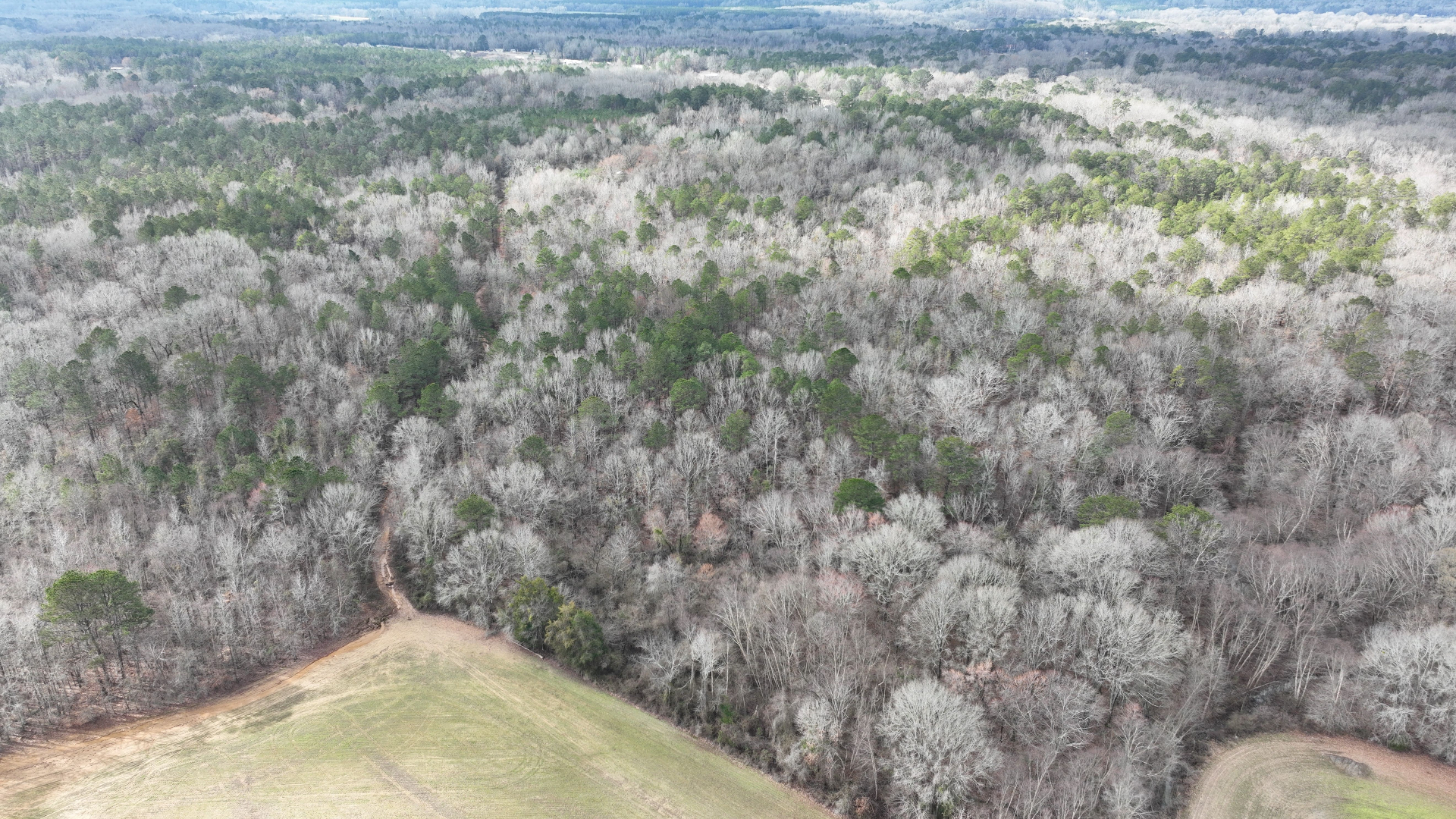
The standing timber reflects that geography: loblolly on the uplands, cedar and post oak on the prairie edges, and quality bottomland hardwood — cherrybark oak, sweetgum, cottonwood — along the Tombigbee.
Roads, Rivers, and the Two-State Buyer Reach
Monroe County access threads together US 45 and US 278 with local routes running to Aberdeen, Amory, Smithville, Hatley, and Hamilton; those routes connect county tracts with mill yards on both sides of the state line. The Tombigbee and Buttahatchee shape drainage across the county, while the Tenn-Tom corridor may affect transportation and marketing options for suitable products. On the Black Belt edge to the west, that operability picture flips fast in wet weather, which is a real factor in how a sale window gets chosen.
Sale Preparation Where Hardwood and Pine Share a Tract
On a Monroe County tract containing bottomland hardwood and upland pine, operability and product separation are separate questions for the cruise and sale plan. Product-class segregation runs across Black Belt clays that swell and bog down in winter, sandy loams to the east, and alluvial flats along the Tombigbee. Bid packages are shaped for the Amory-Aberdeen cluster, the larger Tombigbee-corridor buyers, and Alabama-side demand within reasonable haul. Contract terms handle residual-stand protection, road use through soft-ground months, buffer conditions along the Tombigbee, and payment timing. Post-harvest planning can address reforestation, prescribed-burning windows, and timber stand improvement based on the landowner's objectives and the condition left after harvest.
Regional Timber Markets and Multi-County Ownership
Nearby markets and haul overlap: Itawamba County, Lee County and Lowndes County.
Where to Go From Here
If you own timber in Monroe County and want a clear read on what the property is carrying — and how the Mississippi and Alabama mill pools will actually price it — the first step is a walk-through and a conversation.
Contact Southeast Forestlands to talk through your tract, your goals, and your options.

