
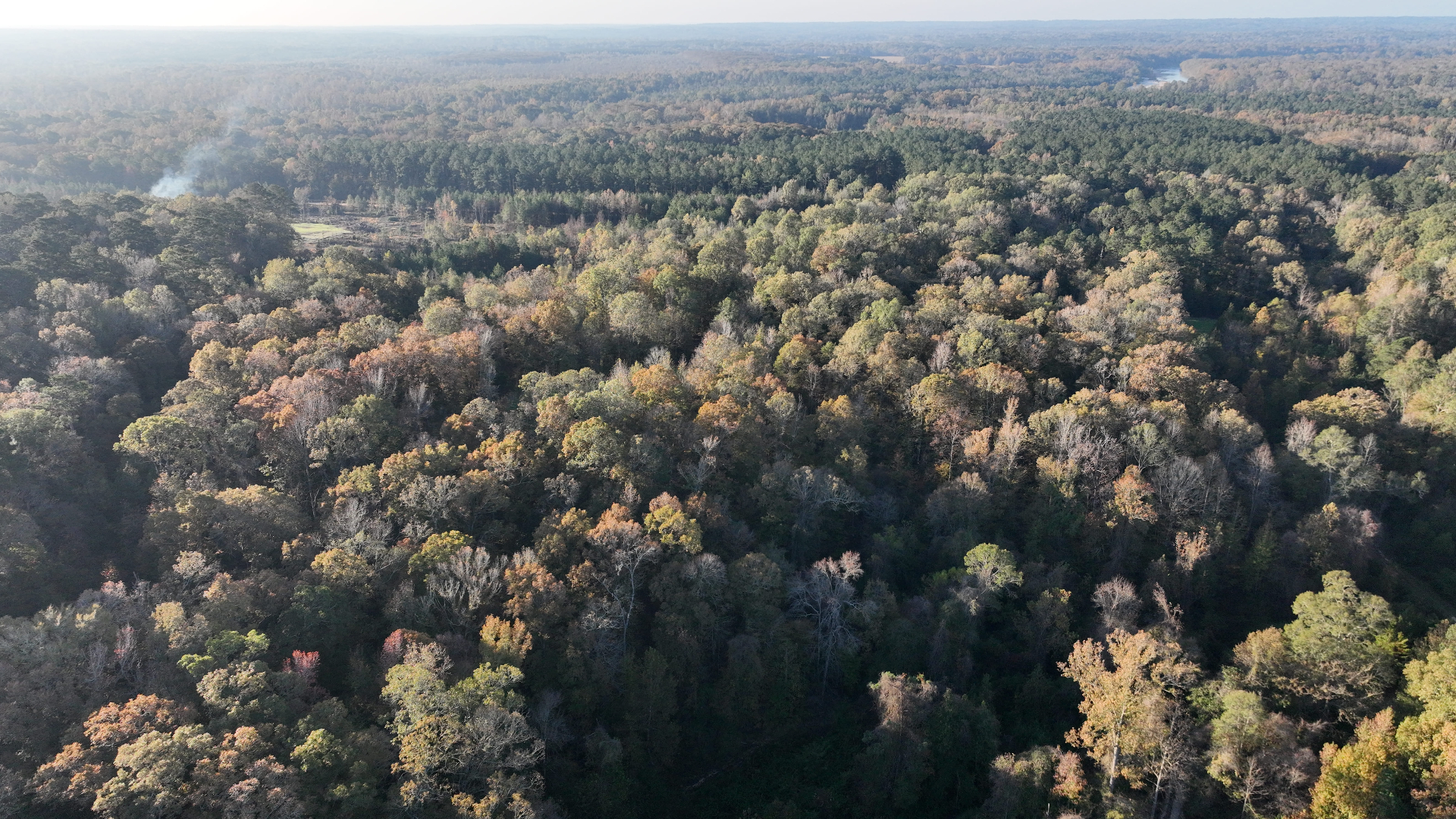
Pike County is one of the busiest pine corridors in the South. McComb sits on I-55, the mills around Bogalusa and Hammond are a short haul south, and loggers are moving wood through this county every week of the year.
Most working tracts are loblolly plantation on rolling uplands, with hardwood drains feeding the Bogue Chitto and Tangipahoa, and a steady amount of suburban-edge timber around McComb, Summit, and Magnolia where access and aesthetics start to drive decisions as much as stumpage does.
Heavy activity is not the same as strong pricing. When buyers are everywhere, the temptation is to take the first call and be done with it.
That's where landowners lose money in Pike County — not because the market is weak, but because the tract was never properly exposed to it.
Selling Timber in the McComb Corridor
Example from the field. Worked a Pike County tract north of McComb where the owner had two unsolicited offers within a week of each other. Cruised the stand, marketed it sealed-bid to the full McComb/Bogalusa/Brookhaven buyer list, and the winning bid landed materially above both of the original calls. Roads, SMZs, and post-harvest cleanup were written into the contract before any saw started — not negotiated after the fact.
Most of the calls I get from Pike County come from owners of 40 to 120 acres — family tracts inside the McComb commute shed, often inherited, sometimes part of a larger estate decision. The buyers are everywhere. The mills are close. And exactly because of that, the temptation to take the first offer and be done with it is real.
That's the math that costs Pike County landowners the most money. A buyer who knocks on the door isn't bidding against anyone. The instant a sealed-bid sale puts the same tract in front of the McComb, Bogalusa, Hammond, and Brookhaven buyer lists, the same buyer's number usually moves — sometimes by a meaningful margin on the per-ton, almost always on the contract terms.
Timing matters more in Pike than people think
Suburban edge changes the calculus. A tract north of McComb or near Summit that may have a higher-and-better-use horizon in five or ten years isn't the same tract as one tucked back off MS 48. The management plan should know the difference.
- Stands inside the McComb growth ring get marketed with aesthetics, road condition, and post-harvest cleanup written hard into the contract
- Tracts with development potential get a parallel look at timber-only versus timber-plus-position-for-sale before the saws start
- Pole-grade pine on the right stands is identified and marketed separately rather than rolled into sawtimber pricing
- Thinning assessments catch overstocked stands before peak diameter growth slips past
Small Tracts, Real Money
A 60-acre first thinning in Pike County is not a small sale. Five qualified buyers competing through a sealed bid will move that number well past what any of them would have paid on a walk-up offer — and the spread between the high and low bid alone usually pays the consulting fee several times over.
After the harvest, the next move is usually a reforestation decision on what to put back, when, and with what site prep. On Pike County uplands that decision is almost always pine — but the species, spacing, and chemistry choice should be made on cruise data, not on the planter's default.
The McComb Corridor Buys Fast. Slow It Down.
Pike County moves wood every week of the year. That's an asset for the landowner — but only if the tract is exposed to the market on the landowner's schedule, not the first buyer's.
Most Pike County family tracts are too valuable, and too close to home, to sell on a handshake. A walked cruise, a sealed bid, and a contract written for the property — not for the haul — are what keep the next generation glad you didn't rush.
If you own timberland in Pike County and you're trying to figure out what it's worth and what to do next, reach out. Amite County, Walthall County, Lincoln County, and Marion County are all in regular rotation, so the first walk-through is rarely more than a week out.
About Pike County, Mississippi for Timberland Owners
Pike County, Mississippi centers on Magnolia and sits in south Mississippi along the I-55 corridor and the Louisiana line, with McComb at the center. Pike County tracts are dominated by managed loblolly on rolling uplands, with hardwood drains running into the Bogue Chitto and Tangipahoa, plus suburban-edge tracts around McComb and Summit. Pulpwood, CNS, pine sawtimber, and poles all move through the McComb, Bogalusa LA, Hammond LA, and Brookhaven mill cluster — one of the most active pine markets in the country.
For landowners managing tracts here, the practical issues that recur are suburban-edge harvest aesthetics around McComb, sealed-bid exposure in a fast-moving buyer market, and pole-grade pine identification on the right stands. Decisions on thinning timing, sale structure, and reforestation should be made with those local conditions in mind rather than from a generic regional template.