
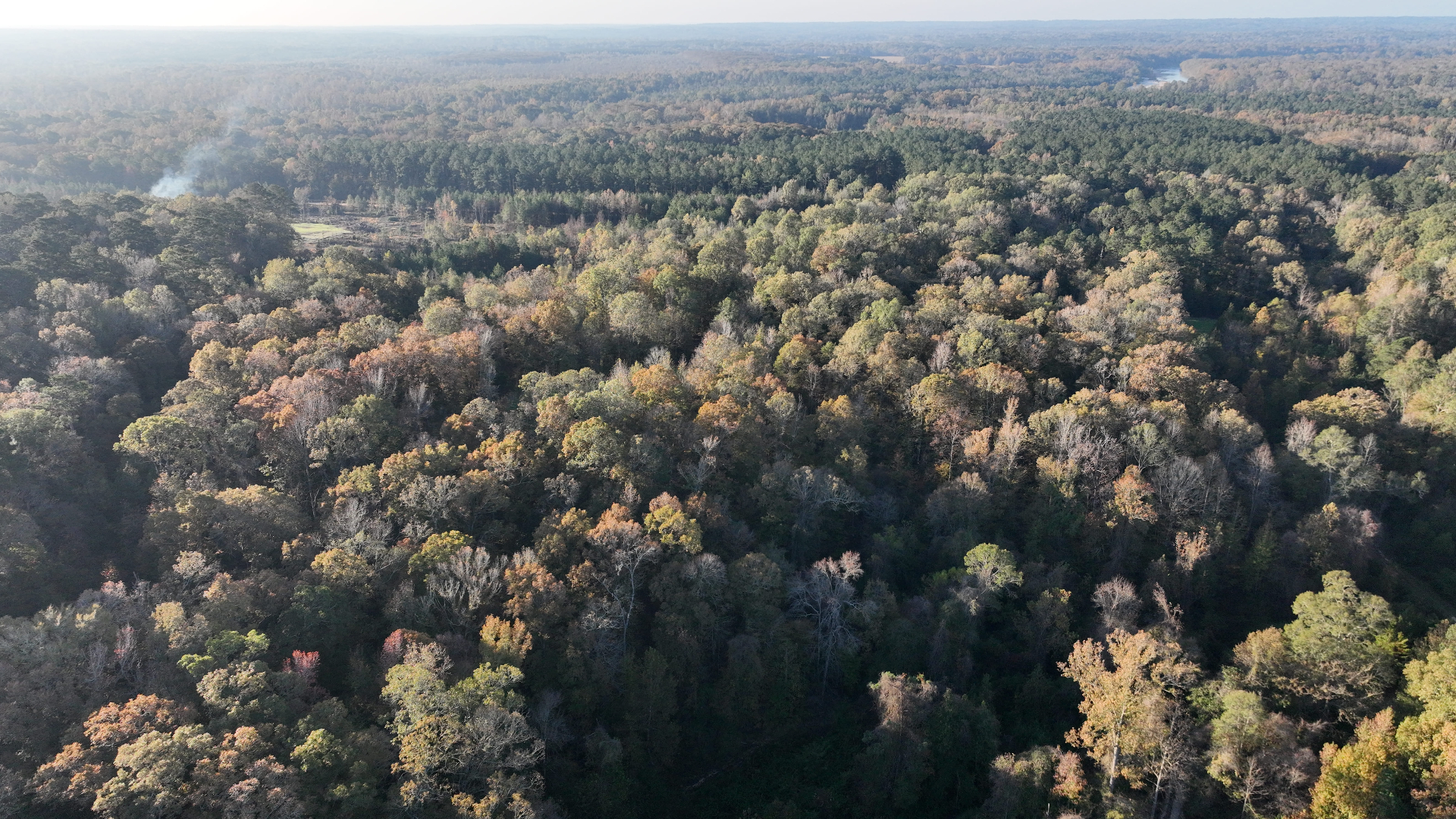
Amite County is pine country, plain and simple. Much of the working timberland between Liberty, Gloster, and Crosby is loblolly plantation on rolling Citronelle hills, with hardwood drains threading down toward the Amite and Tickfaw headwaters.
MS 24, MS 33, and MS 48 carry wood south into the mills around Bogalusa and Hammond and west into the Crosby corridor. The McComb pine cluster sits right next door.
That is a deep buyer pool. It is also part of why a fair number of Amite County tracts get sold too quickly — one buyer makes an offer, the landowner accepts it, and the rest of the market may not see the tract at all.
When pine competition is this deep, the difference between a phone-call sale and a sealed-bid sale can be meaningful money. Exposure is the leverage.
Pine Management Along the Homochitto Edge
Educational scenario — not a completed Southeast Forestlands project. Consider a hypothetical Amite County thinning where the owner has a per-ton offer in hand from a single buyer. A cruise may confirm stocking and stand health; a sealed-bid round exposed to qualified buyers across the McComb, Bogalusa, and Crosby corridor may return a range of bids that reflects each buyer's mill fit and haul economics on the day the sale is offered. The final result depends on the specific stand, current mill activity, and the buyer pool available at the time, so this outline is illustrative rather than a claim about any particular Amite tract or price.
Amite County participates in one of the deeper pine markets in the region, and management decisions may reflect that. Tracts here are often planted, thinned, and replanted on a rotation clock, and landowners who plan for that rotation as one long project tend to make different decisions than landowners who treat each sale in isolation.
The Homochitto National Forest along the north edge of the county is part of the picture. Family tracts may share lines with federal ground, and access roads, gates, and burn windows generally need to be planned so they work with the neighbor. Those questions are generally handled in a written management plan rather than on contract day.
How a rotation may be sequenced
- A first thinning at the point where stocking and basal area indicate the stand is ready, generally exposed through a sealed bid into the McComb, Bogalusa, and Crosby cluster to keep the residual stand growing on the strongest crop trees
- Mid-rotation work — timber stand improvement, prescribed burning on longleaf-restoration sites, and herbicide release where competition may be limiting growth
- A second thinning if stocking, basal area, and market conditions support it
- Final harvest marketed separately from any residual hardwood, with the reforestation plan drawn up before the last load leaves
That sequencing — and the decisions about which sandy ridges may fit longleaf restoration versus continued loblolly — is where longer-horizon value tends to come from. A buyer's per-ton offer generally does not describe any of that. A cruise and appraisal may.
Access Planning Before the First Load
Many Amite County tracts sit off narrow county roads with soft creek crossings. Loggers know that, and buyers may price the risk into a bid whether the contract addresses it or not.
The fix is upstream. Road inventory, gravel scope, wet-weather language, and BMP requirements written into the sealed-bid sale package can make access a known cost to every bidder instead of a hidden discount applied by whichever bidder is willing to absorb the risk. On Amite tracts, that piece of preparation may move stumpage by a meaningful margin.
Contract terms that often matter
Alongside price, common contract terms landowners may want to review before signing include weather-out clauses that let a forester pause operations when ground conditions become unsuitable, road-use and reclamation standards, SMZ buffer widths and BMP compliance language, load reconciliation and scale-ticket documentation, and payment timing tied to product tickets rather than to a lump-sum handshake. The value of these terms depends on the tract, the buyer, and the season — a written contract is where those factors become enforceable.
Long-Rotation Thinking in Pine Country
Between Liberty, Gloster, and Crosby, families that have been growing pine for more than one rotation often already know the math. Families that have not may find that a cruise and a sealed bid change what they thought their timber was worth.
Amite County timber moves whether it is professionally represented or not. The relevant question for most landowners is whether the tract was cruised, exposed, and represented — or whether it was sold off the first phone call. The answer generally shapes the outcome more than the calendar date does.
If you own pine in Amite County and are working through the next decision, get in touch. Pike County, Wilkinson County, Walthall County, and Franklin County are also part of our regular service area, and scheduling a walk depends on current fieldwork, tract location, weather, and access.
About Amite County, Mississippi for Timberland Owners
Amite County, Mississippi centers on Liberty and sits in deep southwest Mississippi along the Louisiana line, between the Homochitto and the Tangipahoa headwaters. Amite County tracts are largely managed loblolly on rolling Citronelle uplands, with hardwood drains feeding the Amite River and Tickfaw headwaters and pockets of longleaf restoration on sandier ridges. Pulpwood, CNS, and pine sawtimber may move into the McComb, Bogalusa LA, Crosby, and Hammond LA mill cluster — one of the deeper pine markets in the South when a sale is properly exposed.
For landowners managing tracts here, the practical issues that tend to recur are competitive pine pricing that benefits from sealed-bid exposure, longleaf restoration decisions on sandy ridges, and cross-state mill access. Decisions on thinning timing, sale structure, and reforestation are generally stronger when made with those local conditions in mind rather than from a generic regional template.

