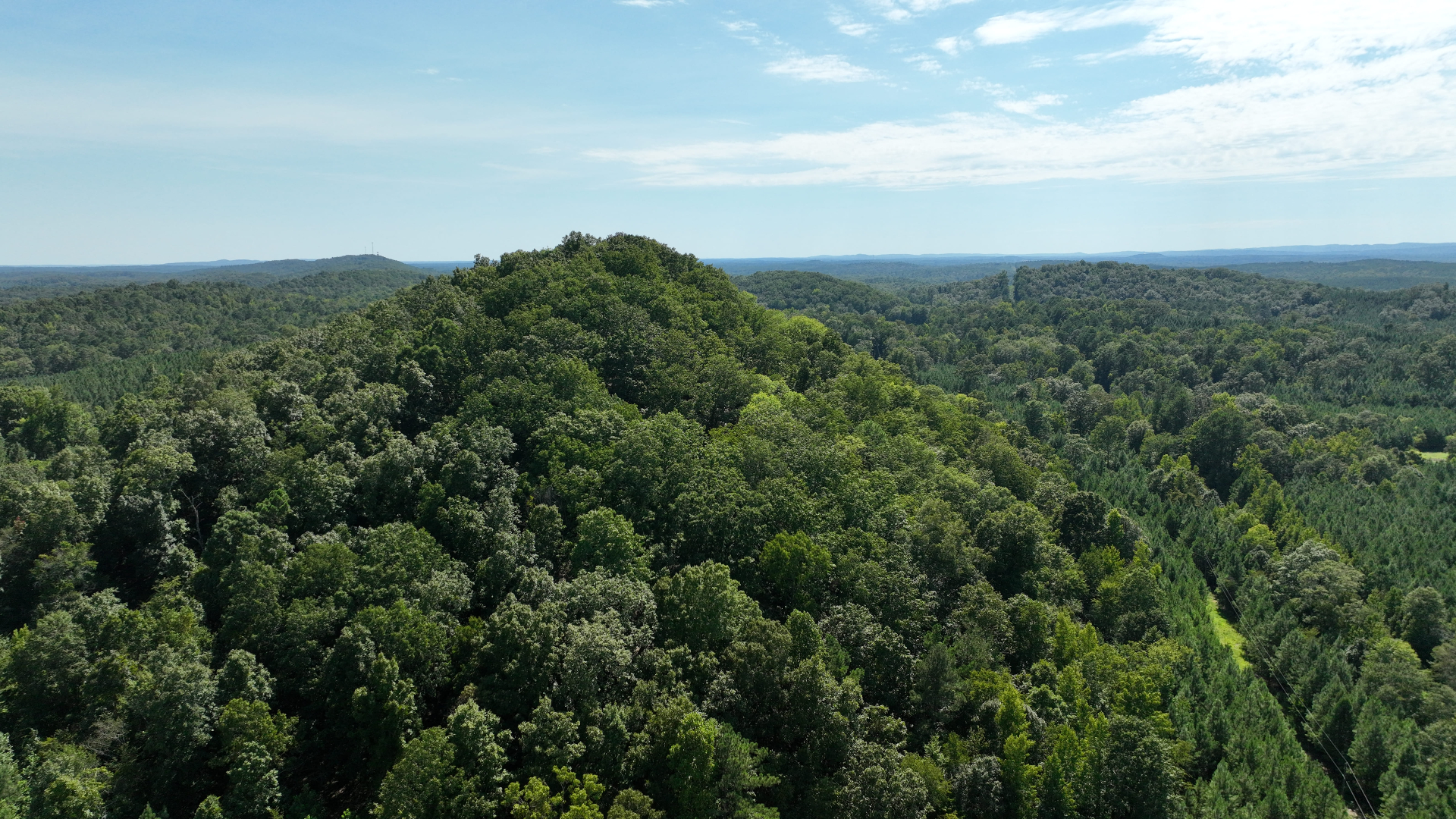
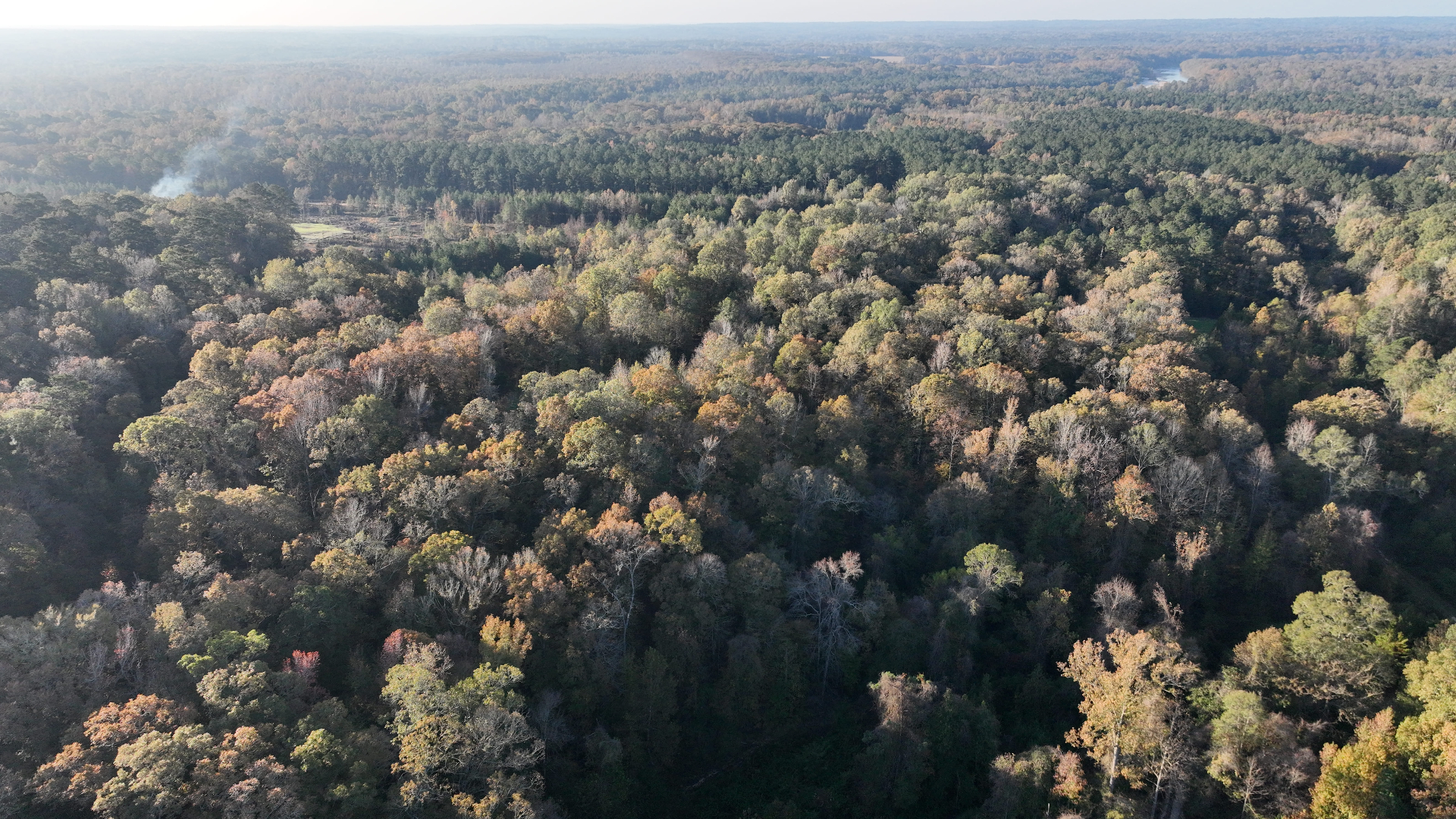
If you own timber in Adams County, Mississippi, you're sitting on some of the most distinctive ground in the state — loess bluffs that fall hard toward the river, ridges cut by St. Catherine and Second Creek, and bottomland hardwood pushing back from the Homochitto.
Natchez sits at the center of it, with US 61, US 84, and US 98 carrying timber north toward Brookhaven, east toward Monticello and McComb, and west across the river into Concordia Parish.
Most of the calls I get from Adams County aren't from big plantations. They're from family tracts — 40, 80, 160 acres — where the timber hasn't been touched in a long time, the lines need refreshing, and somebody finally needs answers before a sale.
Loess country is unforgiving when it's logged wrong. A road cut on the wrong contour turns into a gully in one winter. A grade hardwood sold as pulp leaves real money on the stump.
Decisions on this ground need to be made with the ground in mind — not from a buyer's template.
Working the Bluffs: What Adams County Timberland Owners Are Actually Managing
Example from the field. Worked an Adams County tract a few miles southeast of Natchez where the owner already had a verbal offer on a mixed pine and hardwood stand. A measured cruise showed a meaningful share of grade red oak and cherrybark in the bottoms that the original buyer was rolling into pulpwood. Marketed separately to qualified hardwood buyers along the river corridor, the bottomland stems cleared at sawlog pricing while the uplands sold as pine into the Brookhaven mill pull. Same tract, two markets, materially different check.
A lot of the timberland in Adams County isn't a pine farm. It's family ground — hunted hard, walked at Christmas, and managed for the long haul as much as for the next harvest. When the timber question finally comes up, it usually arrives wrapped in three or four others: the lines, the roads, the food plots, the estate.
That changes how a sale needs to be put together. A forestry management plan drawn up before the saws come in is worth more here than on a straight plantation tract, because the harvest is rarely the only thing the owner cares about.
The bluffs themselves do most of the rest of the talking. Loess will erode if you cut a skid trail down the fall line. A creek crossing dropped in the wrong spot blows out the first hard rain in February. The contract language on roads, water bars, and SMZs has to reflect that going in — not get negotiated after the loggers are already in the woods.
What an Adams County sale usually has to sort out
- Grade hardwood in the creek bottoms marketed on its own bid sheet, not rolled into pine pulpwood pricing
- Loess-slope skid plans, contour logging, and post-harvest road shape-up written into the contract
- Stand-by-stand decisions — which ridges replant in pine, which slopes manage back to mixed hardwood
- Hunting access, food plots, and shooting lanes preserved through the harvest plan rather than rebuilt afterward
- Cruise documentation that supports a stepped-up basis on inherited tracts
If you've already got a number on the table, run it through a timber thinning assessment before you sign anything. The first offer tells you what a buyer is willing to pay; it doesn't tell you what the tract is worth.
Marketing Mixed Pine and Hardwood Around Natchez
Adams County buyers pull from three directions — Natchez and Crosby to the south, Brookhaven and Monticello to the east, and the Concordia Parish mills across the river. That's a wider buyer pool than the county size suggests, but it only matters if the sale gets in front of all of them.
Sealed-bid timber sales are how that exposure happens. A pine-only buyer working a phone-call offer will price the hardwood as if it were pulpwood — sometimes because that's what their mill takes, sometimes because they're betting you won't notice. A cruise and appraisal done before the bid sheets go out is what puts that conversation on the right footing.
After the harvest, the next decision matters as much as the sale did. Some ridges replant clean in loblolly. Some bluff faces are better left to natural mixed regeneration. Reforestation planning on Adams County ground is rarely one-species, one-prescription work.
Adams County Is Worth Doing Right
The land between the Homochitto and the river is some of the oldest worked-and-walked ground in Mississippi. Most of the families I work with here aren't selling the place — they're selling timber off it, once a generation, and they want the property to look right when the loggers are gone.
That's the standard the work has to meet. Cruise the timber. Market it competitively. Write a contract the property can live with. Be there when the trucks roll, and be there when the gates close.
If you've got an Adams County tract you're trying to make a decision on — a sale, a thinning, an inherited place you haven't walked in years — reach out and we'll walk it together. Jefferson County and Wilkinson County are regular ground too, so the trip is rarely a long one.
About Adams County, Mississippi for Timberland Owners
Adams County, Mississippi centers on Natchez and sits in the loess bluffs of southwest Mississippi along the river at Natchez. Adams County tracts often include steep loess ridges, mixed pine-hardwood on the slopes, and bottomland hardwood along St. Catherine Creek, Second Creek, and the Homochitto bottoms. Pulpwood and pine sawtimber move into mills around Natchez, Brookhaven, Crosby, Monticello, and across the river into Concordia Parish, LA; grade hardwood from the loess and creek bottoms draws separate, more selective buyers.
For landowners managing tracts here, the practical issues that recur are loess erosion control, separating grade hardwood from pine pulpwood marketing, and steep-slope BMP planning. Decisions on thinning timing, sale structure, and reforestation should be made with those local conditions in mind rather than from a generic regional template.