
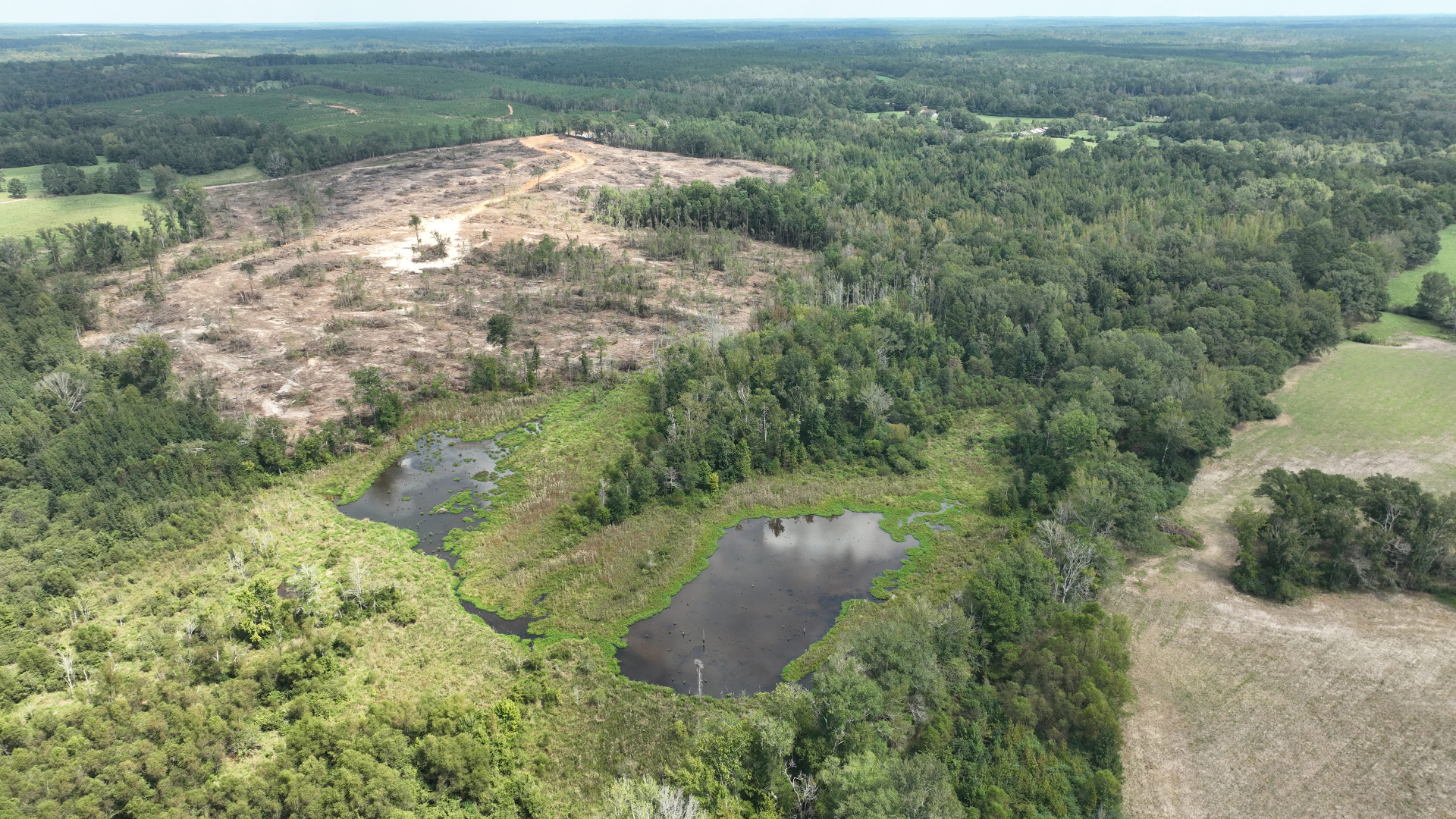
Neshoba County is in east central Mississippi. Most of the timberland here is owned by families. Tracts often hold planted pine on the high ground and hardwood in the bottoms.
Southeast Forestlands works only for the landowner. We do not buy timber and we are not paid by mills.
Ridges, Slopes, and the Soft Flats Between
The ridges and hillsides drain well. They dry out fast after rain. Below them lie flats that hold water. A dense layer under the soil keeps it from soaking away.
That flat ground can stay soft while a ridge nearby is firm. So the working window is set by which part of a tract you are on, not by a month on the calendar.
Mixed Timber
A tract may hold both pine and hardwood. One cruise tallies them by species and product, so each is described for what it is.
On the pine side, watch for a first thinning that keeps slipping. Crowded pine that grows slowly is most at risk from southern pine beetle. Thinning on time is the way to stay out of that trouble. The right timing depends on the site, the age, and your goals.
What to Check on the Ground
Some slopes here are steep. A buffer along a creek should be wider on that kind of ground. Deck spots belong on a map before a crew arrives.
Check the way in, the lines, the stand, and where the wet ground starts. Do that tract by tract before you decide to sell.
Nearby Counties
We also work with landowners in nearby counties, including Winston, Kemper, Lauderdale, Newton, Leake, and Attala.
General Guidance
For more on how we handle each part of the work, start with these guides:
- What a timber cruise measures
- How a sealed-bid timber sale works
- How we sell timber
- Wet-weather logging and BMPs
- Thinning decisions
- Regeneration and replanting
- All forestry services
Talk It Over First
Talk with a forester before deciding anything. Contact us to discuss your goals; the first review of your property generally happens online.