
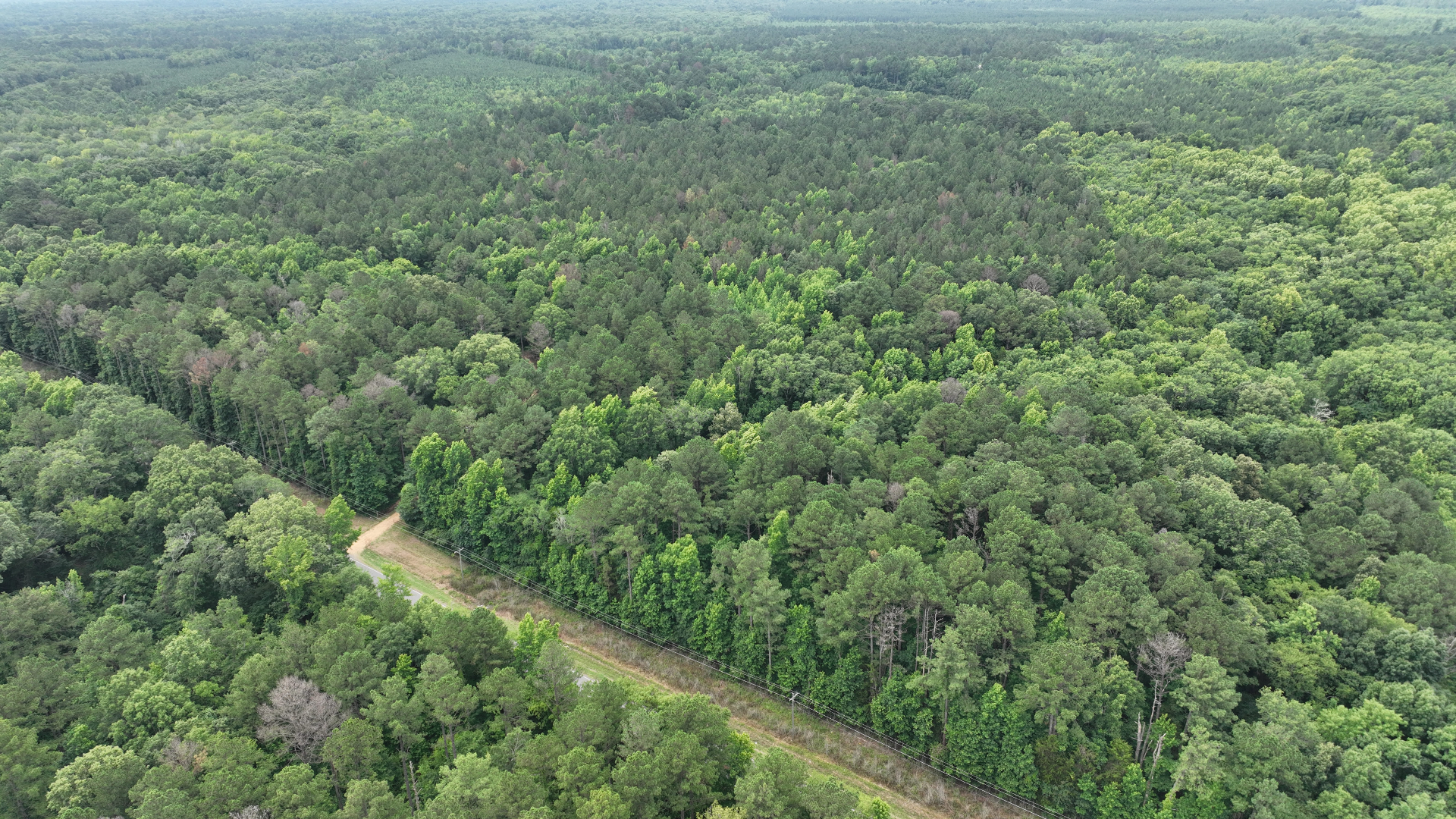
Greene County is Black Belt country with a Tombigbee-Warrior bottomland edge, and the two halves don't behave the same way. The clay flats around Eutaw and Boligee shrink and swell hard with the weather, which decides when you can log and what the residual stand looks like afterward. The bottomland along the river is where the hardwood grade lives — and where the wrong buyer mix will leave 30% of the value sitting in the woods.
I work Greene County tracts on those terms: log when the ground can take it, market the bottomland hardwood separately from the upland pine, and never let one buyer set the price for both.
Market Pull on a Greene County Tract
Buyer demand on a Greene County tract is shaped by Demopolis-area mills, Tuscaloosa-area buyers, Tombigbee barge markets, and Birmingham-area specialty hardwood demand. Prairie-edge loblolly, Tombigbee-bottom cherrybark and water oak, and eastern red cedar on prairie transitions each align with different bidder groups, and whether specialty hardwood buyers ever see the tract often depends on whether those products are broken out of a mixed lot in the cruise.
Planning Around Pine Decline on a Black Belt Stand
Example forestry scenario for local landowners. Imagine an owner south of Eutaw who believes a loblolly stand is healthy and is weighing a first thinning. A ground walk paired with a low-altitude aerial flight can be used to map crown thinning, resin flow, and beetle activity, and to distinguish areas where the stand is still on a normal management track from areas where pine-decline symptoms warrant a different response. Some acreage may support a conventional commercial thinning; other acreage may point toward a salvage-oriented plan, reforestation planning, or a hardwood-conversion evaluation. What the mix looks like — and what marketing structure fits — depends on the cruise, the soils, and the owner's holding-period goals, not on a generic west-Alabama template.
The core insight for this county is straightforward: Black Belt operability constraints, the Tombigbee-Warrior confluence bottomland-hardwood quality, and barge-fed market access. An unsolicited direct offer, arriving before the cruise is walked, seldom reflects that Black Belt-plus-bottomland split.
Soils, Water, and Species in Greene County
Greene County land sits in the Black Belt Prairie, Tombigbee-Warrior confluence, anchored around Eutaw and communities like Boligee, Forkland, Union. Drainage runs through the Tombigbee River, the Black Warrior River, Sipsey River, and the soils are classic Black Belt prairie clays that swell wet and crack dry, plus rich alluvial flats at the Tombigbee-Warrior confluence.
The standing timber reflects that geography: loblolly on the uplands and pine-adapted ridges, eastern red cedar on prairie edges, and outstanding bottomland hardwood — cherrybark, water oak, sweetgum, cottonwood. What grows here is not what grows fifty miles in any direction, and pricing has to follow.
The Short List of Greene County Sale Mistakes
Most preventable losses on Greene County sales follow a short, repeatable list:
- winter logging on Black Belt prairie clay — the rutting damage outlasts the sale check by years
- selling confluence-bottom cherrybark and water oak as run-of-the-mill pulp
- no barge-market consideration on tracts within reach of the Tombigbee loadouts
None of these are mysterious. They all come from selling timber without independent representation in a market this specific.
Prairie Clays, Stand Health, and Operability in Greene County
Planning for a Greene County tract may need to account for two conditions before a sale is designed: prairie soils that can limit equipment access after rainfall and stand-health concerns in pine stands showing possible decline symptoms. A cruise documenting both conditions can help the landowner evaluate commercial thinning, salvage-oriented work, continued management, or deferring a sale.
Using the cruise findings, the landowner and consulting forester may develop a written prospectus that separates upland, prairie-margin, and bottomland components; a sealed-bid package inviting west-Alabama and Mississippi-side buyers; a contract that anchors seasonal access, SMZ handling, and completion timelines to the ground reality; and independent oversight from first load through payout.
Independence Is the Product
On a Greene County tract, the party proposing to buy the timber is often also the party estimating its volume and grade — and Black Belt operability windows plus Tombigbee-bottom hardwood grading each pull those numbers in different directions. Without a separate professional read, the landowner has no way to verify how prairie-clay access limits or bottomland grade breakdowns were factored in.
Southeast Forestlands does not buy timber, log timber, or take referral fees from buyers or loggers. That separation is what lets the cruise, the sale prospectus, and the contract answer to the landowner rather than to any single mill or hauler.
The Right Time to Call
Starting the conversation early — before an unsolicited buyer is in the room — leaves a Greene County landowner room to separate prairie-clay operability windows from bottomland hardwood grading. That flexibility matters most on inherited tracts near Eutaw, on ground that has not been walked in a decade, and on properties where the harvest-versus-hold question is genuinely open.
The cruise-to-closing timeline on a Greene County tract benefits from being paced to prairie-clay operable windows and Tombigbee-bottom access rather than to any external deadline.
Cross-County Coordination
Mill draws, buyer participation, and haul economics in Greene County can extend across county lines into Tuscaloosa County, Hale County, Marengo County, Sumter County and Pickens County. If you own land in more than one of those counties, coordinating multiple tracts may broaden the qualified buyer pool when timing, products, and haul geography align.
Getting Started in Greene County
If you own timberland in Greene County, Alabama, the first step is a conversation — no obligation, no buyer in the room, and an honest read on whether selling, holding, or managing makes more sense for your situation.
Contact Southeast Forestlands to start that conversation, or read more about our independent forestry consulting services.
About Greene County, Alabama for Timberland Owners
Greene County, Alabama centers on Eutaw and is reached by I-20/59, US 11, and US 43, with timber moving through the Demopolis, Tuscaloosa, and Aliceville mill cluster. Drainage follows the Black Warrior and Tombigbee, and most working timberland is loblolly plantations on the uplands with hardwood bottomland along the Tombigbee corridor.
The recurring practical issue for landowners here is Black Belt clay — it affects site index, residual damage, and wet-weather operability in real, measurable ways. Thinning timing, sale design, and reforestation decisions all need to be made with that ground in mind, not from a generic west-Alabama template. Independent consulting forestry, timber cruises, and sealed-bid sale support are available for Greene County landowners.

