
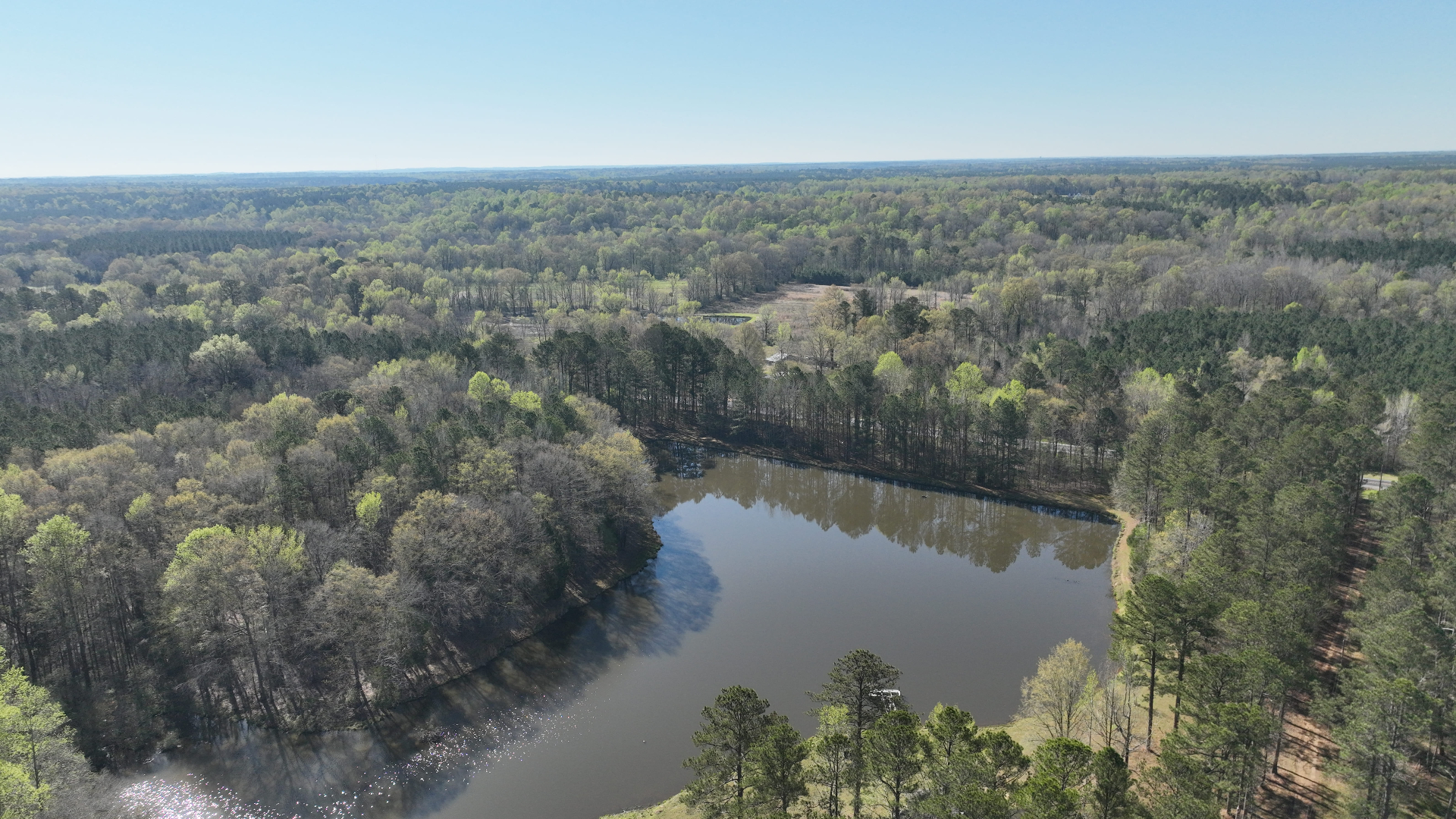
Inherited timberland and old boundaries go together. A tract held in one family for two or three generations almost always has at least one line that has drifted — a fence built where it was easiest, a logging road that wandered, a neighbor who maintained a clearing past the deeded corner. By the time the next generation inherits, the working boundary on the ground and the legal boundary on the deed are not the same line.
This Field Note covers how to handle a boundary dispute on inherited Mississippi or Alabama timberland — what to document, when to survey, how Mississippi law treats adverse possession, and what protects the future value of the timber.
Why Inherited Tracts Have Boundary Problems
Boundaries on rural Mississippi and Alabama timberland were often set by:
- A surveyor in the 1950s–1970s working off section corners that have since been disturbed.
- A handshake reset between two neighboring families that never made the deed.
- A logger's mark that became the working line after a harvest.
- A bulldozer-cleared fire line that became the de facto property edge.
None of these are recorded boundaries. They become problems the moment timber value is on the line — a sale, an inheritance split, a beetle salvage, or a neighbor's harvest that runs to the wrong line.
Step 1: Pull the Deeds Before You Walk the Tract
The first move is paperwork, not boots. Pull the current deed, the prior deeds in the chain back to the original conveyance if possible, and any recorded surveys or plats. The county chancery clerk holds deeds; the tax assessor often holds plat references and parcel maps. The Bureau of Land Management's GLO records cover original federal-government surveys for most of Mississippi and Alabama and are free online.
Step 2: Walk the Tract with a Registered Forester
A registered forester will identify old blazes, witness trees, line trees with cut scars, surveyor's flagging from past work, and obvious mismatches between deed call and ground evidence. The forester is not a substitute for a surveyor, but the walk usually reveals which lines are clean, which are uncertain, and where the dispute (if any) actually sits. This is a routine part of the work covered under our Mississippi consulting forester practice.
Step 3: Engage a Registered Land Surveyor
When the deeds and the ground don't agree, a registered land surveyor is the next call. The surveyor will tie the deed calls back to controlling monuments — section corners, original GLO corners, or established subdivision corners — and produce a current plat that shows the legal line, the physical evidence on the ground, and any conflict between them. That plat is what an attorney works from if the dispute does not resolve.
Adverse Possession in Mississippi: What It Actually Requires
Mississippi Code §15-1-13 authorizes adverse possession after 10 years of possession that is open, notorious, exclusive, hostile, continuous, and under claim of right. On rural timberland, "possession" typically means active use — clearing, fencing, farming, or harvesting. Passive ownership of an adjoining tract is not enough. The bar is high, and successful adverse-possession claims on Mississippi timberland usually involve clear physical evidence of continuous use across the disputed strip for the full statutory period.
The practical implication for a landowner inheriting a tract: an old fence that has stood for 30 years and was maintained by the neighbor may carry weight in court. An old fence that has fallen down and grown over since the 1980s usually does not, because continuous, open possession ended when the use ended.
Adverse Possession in Alabama
Alabama recognizes adverse possession with a 20-year period under the common-law doctrine, or 10 years under the statutory "color of title" doctrine when the claimant has a written instrument and has paid taxes for the period. Tract-by-tract analysis with an Alabama-licensed attorney is necessary; the rules are not the same as Mississippi's.
What Not to Do
- Don't confront the neighbor until you have a survey and (often) an attorney. Conversations become evidence.
- Don't bulldoze the fence. Disturbing physical evidence on the ground weakens whichever side disturbed it.
- Don't sell timber close to a disputed line. A buyer who cuts to the wrong line creates a separate timber trespass exposure on top of the boundary issue.
- Don't accept a verbal agreement. Any resolution should run through a corrected deed and recorded plat.
Real-World Pattern
A typical situation: a Lauderdale County tract inherited from a grandparent. The east line on the deed runs along a section line; the working line on the ground is a barbed-wire fence built in the 1970s along a logging road, roughly 60 feet inside the deeded line. The neighbor has bush-hogged a strip along his side of the fence for decades. A current survey re-establishes the deeded line. The next conversation — through attorneys — typically ends with the deed honored, a quitclaim or boundary-line agreement filed, and the fence rebuilt on the legal line before the next timber sale. No litigation, because the survey made the facts unarguable.
Boundary Health Before a Timber Sale
Before any meaningful timber sale on an inherited tract, the boundary should be:
- Surveyed within the last 10 years, or freshly walked and tied to current monuments.
- Blazed and painted in the standard two-blaze, single-mark pattern on the trees nearest the line, on both sides.
- Free of any active dispute or unresolved adverse-possession claim.
- Documented in the sale prospectus and the contract — boundary description, SMZ buffers off the line, and harvest oversight language. The standard contract clauses are summarized in timber contract clauses that protect landowners.
Where Boundary Problems Cluster
Boundary issues are most common on long-held family tracts in Lauderdale, Kemper, Newton, Clarke, and across the working-forest counties of east-central Mississippi and west Alabama where multi-generation ownership is the norm. Newer, single-owner tracts in the Pine Belt typically have cleaner boundaries because they passed through a survey at sale.
The Right Sequence
Documents, then forester, then surveyor, then attorney if needed — in that order. Skipping straight to confrontation or straight to cutting timber is what turns a fixable boundary mismatch into a multi-year dispute. Help running the sequence on an inherited Mississippi or Alabama tract is part of our consulting forester work, alongside our timber sales practice for sales that follow.