
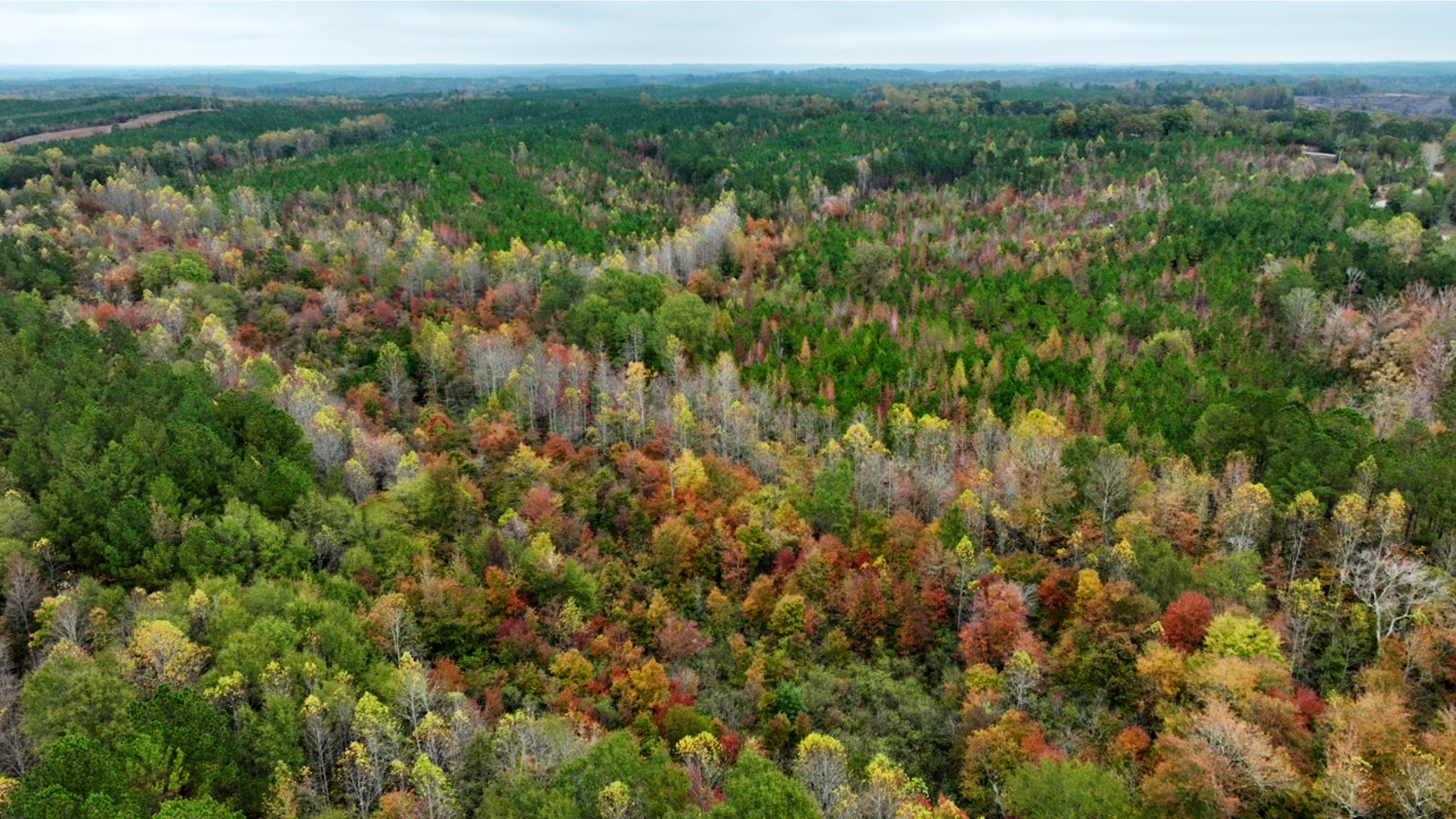
My neighbor got more than that, and his timber looked about the same.
That is one of the most common things a landowner says when the first offer comes in lower than expected. And it is a fair thing to say — except that two tracts a few miles apart are not always as similar as they look from the road.
Timber price is not random, but it is not interchangeable either. A neighbor's sale is useful context. It is not a guaranteed benchmark.
Here is why.
The mills competing for the timber are not always the same.
A tract ten minutes from a hardwood mill and a tract ten minutes from a pine mill are in two different conversations. The hardwood buyer may be looking for sawtimber, veneer logs, and grade material. The pine buyer may be looking for pulpwood, chip-n-saw, or sawlogs.
Distance matters. Product demand matters. Hauling cost matters.
A buyer may pay strong on one tract because it fits exactly what his mill needs that week. Another tract nearby may look good from the road but not fit the same market.
That does not mean the timber is bad. It means the buyer pool is different.
Access can change everything.
A clean, dry tract with a good road system is easier to cut, easier to haul, and easier to manage. A tract with weak access, soft ground, bad culverts, long skid distances, or limited truck turnaround can cost more to harvest.
Those costs get built into the offer.
A landowner may only see trees. A logger sees whether he can get trucks in, whether he can work after rain, whether a loader has room, and whether the job will tear up roads if the timing is wrong.
Two tracts can have the same timber volume and still bring different offers because one is simply easier to operate.
Product mix matters more than most landowners realize.
A stand that looks big
is not automatically high-value timber. Size helps, but buyers are looking at product classes.
Is it pulpwood?
Chip-n-saw?
Pine sawtimber?
Hardwood sawtimber?
Veneer?
Mixed grade logs?
A tract with more sawtimber and better log quality can bring a very different result than a tract with the same number of trees but more pulpwood or lower-grade material.
That is why a timber cruise matters. You cannot price a tract accurately from a windshield view.
Timing can help or hurt.
Timber markets move. Mill inventories change. Weather changes logging conditions. Quotas open and close. Some buyers may be aggressive one month and quiet the next.
A neighbor's sale from last year, last season, or even a few months ago may not reflect today's market.
That is especially true in wet periods, during mill slowdowns, or when a certain product class gets oversupplied. A tract that would have drawn strong interest in one season may need different timing to get the best result.
Buyer competition is often the biggest difference.
One offer is not a market.
It is one buyer's opinion, based on his needs, his crew, his quota, and his margin.
When multiple qualified buyers compete for the same timber, the landowner gets a much clearer picture of real market value. That is one reason Southeast Forestlands uses sealed bids on many timber sales.
The goal is not to guess what the timber is worth.
The goal is to expose the sale to the right buyers, put clear sale terms in front of them, and let competition show what the market is willing to pay.
The contract matters too.
A higher price is not always a better deal if the contract is weak.
Payment terms, harvest boundaries, BMP compliance, streamside management zones, road repair, cleanup, timing, and damage protection all matter.
A good timber sale is not just about the check. It is about getting paid fairly and protecting the land after the logging crew leaves.
That is where a consulting forester earns his keep.
So when a neighbor gets more, ask better questions.
Instead of asking, Why did he get more than me?
ask:
What products were on his tract?
How many buyers bid?
Was it dry-ground logging?
Was access better?
Was it near a different mill?
Were the sale terms the same?
Was the timber cruised and marketed properly?
Those answers usually explain the difference.
Nearby does not always mean comparable.
Two tracts can be a few miles apart and still have different timber quality, different access, different soil conditions, different product mix, and different buyer interest.
That is why Southeast Forestlands looks at the actual timber, the actual ground, the actual market, and the landowner's goals before recommending a sale strategy.
Your neighbor's sale may be useful information.
But your timber deserves its own look.
See more field notes on timber sales, prices, and landowner decisions.