Three federal programs pay forest landowners to manage their land better: EQIP, CSP, and CRP. They are routinely confused because the acronyms sound similar and all three involve the USDA. They do different things, pay differently, and fit different landowner situations. Here's how to think about each.
Program rules, payment rates, and ranking criteria change. Confirm current terms with your local NRCS or FSA office before enrolling.
EQIP — Environmental Quality Incentives Program
What it is. EQIP is the Natural Resources Conservation Service's flagship working-lands program. It pays a share of the cost of conservation practices implemented on actively managed forestland.
What it pays for on timberland. Common forestry practices include:
- Tree and shrub establishment (reforestation) — site prep, planting, and seedling cost
- Forest stand improvement — TSI, pre-commercial thinning, removal of undesirable stems
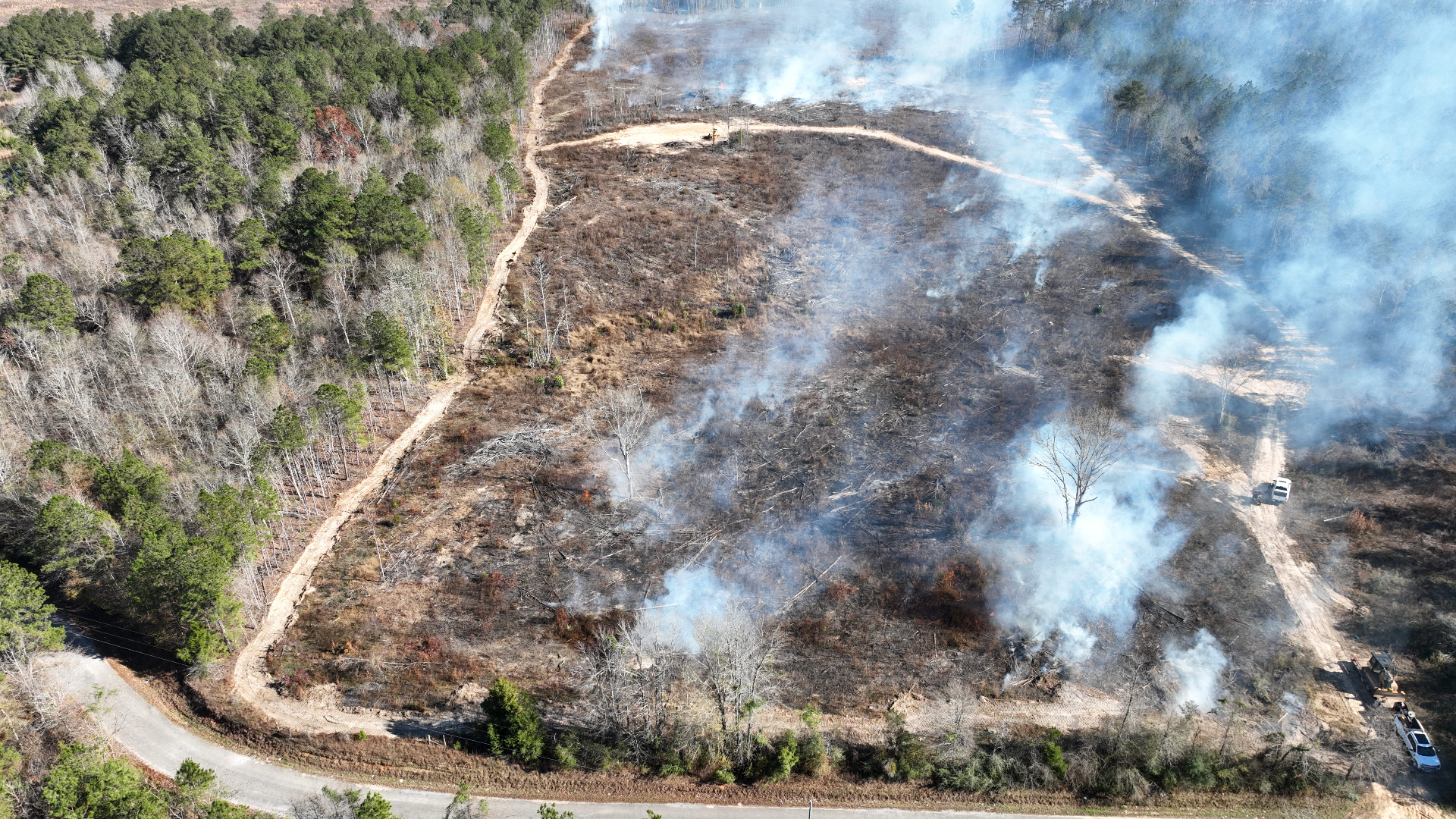
- Prescribed burning
- Herbaceous weed control and herbicide application
- Firebreak construction and maintenance
- Restoration of declining habitats (longleaf pine establishment in the Southeast is a flagship priority)
How it works. Landowner applies through the local NRCS office. NRCS ranks applications by environmental benefit and the priorities of the local field office. Selected applications enter into a contract that pays a fixed per-acre or per-unit rate on completion of each practice, typically over 3–5 years.
Who it fits. Owners actively investing in reforestation, longleaf restoration, prescribed burning, or stand improvement. EQIP is the most commonly used cost-share for ongoing forestry work in Mississippi and Alabama.
CSP — Conservation Stewardship Program
What it is. CSP rewards landowners for the level of conservation already on the ground and pays for additional enhancements on top of it. It's a stewardship program, not a single-practice cost-share.
What it pays for on timberland. Annual stewardship payments based on the conservation activities already in place across the entire enrolled operation, plus enhancement payments for new practices like:
- Adoption of cover crops or pollinator habitat in fields and openings within the forest
- Forest management with retention of snags and mast trees
- Stream and wetland buffer enhancements beyond minimum BMP
- Wildlife habitat enhancements (woodcock corridors, quail patches, etc.)
How it works. Five-year contracts covering the entire eligible operation. Payments are annual, based on a conservation performance ranking. Renewable if performance is maintained.
Who it fits. Landowners with diverse, actively stewarded properties — mixed timber, fields, food plots, streams — who are already practicing strong conservation and want to expand it. CSP is harder to qualify for than EQIP but rewards depth, not single practices.
CRP — Conservation Reserve Program
What it is. CRP is the Farm Service Agency program that pays an annual rental rate to take environmentally sensitive land out of agricultural production and put it into permanent cover for a contract term of 10–15 years.
What it pays for on timberland. Most pure timberland is not eligible for CRP because the program is designed for cropland conversion. The relevant CRP practices for forest landowners are typically:
- CP3 / CP3A — Tree planting on former cropland. Pays for site prep and tree establishment plus annual rental for the contract term.
- CP22 — Riparian buffer. Pays for buffer establishment along streams and rivers.
- CP31 — Bottomland hardwood reforestation. Reforests former cropland in bottomland hardwoods, particularly in the Mississippi alluvial valley.
- CP33 — Habitat buffers for upland birds (bobwhite). Establishes native warm-season grass and forb buffers around fields.
How it works. Enrollment is through FSA, either through general signups (announced periodically) or continuous signup for specific practices. Annual rental rates are set by soil rental rate, with bonus payments for certain practices.
Who it fits. Owners with eligible cropland or marginal pasture they want to convert to forest. Not a fit for already-established timber stands.
Quick comparison
- EQIP: One-time cost-share on specific forestry practices. Best fit for ongoing reforestation, TSI, prescribed burning, and longleaf work.
- CSP: Five-year annual payments rewarding overall conservation stewardship plus enhancements. Best fit for diverse, well-managed properties.
- CRP: 10–15 year annual rental on land converted from crop to permanent cover (tree planting or buffer). Best fit for cropland-to-timber conversion.
How to enroll well
- Get a written forest management plan first. Most EQIP and CSP forestry contracts require an approved plan from a registered forester. The plan is also what aligns the practices to the right program.
- Visit both offices. NRCS (for EQIP and CSP) and FSA (for CRP) operate in the same USDA service center but run different programs. Walk into both.
- Don't start the practice before approval. Federal cost-share generally cannot reimburse work that started before the contract was signed.
- Stack programs intelligently. A reforestation project can sometimes layer EQIP cost-share on site prep and planting with CRP rental on the resulting stand. The right combination is property-specific.
- Document everything. Receipts, before/after photos, GPS-located practice areas, and signed contractor invoices keep payments on track.
The takeaway
EQIP, CSP, and CRP are powerful tools — but only when matched to the right property and the right goal. The wrong program on the wrong tract is paperwork without a payoff. The right program on the right tract pays a meaningful share of the work the family was going to do anyway.
If you're considering reforestation, longleaf restoration, prescribed burning, or stand improvement on a Mississippi or Alabama tract, talk to a registered forester about which programs fit before you start the work. Many of the best opportunities are time-sensitive.