
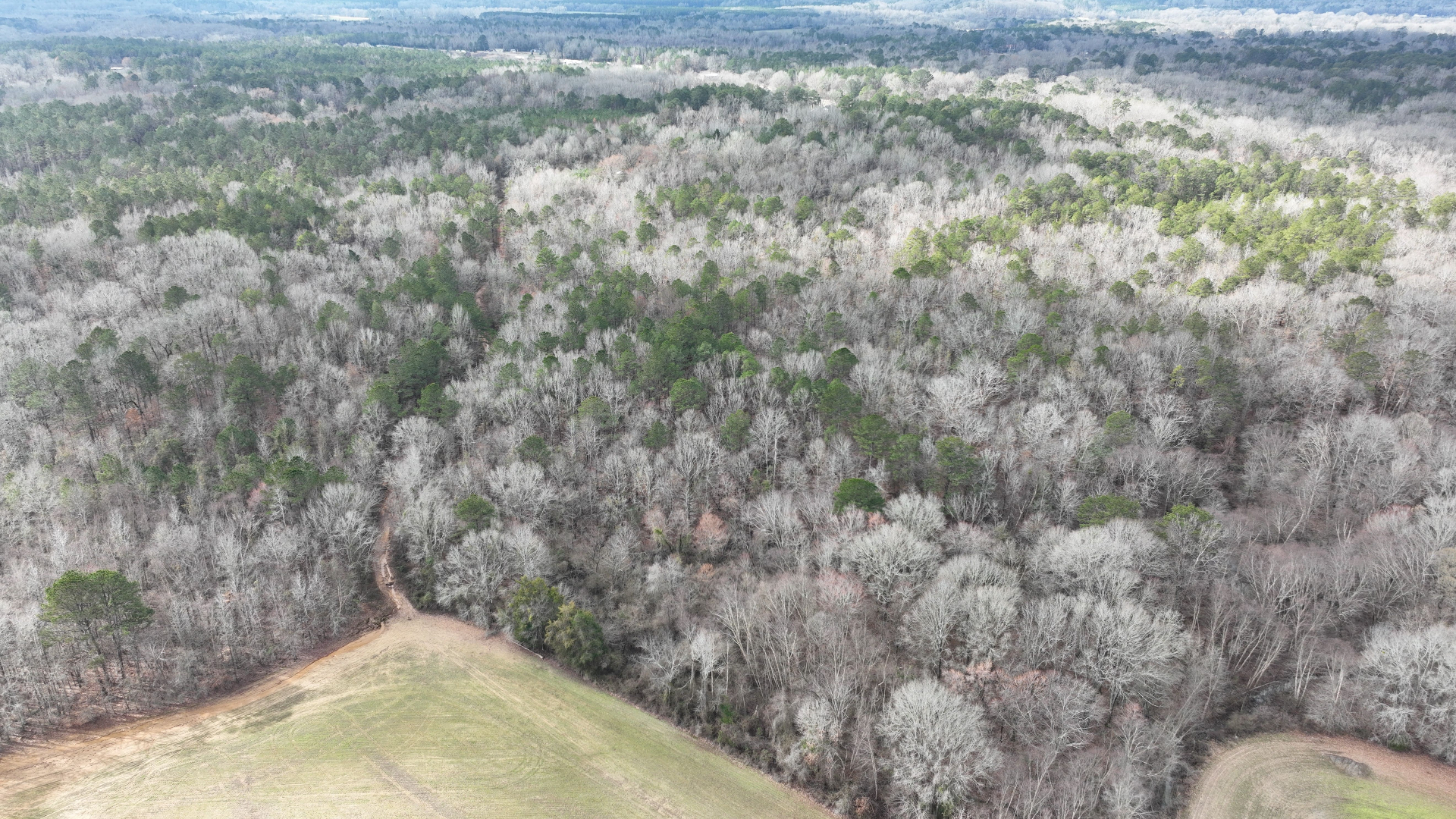
A forest road is infrastructure, not an accessory. Done right, it's the spine of every harvest, every burn, every cost-share inspection, and every emergency response for the next several decades. Done wrong, it's a soil-loss factory that costs more in maintenance and BMP violations than the harvest it was built for ever paid.
This Field Note covers how a permanent forest road actually gets planned and built on Mississippi and Alabama timberland — alignment, drainage, culverts, BMPs, and the contractor handoff that determines whether the road is an asset or a liability.
Step 1: Design Before Dirt Moves
The first cost of a bad forest road is the location. Once a road is cut, fixing the alignment costs more than building it correctly did. Before anything moves:
- Walk and flag the proposed alignment with a registered forester or experienced road contractor.
- Pull a topographic map and a current aerial. Identify ridges, draws, wet areas, and stream crossings.
- Identify SMZ (Streamside Management Zone) widths required by state BMPs along every perennial and intermittent stream the road will approach or cross.
- Set the gradient target — typically 8% or less on sustained pitches in Mississippi and Alabama soils, with short steeper segments allowed where unavoidable.
Step 2: Drainage Is the Whole Design
Water destroys forest roads. Every design decision is a drainage decision in disguise. The four tools that keep water off the road and out of streams are:
- Crown. A 3–5% crowned running surface sheds water laterally before it can run down the road.
- Outsloping. On sustained grades, outsloping the entire road surface 2–4% toward the downhill side moves water off without channeling.
- Broad-based dips and waterbars. Built-in dips at calculated intervals on sustained grades discharge water into the woods before it gathers velocity.
- Cross-drain culverts. Pipes or low-water crossings sized for the drainage they receive.
The single most common Mississippi forest road failure is a road built on the right line with the wrong drainage — long, uncrowned, undrained pitches that gully out in the first major rain.
Step 3: Stream Crossings
Stream crossings are where most BMP violations and most permit issues happen. Three crossing types:
- Ford / low-water crossing. Hardened concrete or rock crossing of an intermittent stream where a culvert is impractical.
- Culvert crossing. A buried pipe sized for the design storm, with proper headwall, fill, and seeding.
- Bridge. For wider streams or wetland conditions; sometimes the only BMP-compliant option.
For any crossing of a waters-of-the-U.S. stream, a Section 404 permit from the Army Corps of Engineers is typically required. Forestry has limited statutory exemptions for normal silviculture, but those exemptions don't cover everything — coordinate before the bulldozer arrives.
Step 4: Culvert Sizing
Undersized culverts are the second most common cause of forest road failure. A 24-inch pipe placed where a 36-inch was needed will plug, blow out, or wash the road in the first significant storm. The state BMP manuals publish sizing guidance based on drainage area and rainfall intensity; experienced road contractors and registered foresters use those tables, not eyeball estimates.
Step 5: Surfacing
For most permanent woods roads on Mississippi and Alabama timberland:
- Base: 6–8 inches of crusher-run or pit-run aggregate on a properly shaped, compacted subgrade.
- Wearing surface: 4–6 inches of dense-graded gravel.
- Seasonal use roads may run on native soil where conditions allow, with closure during wet weather.
Wet-weather use of unsurfaced roads is the leading cause of long-term road damage. Contract language and harvest oversight should enforce wet-weather restrictions during any timber sale — see timber contract clauses that protect landowners.
Step 6: BMP Compliance
Mississippi's BMP manual and Alabama's parallel manual cover the practices that protect water quality during and after road construction:
- SMZ buffer widths along streams, with restrictions on disturbance inside the SMZ.
- Filter-strip seeding and mulching on cut and fill slopes.
- Sediment control at culvert outlets.
- Closeout requirements when roads are decommissioned.
Following BMPs is what protects the landowner under the federal "silvicultural exemption" from the Clean Water Act's NPDES permit requirements. Skip BMPs and the exemption can disappear.
Step 7: Contractor Handoff
Two practical points where landowners lose value:
- Verbal scope. Forest road construction needs a written scope of work — alignment, width, drainage spacing, culvert sizes, surfacing, and seeding — not a handshake. Without it there is no enforceable standard.
- No final inspection. A road that's "done" on the contractor's word but never walked by the forester or landowner is a road with hidden deferrals. Final inspection with a punch list closes out the job.
Real-World Pattern
Common scenario: a landowner asks the logging contractor to "leave us a road" during a clearcut. The crew bulldozes the haul route into a passable shape, cuts a couple of crossings, and leaves. Two wet seasons later the running surface is rutted to the axle, the culverts are plugged, and one stream crossing has washed out. The fix — engineered drainage, properly sized culverts, surfacing — costs more than building the road right the first time would have. The harvest paid; the road did not.
Where Road Construction Is Hardest
Heavy clay soils and high rainfall in Wayne, Greene, Perry, George, and into south Alabama drive higher drainage densities and heavier gravel requirements than the lighter sandy loams further north and east. Bottomland and floodplain tracts almost always require engineered crossings rather than fords. Tract-by-tract design is not optional in these soils.
The Road Is the Tract's Future
Every future thinning, burn, salvage, cost-share inspection, and sale runs over the road network built today. Designing it as infrastructure — with drainage, BMPs, and a written scope — is what makes the next 30 years of management cheaper and the next timber sale cleaner. Help planning and overseeing forest road construction is part of the work covered by our Mississippi consulting forester practice.