
How far timber can travel
Every timber sale answers one practical question before price is discussed: where can this wood go, and what does hauling it there cost? The distance a load can move and still leave stumpage on the table for the landowner is called economic hauling distance, and it varies by product class, road access, fuel and trucking cost, and the destination facility.
Pulpwood is usually the shortest-haul product because the per-ton value is lowest. Chip-n-saw and pine sawtimber can move further before hauling cost overwhelms stumpage value. Poles and grade hardwood often travel the longest distances because per-ton value supports the additional haul.
What changes economic hauling distance
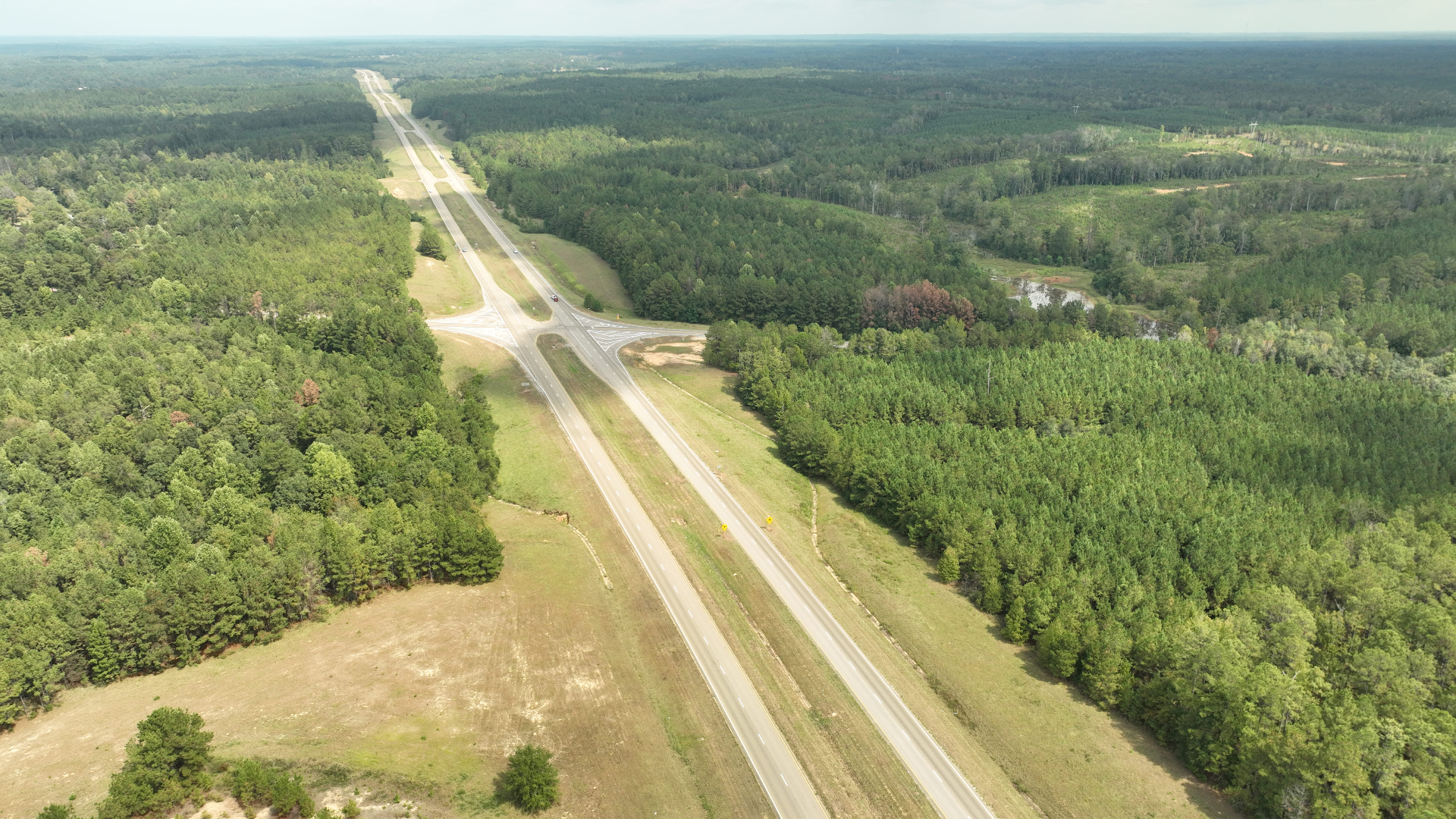
Regional wood demand, road conditions, weather, fuel prices, and truck availability all move economic hauling distance up or down over time. A route that pencils in a dry summer with plentiful trucks may not pencil in a wet winter with tight capacity. Tract-level access, load-out conditions, and the durability of the roads leading out to the highway all factor in.
Why this matters at the landowner's tract
The practical implication for a landowner is straightforward: qualified buyers must be identified for the specific tract, based on the measured product classes, current demand, buyer specifications, access, and hauling distance. Regional averages do not tell a landowner what their timber is worth. A cruise plus a competitive sealed-bid process — inviting qualified buyers on the same measured cruise — is generally the productive way to test the tract's value on the day of sale.
Working with your consulting forester
A consulting forester working only for the landowner tracks current regional wood demand, road and weather conditions, and hauling economics as part of pricing and marketing a sale. Southeast Forestlands runs sealed-bid timber sales in Mississippi and Alabama; the tract-specific cruise, marketing plan, and contract terms are what determine outcomes rather than a generalized market map. For current pricing considerations and market notes, see the latest pricing update or contact us to discuss a specific tract.