
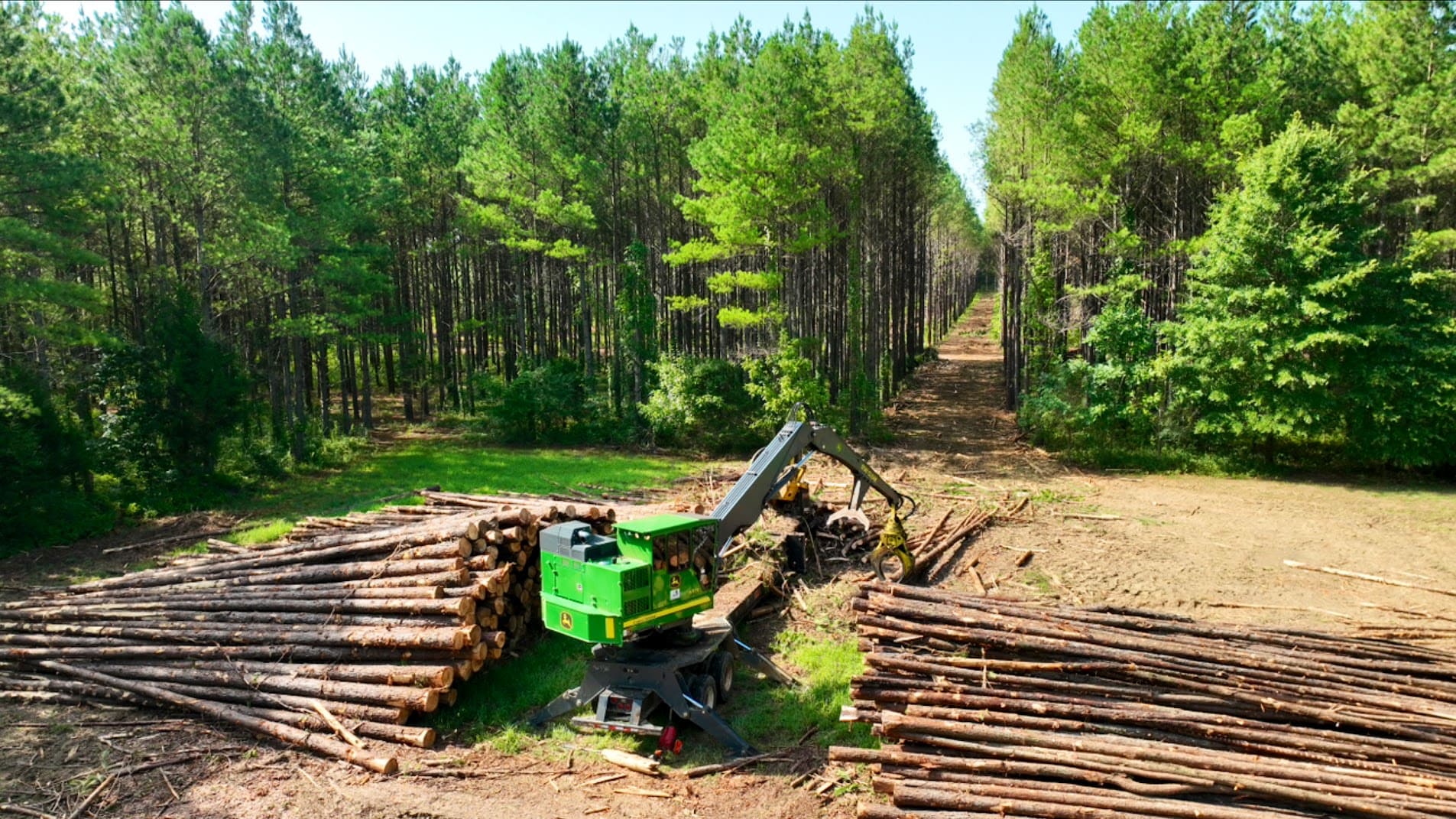
Perry County is sandy pine ground in south Mississippi. Much of it is flat to gently rolling. The sand drains fast on the high ground, but the flats between drains can hold water after a wet week. The Leaf River bottom cuts through the county and floods.
Southeast Forestlands works only for the landowner. We do not buy timber and we are not paid by mills.
Sand Is Not the Same as Dry
High sandy ridges shed water and hold up under a truck. Low sandy flats can perch water and turn soft.
That difference is easy to miss on a map. It shows up the first wet week of a job.
Longleaf Ground
Parts of this county are good longleaf country. Longleaf has slower early height growth than loblolly and is adapted to fire and dry sites.
On a dry sandy ridge it is worth considering. On a wetter flat, loblolly usually makes more sense.
River Bottom Rules
The Leaf bottom floods and stays wet. Equipment does lasting damage there when the ground is soft.
Keep bottom work for a dry stretch and put a clear stop-work rule in the contract.
Fire as a Tool
Open pine ground here carries a burn well. A prescribed burn can reduce fuel and brush and improve habitat, depending on the stand and burn objectives.
It has to be planned and it has to be legal. Have a qualified professional prepare the burn plan.
Before You Decide
Stand age, access, and where the soft spots sit all change within a single tract.
Walk it first. That is the only way to know which acres can be worked and when.
Nearby Counties
We also work with landowners in nearby counties, including Forrest, Jones, Wayne, Greene, George, and Stone.
General Guidance
For more on how we handle each part of the work, start with these guides:
- What a timber cruise measures
- How a sealed-bid timber sale works
- How we sell timber
- Wet-weather logging and BMPs
- Thinning decisions
- Regeneration and replanting
- All forestry services
Talk It Over First
Talk with a forester before deciding anything. Contact us to discuss your goals; the first review of your property generally happens online.