
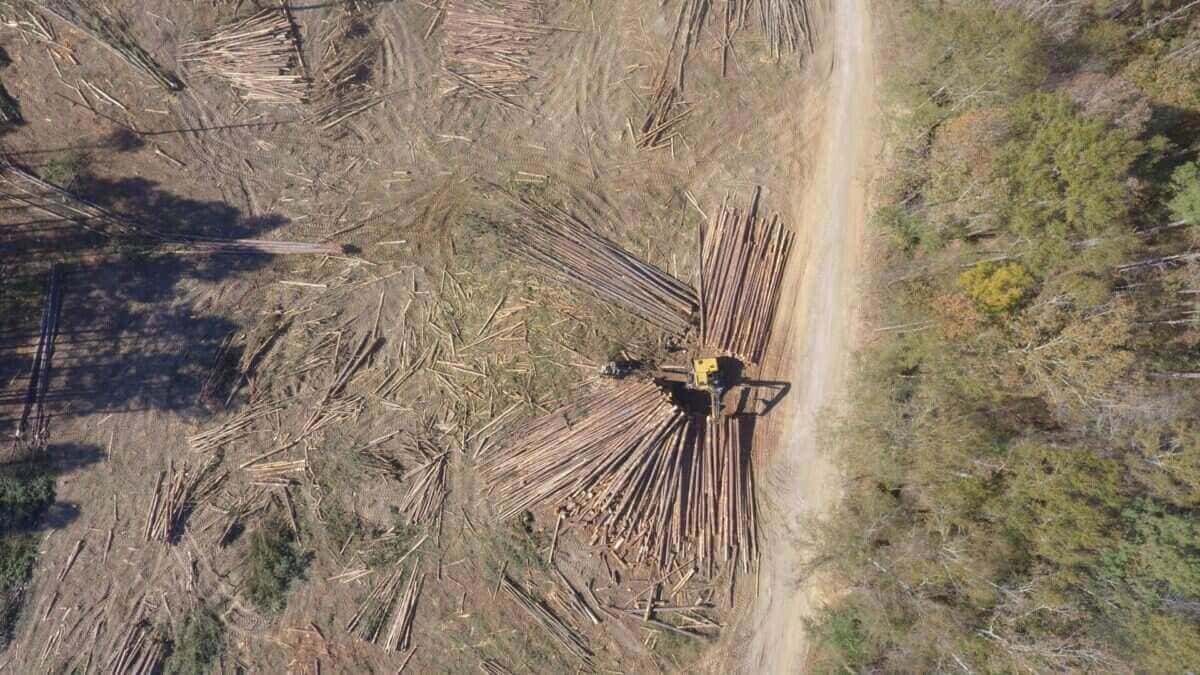
Grenada County sits where the north-central Mississippi hill country meets the Delta edge, around Grenada Lake. Timber generally moves into mills at Grenada, Charleston, Bruce, and Houston-area buyers, with Delta-edge hardwood pulling separate, more selective attention on quality bottomland stems. Grenada Lake and the Yalobusha and Skuna drainages shape access on much of the county, while the hill country runs heavily to loblolly plantation on rolling ground.
Work with Grenada landowners often includes cruises, sale structuring, and reforestation planning. Because the local mill pool is more concentrated than markets farther south, how a sale is laid out — products separated, access cleaned up, sealed-bid versus negotiated — generally matters more here than in counties with deeper buyer competition.
Soils, Water, and Species Around Grenada Lake
Grenada County land is anchored around Grenada and shaped by Grenada Lake and the Yalobusha and Skuna drainages. Uplands are generally loblolly plantation on rolling ground, with hardwood draws and bottomland along the Yalobusha and Skuna feeding into Grenada Lake. Loess-influenced hill soils can erode when handled without contour discipline, and reservoir-influenced flats and rich alluvial bottoms often carry a different stand than the ridges above them.
The standing timber generally reflects that geography: loblolly plantations on the uplands; mature mixed pine-hardwood on transition ground; and bottomland hardwood — including cherrybark, swamp chestnut oak, and sweetgum — closer to the lake and the drainages. Pricing on a Grenada tract may need to follow that mix rather than treat the ownership as one product.
Example forestry scenario for local landowners. Consider a hypothetical Grenada County ownership with three verbal offers quoted in different units — per ton, per MBF, and lump sum. Comparing offers across mismatched units generally makes it difficult to see which is genuinely the highest number. A measured cruise, a normalization of the offers to a common basis, and a sealed-bid sale invited to the regional mill pool would generally allow every offer to be compared apples-to-apples, with cleaner contract language on roads, SMZs, and reclamation.
The Grenada Mill Pool and Product-Class Separation
Buyer demand on a Grenada tract is often shaped by the Grenada-area mills, Bruce, Houston, and Charleston, and by Delta-edge hardwood buyers pulling quality bottomland stems. No single buyer typically wants every product class — and the range between the lowest and the highest qualified bid tends to be where landowners can leave the most value on the table.
A practical read for many Grenada ownerships is that Grenada Lake development and recreation pressure can affect land values around the lake, and that Delta-edge hardwood buyers may pay materially more for graded hardwood than a pine-focused buyer will. A walk-up offer generally does not reflect either dynamic without a competitive process behind it.
Independent Representation on a Grenada Sale
A recurring structural issue is that the party valuing the timber is often the party buying it. Southeast Forestlands does not buy timber, log timber, or take referral fees from buyers or loggers. On a Grenada tract, with the buyer mix outlined above, that independence can be worth real money — often the difference between the floor and the top qualified bid in a properly run sealed-bid process. That independence is the entire service.
Common Losses on Grenada Tracts
Preventable losses on Grenada sales often follow a short list:
- Harvesting near Grenada Lake without considering visual buffers, SMZ rules, and neighbor sensitivity around the shoreline
- Selling cherrybark and swamp chestnut oak to a pine-focused buyer with no hardwood outlet
- Ignoring loess-ridge erosion, which can lower resale value more than the timber check contributes
None of these are mysterious, and they generally come from selling timber without independent representation in a market this specific.
How a Grenada Sale Comes Together
On a Grenada engagement the work is generally concrete:
- Tract inventory, stand mapping, and product-class segregation across upland and bottomland zones
- Independent timber sale design — bid package, buyer invite list, and exposure window calibrated to the Grenada mill pool and the wider regional buyer set
- Contract terms that protect the residual stand, the road system, riparian buffers along the Yalobusha and Skuna, and payment timing
- On-the-ground harvest supervision and post-harvest inspection
- Reforestation, prescribed burning, and timber stand improvement planning for the next rotation
The landowner receives an independent set of eyes on every step — paid by the landowner, working for the landowner, with no buyer relationship in the background.
Timing and Seasonal Access
The right time to begin the conversation is generally when a landowner is first thinking about the property — not once a buyer has knocked. By the time an unsolicited offer is on the table, the negotiating position may already have narrowed. The time from the initial cruise to closing varies with tract complexity, bidder response, contract review, weather, access, and the landowner's schedule.
Grenada Lake affects more than fishing — it can affect market access. Tracts on the wrong side of a wet creek in mid-winter may not haul, regardless of what a buyer promises during a dry August walk. Planning the sale around a realistic haul season generally produces better outcomes than reacting to the calendar quarter.
Reforestation planning on Grenada uplands may involve matching species and site prep to the local loess-hill and reservoir-influenced soils; getting those decisions right at the front of a rotation can materially affect establishment and long-term stand performance.
Multi-County Ownership
Mill draws, buyer participation, and haul economics in Grenada County often cross into Calhoun County. Where an ownership includes tracts in more than one adjacent county, coordinating multiple tracts may broaden the qualified buyer pool when timing, products, and haul geography align.
Getting Started in Grenada County
For a Grenada County timber owner who wants a clear read on what the tract is carrying — and what the local mill pool may pay for it — the first step is generally a walk-through and a conversation. No commitment on either side.
Contact Southeast Forestlands to talk through your tract, your goals, and your options.

