
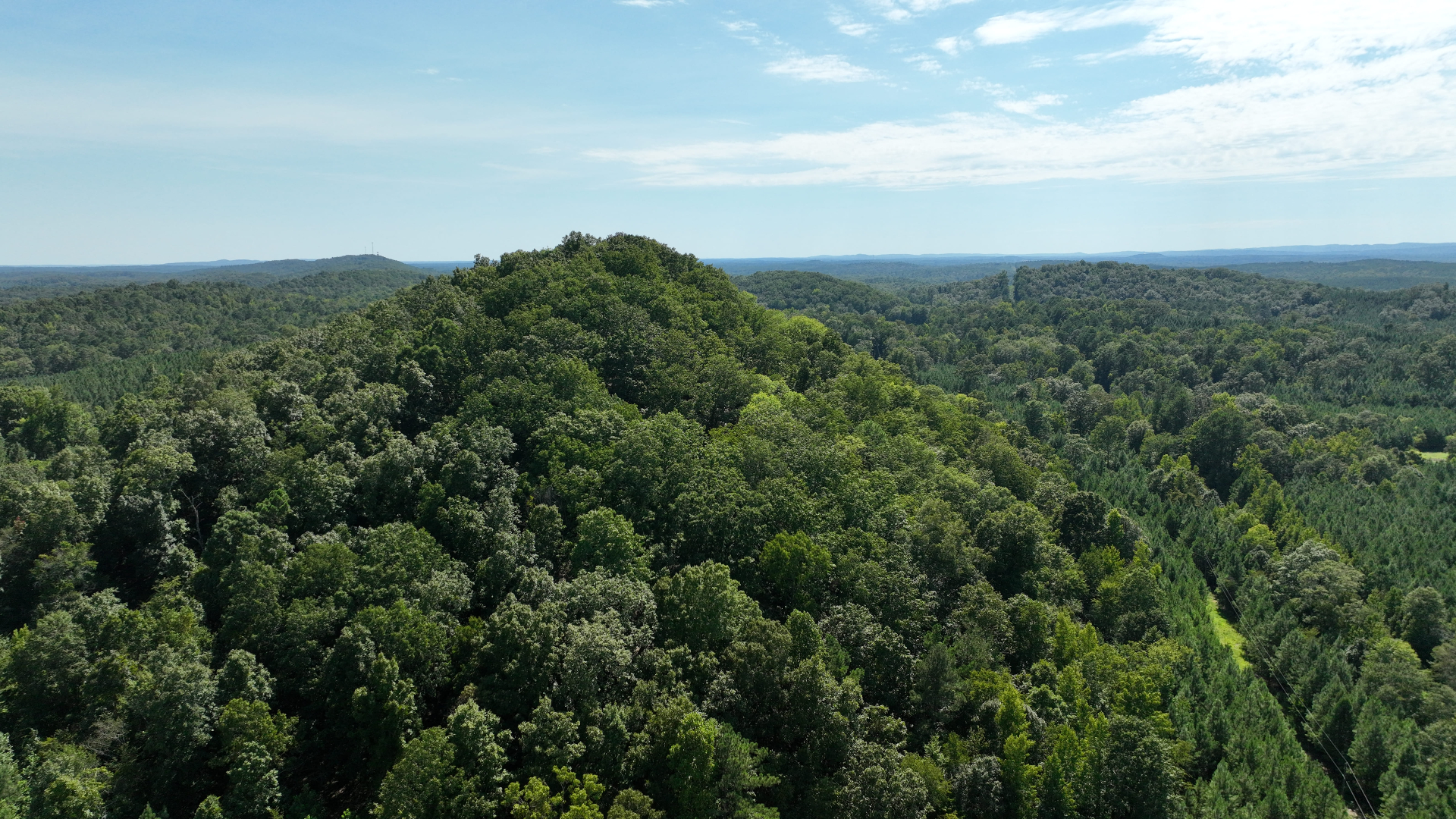
Mobile County is its own market. Deepwater port demand, the Mobile-Tensaw Delta on the east, coastal development pressure pushing out from the city, and a band of working timberland that runs from Citronelle and Wilmer in the north down through Theodore and Grand Bay. The mills, the export docks, and the real-estate buyers all want different things from the same acre, and they rarely agree on what it's worth.
I run Mobile County tracts with all three of those forces priced in — the harvest decision is almost never just a harvest decision here.
Where the Bids Come From in Mobile County
Buyer demand on a Mobile County tract is shaped by the deepwater Mobile port industrial complex, multiple chip and pulp mills inside the metro area, plus barge and rail access to specialty buyers. The narrow point is that no single buyer wants every product class — and the wide spread between the lowest and the highest qualified bid is exactly where most landowners lose money.
Example from the field. Took on a Mobile County tract north of town where a longleaf stand had been undervalued because the buyer wasn't pulling pole-grade out of the cruise. We re-cruised with poles tracked as their own product, marketed to a buyer pool that actively bid pole material, and the same trees cleared at a meaningfully higher per-acre number.
The core insight for this county is straightforward: deepwater port access, urban-fringe harvest constraints, delta-margin ecology, and coastal-development pressure on long-term land value. A direct, walk-up offer almost never reflects that reality.
Costly Patterns We See Repeatedly in Mobile County
Most preventable losses on Mobile County sales follow a short, repeatable list:
- harvesting near growing Mobile-area subdivisions without dust, noise, and visual-buffer protections in the contract
- selling delta-margin tracts without understanding wetland and Section 404 implications
- ignoring deepwater-port specialty buyers and selling only to the nearest pine mill
None of these are mysterious. They all come from selling timber without independent representation in a market this specific.
Reading the Ground in Mobile County
Mobile County land sits in the Coastal Alabama, Mobile-Tensaw Delta and Gulf Coastal Plain, anchored around Mobile and communities like Saraland, Citronelle, Mount Vernon, Wilmer. Drainage runs through Mobile Bay, the Mobile River, the Tensaw River, Chickasaw Creek, and the soils are sandy Coastal Plain uplands, broad delta and bottomland flats along the lower rivers, and coastal-influenced soils with higher water tables.
The standing timber reflects that geography: loblolly and longleaf on the uplands, swamp hardwood and cypress in the delta margins, and Coastal Plain mixed pine-hardwood. What grows here is not what grows fifty miles in any direction, and pricing has to follow.
Who We Work For
The structural problem in most timber transactions is that the person valuing the timber is also the person buying it. On a Mobile County tract, with the specific buyer mix described above, that conflict is worth real money — typically the difference between the floor and the top bid in a properly run competitive sale.
Southeast Forestlands does not buy timber, log timber, or take referral fees from buyers or loggers. That independence is the entire product.
What an Engagement Looks Like in Mobile County
On a Mobile County engagement, the work is concrete:
- tract inventory, stand mapping, and product-class segregation across the sandy Coastal Plain uplands and bottomland zones
- independent timber sale design — bid package, buyer invite list, and exposure window calibrated to the deepwater Mobile port industrial complex and the wider regional pool
- contract terms that protect the residual stand, the road system, riparian buffers along Mobile Bay, and payment timing
- on-the-ground harvest supervision and post-harvest inspection
- reforestation, Prescribed Burning, and Timber Stand Improvement planning for the next rotation
You receive an independent set of eyes on every step — paid by you, working for you, with no buyer relationship in the background.
Cross-County Coordination
Mill draws, buyer participation, and haul economics in Mobile County routinely cross county lines into Washington County and Baldwin County. If you own land in more than one of those counties, a single coordinated marketing package usually outperforms separate sales.
Sale Timelines and What to Expect
The right time to call is not when a buyer knocks. By then, the negotiating position has already narrowed. The right time is when you are first thinking about the property — whether that is a planned harvest, an inherited tract near Mobile, a tract you have not visited in a decade, or a question about whether to harvest at all.
Tracts in Mobile County typically run a 60-to-120 day cycle from cruise to closing when the sale is structured for real bidding. Compressing that timeline almost always costs more than it saves. Between rotations, modest stand improvement work on the upland pine is often the highest-return spending a Mobile County owner can do.
Start the Conversation
If you own timberland in Mobile County, Alabama, the first step is a conversation — no obligation, no buyer in the room, and an honest read on whether selling, holding, or managing makes more sense for your situation.
Contact Southeast Forestlands to start that conversation, or read more about our independent forestry consulting services.
About Mobile County, Alabama for Timberland Owners
Mobile County, Alabama centers on Mobile and is reached by I-10, I-65, US 90, and US 98, with timber moving through the Mobile, Chickasaw, and Bay-area pulp, sawtimber, and export markets. Drainage follows the Mobile, Tensaw, and Dog rivers and the Mobile-Tensaw Delta, and most working timberland is loblolly and slash pine plantations on the uplands with hardwood and cypress through the delta.
Mobile County timberland is one storm season away from being a different kind of asset. The salvage clock starts the day the wind stops, the wetland overlay decides which loggers can get to which ground, and the deepwater port keeps a buyer pool nobody inland has access to. The owners who do well here keep a current cruise on file, keep boundaries painted, and pick up the phone before a single load moves — not after. The first call is the one that decides what the salvage is actually worth.