
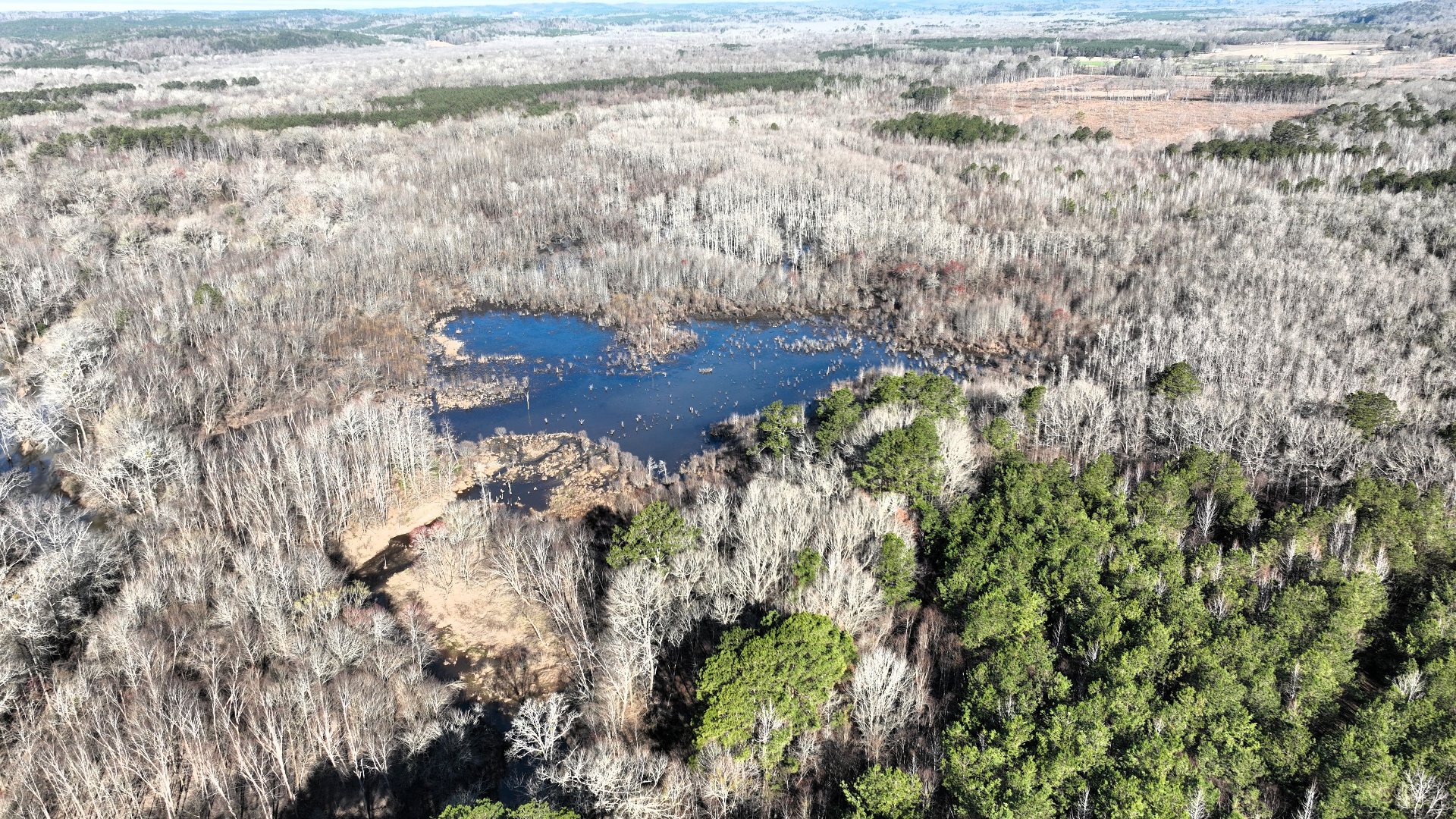
Washington County is one of the strongest longleaf-restoration counties left in Alabama, and it sits right at the doorstep of the Mobile-area industrial complex — two markets that reward landowners who plan past a single harvest. Chatom, Leroy, McIntosh — the timber base here is different from the cut-and-replant pine that dominates a lot of the South, and the right sale strategy reflects that.
I work Washington County tracts with the long view priced in: a sale today should not foreclose the longleaf and management options that make this ground unusual.
What Washington County Timber Actually Looks Like
Washington County land sits in the Lower Tombigbee, southwest Alabama pine belt, anchored around Chatom and communities like Millry, McIntosh, Leroy, Sunflower. Drainage runs through the Tombigbee River, Bassetts Creek, Escatawpa River headwaters, and the soils are sandy-loam uplands well-suited to longleaf and loblolly, broad alluvial flats along the lower Tombigbee, and pockets of poorly-drained flatwoods.
Example from the field. Cruised a Washington County tract east of Chatom where the owner had assumed his longleaf was "too young to bring much." The stand was actually a strong pole candidate, and pulling poles out as their own product on a sealed-bid sale meaningfully changed the per-acre stumpage versus the lump-sum number the original buyer had quoted.
The standing timber reflects that geography: loblolly plantations, significant longleaf-restoration acreage, and rich lower-Tombigbee bottomland hardwood. What grows here is not what grows fifty miles in any direction, and pricing has to follow.
Where the Bids Come From in Washington County
Buyer demand on a Washington County tract is shaped by the McIntosh industrial complex, Mobile-area pulp and chip-n-saw mills, Tombigbee barge markets, and Mississippi-state-line buyers. The narrow point is that no single buyer wants every product class — and the wide spread between the lowest and the highest qualified bid is exactly where most landowners lose money.
The core insight for this county is straightforward: active longleaf-restoration market, lower-Tombigbee barge access, and proximity to Mobile-area industrial demand. A direct, walk-up offer almost never reflects that reality.
Avoidable Losses Specific to Washington County
Most preventable losses on Washington County sales follow a short, repeatable list:
- clearcutting a longleaf-suitable tract and replanting loblolly when longleaf cost-share programs would have paid more long-term
- ignoring Mobile-area buyers in favor of one local offer
- selling lower-Tombigbee hardwood without grading separately
None of these are mysterious. They all come from selling timber without independent representation in a market this specific.
Working for Landowners, Not Mills
The structural problem in most timber transactions is that the person valuing the timber is also the person buying it. On a Washington County tract, with the specific buyer mix described above, that conflict is worth real money — typically the difference between the floor and the top bid in a properly run competitive sale.
Southeast Forestlands does not buy timber, log timber, or take referral fees from buyers or loggers. That independence is the entire product.
Services on a Washington County Tract
On a Washington County engagement, the work is concrete:
- tract inventory, stand mapping, and product-class segregation across the sandy-loam uplands well-suited to longleaf and loblolly and bottomland zones
- independent timber sale design — bid package, buyer invite list, and exposure window calibrated to the McIntosh industrial complex and the wider regional pool
- contract terms that protect the residual stand, the road system, riparian buffers along the Tombigbee River, and payment timing
- on-the-ground harvest supervision and post-harvest inspection
- reforestation, Prescribed Burning, and Timber Stand Improvement planning for the next rotation
You receive an independent set of eyes on every step — paid by you, working for you, with no buyer relationship in the background.
Timing Matters More Than Landowners Think
The right time to call is not when a buyer knocks. By then, the negotiating position has already narrowed. The right time is when you are first thinking about the property — whether that is a planned harvest, an inherited tract near Chatom, a tract you have not visited in a decade, or a question about whether to harvest at all.
Tracts in Washington County typically run a 60-to-120 day cycle from cruise to closing when the sale is structured for real bidding. Compressing that timeline almost always costs more than it saves. On the larger river-bottom tracts here, drone-based stand mapping is the fastest way to see what actually grew back since the last cruise.
Regional Timber Markets and Multi-County Ownership
Mill draws, buyer participation, and haul economics in Washington County routinely cross county lines into Clarke County, Choctaw County and Mobile County. If you own land in more than one of those counties, a single coordinated marketing package usually outperforms separate sales.
Next Steps
If you own timberland in Washington County, the first step is just a conversation — no obligation, no buyer in the room, and an honest read on whether selling, thinning, or holding is the right move for your tract this year.
Washington County rewards the long view. The longleaf you plant today will outlive the person who plants it, and the Mobile-area market that buys your pulpwood next year will not look the same in twenty. Plan the rotation, not the next truck.
Reach out when you're ready, or read more about my independent forestry consulting services.