
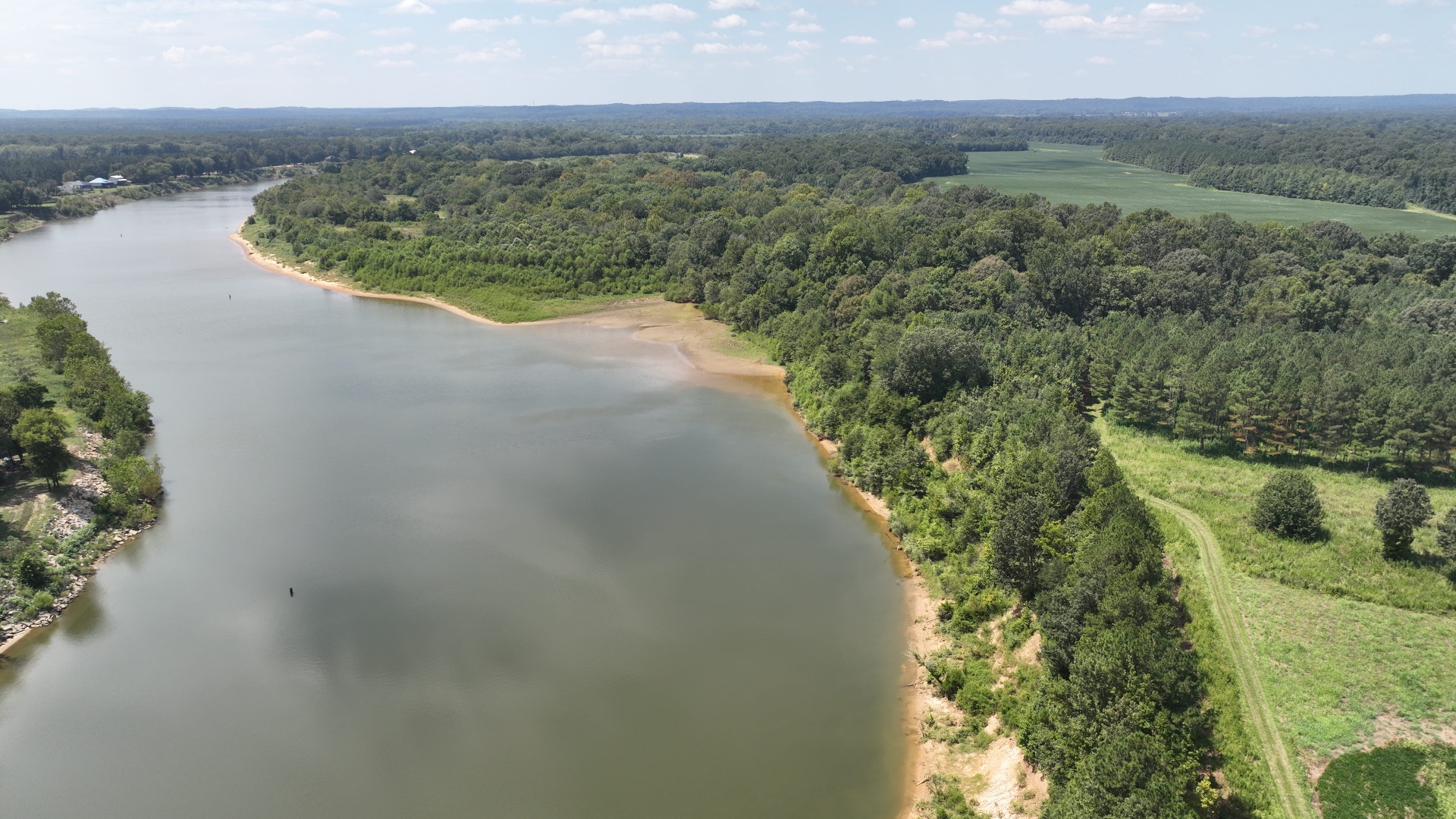
Jackson County covers the southeast corner of the Mississippi coast, where the Pascagoula and Escatawpa reach the sound. Water is the first thing to plan around on nearly any tract here.
Southeast Forestlands works only for the landowner. We do not buy timber and we are not paid by mills.
Water Comes First Here
Soil survey mapping puts more than a quarter of this county in a frequent flood class and a fifth in very poorly drained classes.
Water is the first constraint on most jobs here.
A Real Bottomland County
Forest inventory estimates put oak, gum, and cypress at nearly a third of the forest land, alongside the longleaf and slash pine on higher ground.
Those bottomlands support substantial hardwood stands.
Working Around the River
The Pascagoula and the Escatawpa both run through the county and their swamps are wide.
Access on many tracts depends on a single approach. If that approach floods, the job stops.
Streamside Management Zones
With this much water, streamside zones are not a formality. They are what keeps sediment out of the estuary below.
Mark them before the crew arrives and hold to them.
Hurricanes and Salvage
Storm exposure is real on this coast. After a major hurricane, salvage markets fill up quickly and prices reflect that.
Base thinning on stand condition and wind exposure, not on an assumption that it will prevent hurricane damage; recently opened stands can be more vulnerable to wind.
Nearby Counties
We also work with landowners in nearby counties, including Harrison, George, and Mobile (AL).
General Guidance
For more on how we handle each part of the work, start with these guides:
- What a timber cruise measures
- How a sealed-bid timber sale works
- How we sell timber
- Wet-weather logging and BMPs
- Thinning decisions
- Regeneration and replanting
- All forestry services
Talk It Over First
Talk with a forester before deciding anything. Contact us to discuss your goals; the first review of your property generally happens online.