
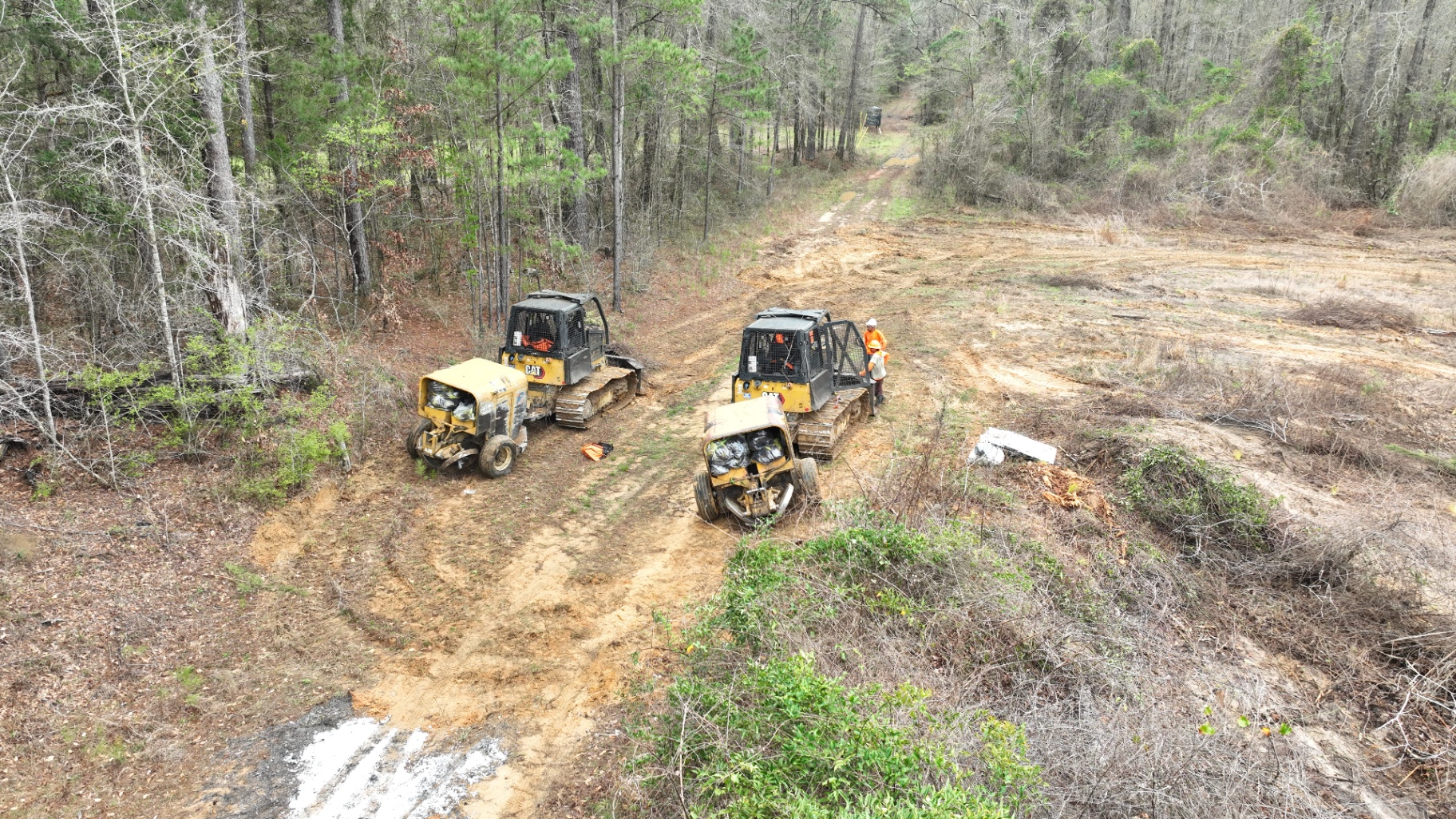
Hancock County is the southwest corner of the Mississippi coast, around Bay St. Louis and Kiln. It is flat, it is wet, and the timber that does well here is not the timber that does well upstate.
Southeast Forestlands works only for the landowner. We do not buy timber and we are not paid by mills.
Flat and Wet
Soil survey mapping puts more than half of this county at one percent slope or less. About a third of it falls in poorly drained classes.
Nearly a quarter falls in a frequent flood class. Water, not terrain, is what limits work here.
Longleaf and Slash Lead
Forest inventory estimates put longleaf and slash pine as the largest share here. Oak, gum, and cypress take up much of the wet ground.
That mix is normal on the coast and rare farther inland.
Season Decides Everything
On ground this flat there is nowhere for water to go. A tract that hauls in October may be untouchable in March.
A contract here needs a clear, enforceable stop-work standard, not a polite suggestion.
Fire Belongs on This Ground
Longleaf flats carry fire well and depend on it. Without burning, brush takes the understory and the stand suffers.
Burning is a planned operation with weather limits, permits, and real liability. It is not a weekend project.
Storms Are Part of Planning
This is a hurricane coast. Standing timber is exposed and salvage after a big storm is crowded and slow.
That is an argument for thinning on schedule rather than carrying heavy volume indefinitely.
Nearby Counties
We also work with landowners in nearby counties, including Harrison, and Pearl River.
General Guidance
For more on how we handle each part of the work, start with these guides:
- What a timber cruise measures
- How a sealed-bid timber sale works
- How we sell timber
- Wet-weather logging and BMPs
- Thinning decisions
- Regeneration and replanting
- All forestry services
Talk It Over First
Talk with a forester before deciding anything. Contact us to discuss your goals; the first review of your property generally happens online.