
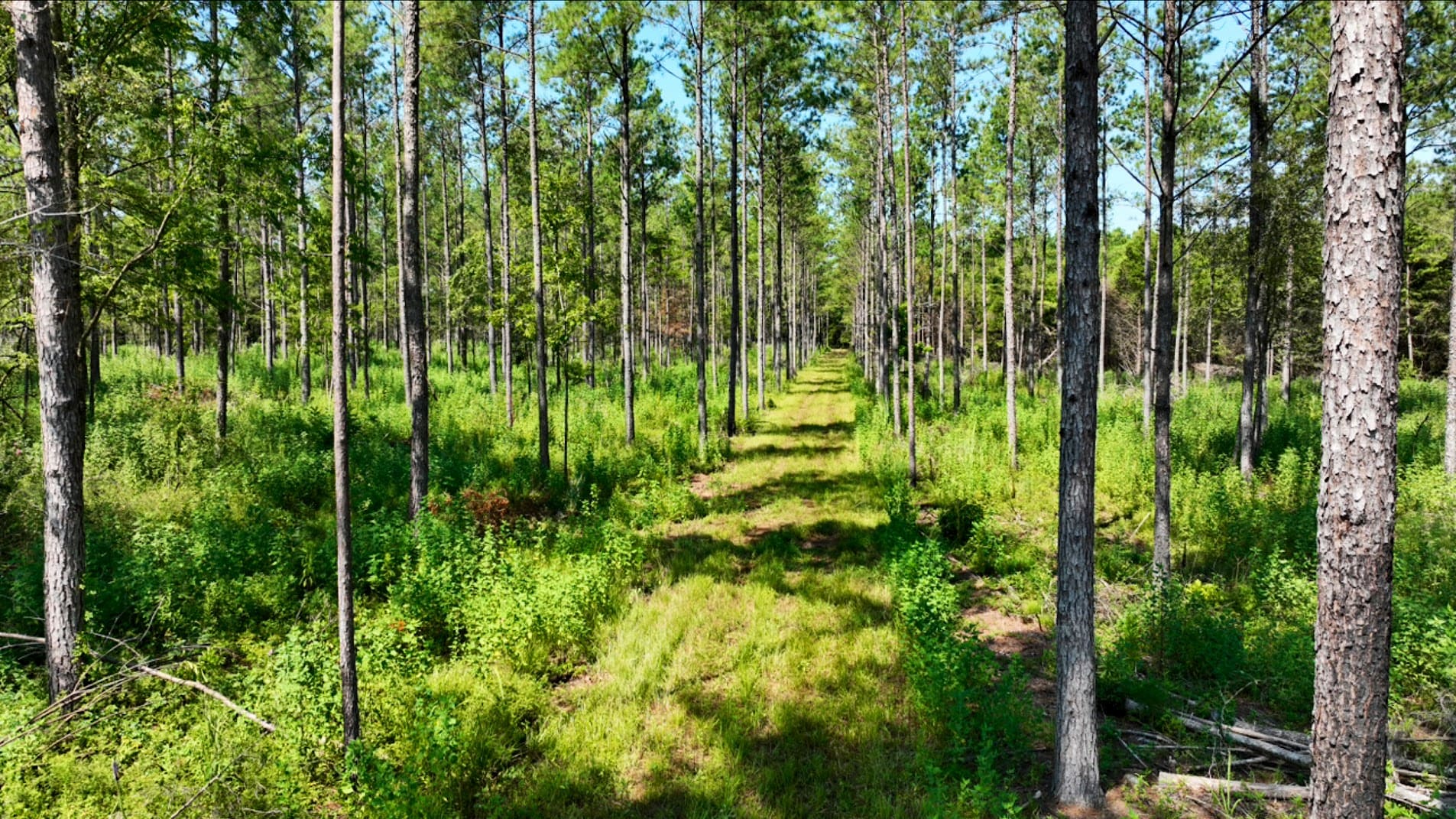
Pearl River County sits above the coastal flats around Poplarville and Picayune. The ground rolls and drains, which is why planted loblolly does better here than it does closer to the water.
Southeast Forestlands works only for the landowner. We do not buy timber and we are not paid by mills.
Rolling, Not Flat
This county sits above the coastal flats and it shows. Soil survey mapping puts nearly half of it in well drained classes, and much of it rolls.
That is why planted loblolly does better here than it does twenty miles south.
A Planted Pine County
Forest inventory estimates put loblolly and shortleaf as the largest share of forest land, ahead of longleaf.
Most of what we look at here is a plantation at some stage of its rotation, which makes thinning the most common question.
Thinning on Schedule
A stand that gets crowded stops adding much wood. Waiting too long costs growth that never comes back.
Timing comes from measured tree size and spacing, not from the age on the planting record.
The Wet Strips Are Still There
Soil survey mapping puts about one acre in five in a frequent flood class, mostly along the East and West Hobolochitto.
Those strips are hardwood ground. Pine planted there is a waste of seedlings.
Access Is Usually Good
Well-drained rolling ground means more workable days per year than the counties below it.
That is worth something to a buyer, and it should show up in the bids.
Nearby Counties
We also work with landowners in nearby counties, including Hancock, Harrison, Marion, Lamar, and Stone.
General Guidance
For more on how we handle each part of the work, start with these guides:
- What a timber cruise measures
- How a sealed-bid timber sale works
- How we sell timber
- Wet-weather logging and BMPs
- Thinning decisions
- Regeneration and replanting
- All forestry services
Talk It Over First
Talk with a forester before deciding anything. Contact us to discuss your goals; the first review of your property generally happens online.