
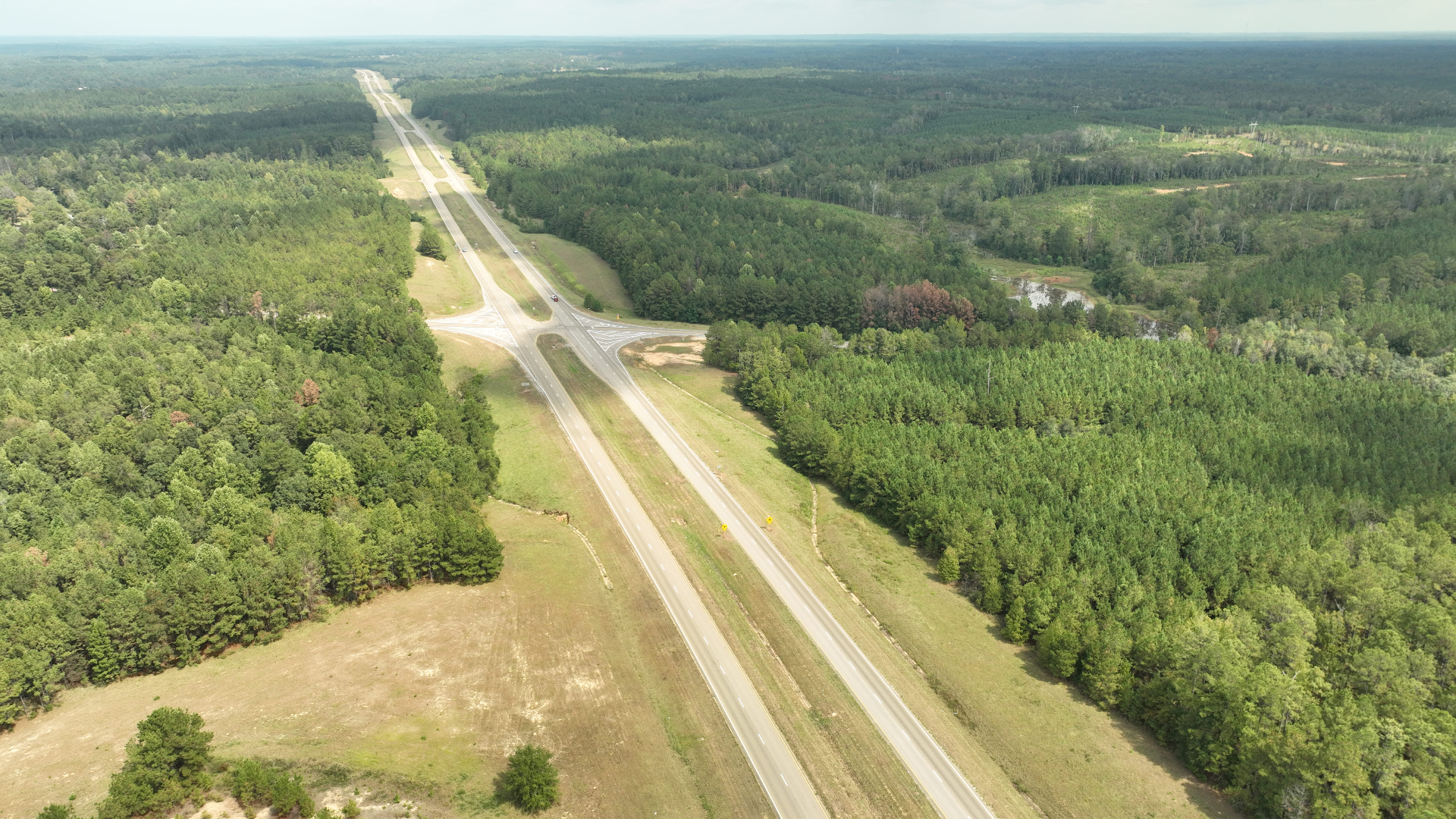
Marion County is strong pine ground with a market position most landowners across the state would trade for — Columbia sits inside a tight ring of mills, and timber moves easily east to Hattiesburg, west to McComb, and south toward the OSB and chip plants along the Louisiana line. The Pearl River and its tributaries run through the county, with bottomland hardwood acreage along them and loblolly plantations on the uplands.
I work with Marion landowners on cruises, sale layout, harvest oversight, and reforestation. The practical question on most tracts here isn't whether timber will sell — it usually will — it's whether the sale is structured to bring real competition from the multiple mills within easy haul, or whether it's just being handed to the first buyer that calls. Tracking current Mississippi timber prices is one piece of that; setting the bid up so buyers actually fight for the wood is the other.
Columbia, the Multi-Mill Haul, and the Terrain That Sets It Up
Columbia sits inside a tight ring of pine buyers: mills east toward Hattiesburg, west toward McComb, and south across the Louisiana line toward the OSB and chip plants at Bogalusa. A tract marketed only to the nearest mill or wood yard may draw a narrower bid picture than one offered to qualified buyers pulling from more than one direction.
The terrain sets what the wood is. Sandy loblolly uplands drain quickly and generally give loggers more operating days than tracts on heavier clay soils in the surrounding counties, though wet-weather stop clauses still matter in any contract. Larger holdings along the Pearl River and its tributaries carry meaningful bottomland hardwood volume. Bottomland stems are a separate product from the upland pine and generally need their own marketing pass to reach grade-hardwood buyers rather than settling for a pulp-averaged number.
The Marion County ownership pattern runs from smaller family tracts near Columbia to larger holdings on the Pearl River side of the county and toward the Walthall and Lamar lines. Each of those settings changes what a landowner can realistically expect out of a first thinning, a second thinning, or a final harvest, and the plan for one is not the plan for the next.
Sale Structure and Product-Class Bidding
The Bogalusa mills, the Hattiesburg pine complex, and the McComb-area buyers each have distinct product preferences and different appetite for pulpwood versus small sawtimber. A tract handed to whichever buyer calls first is a tract that generally only sees one of those appetites. Treating Marion County pine as interchangeable with the ground in Jefferson Davis County or Lamar County is a related trap — site quality and thinning history change the answer to "when should I sell?" more than most landowners assume.
Without a careful read, the recurring losses look like:
- Selling before a stand has moved enough volume into the CNS and sawtimber classes to justify holding.
- Accepting offers built off a single closest yard rather than the wider haul the county allows.
- Signing contract terms that do not spell out road location, wet-weather stop clauses, and SMZ protection along the Pearl River and its tributaries.
- Skipping product-class segregation on mixed pine-hardwood stands and taking a pulp-averaged number on grade material.
Independent Representation on a Marion Tract
Southeast Forestlands does not buy timber, does not represent mills, and does not take referral fees from loggers. That structural independence is what allows a Marion County sale to be marketed to multiple mill directions in the same package with no yard getting a quiet advantage over the others.
Every Marion County tract starts with a walk. Sandy-upland plantation, hardwood drains, and Pearl River bottomland behave differently on the ground than they look on a map, and a defensible cruise is built while walking through the timber. What that produces for the landowner:
- A cruise and appraisal that put a real number on the standing timber before any buyer conversation.
- A read on whether the tract's sale window is now, this coming winter, or after another thinning cycle.
- A sale opened to every qualified buyer within the practical haul, not just the nearest one.
- Contract terms designed to protect roads, SMZs, and the residual stand — enforced during the harvest.
- A plan for the next rotation that the property can carry into without lost ground.
The decisions stay with the landowner. Our role is to put the numbers, the market read, and the on-the-ground detail in front of you so those decisions are made with real information — not with a single verbal offer as the only reference point. Landowners handling recently inherited ground, out-of-state ownership, or a first sale after a long hold especially benefit from having that read before any buyer conversation begins.
Management Planning and Appraisals for Marion County Tracts
A large share of Marion County ownership is not on a sale calendar this year, and holding is often the correct decision. A written management plan turns "we're not selling" into a sequence with real dates attached. Typical pieces:
- First and second thinning schedules on plantation loblolly, calibrated to actual stocking.
- Prescribed burn windows on the sandy uplands where regular fire keeps understory and hardwood competition in check.
- Reforestation strategy after clearcut — seedling selection, site prep intensity, and out-year growth calibrated to the site.
- Access planning that keeps the road system out of the SMZs and ready for the next harvest without a rebuild.
- A written rotation timeline for the plantation ground — thinning windows and expected product-class shifts — so tax and estate planning can be built around it rather than around a buyer's schedule.
Adjacent ownership in Lamar, Forrest, Walthall, and Jefferson Davis County typically sits inside the same broader south-Mississippi buyer pool, so a Marion County plan often benefits from acknowledging what a neighboring landowner across the line is likely to do in the same window.
When a sale is on the horizon, our timber appraisals put species composition, product-class volume, stem quality, and access against current Mississippi timber pricing. A defensible number is what establishes a documented basis on inherited timberland, supports estate or partnership planning, and gives a landowner a floor to measure any walk-up offer against.
Tree Farm Certification and Property Documentation
Tree Farm Certification is one way to formalize the standards a well-run Marion County tract already meets. We prepare the application, the plan-of-management documentation, and the walk-through that Certification expects. Drone coverage from our FAA-licensed operations adds current aerial imagery for stand mapping and — when needed — documentation for storm damage, timber trespass, or wet-weather logging disputes. Documentation is the point — quiet leverage for the landowner, not another folder to file.
Marion County market decisions. Our team has handled timber sales in Marion County. Around Columbia, loblolly uplands and Pearl River bottomland sit inside economic haul of Hattiesburg to the east, McComb to the west, and the Louisiana OSB and chip plants to the south. That geography can favor tracts whose sale is structured so multiple market rings compete, rather than a single local buyer setting the price by default. A cruise that separates pulpwood, chip-n-saw, and sawtimber can help qualified buyers evaluate each product class on its own merits.
Local Forestry Guidance You Can Rely On
Columbia is one of the better-positioned mill towns in south Mississippi — Hattiesburg east, McComb west, the Louisiana OSB and chip plants south, all inside an economic haul of the same Pearl River bottoms. The Marion tracts that pay best are not the ones with the prettiest timber. They’re the ones where the sale was structured to make three groups of buyers compete instead of letting one local market set the price by default.
Contact Southeast Forestlands to walk a Marion County tract.

