
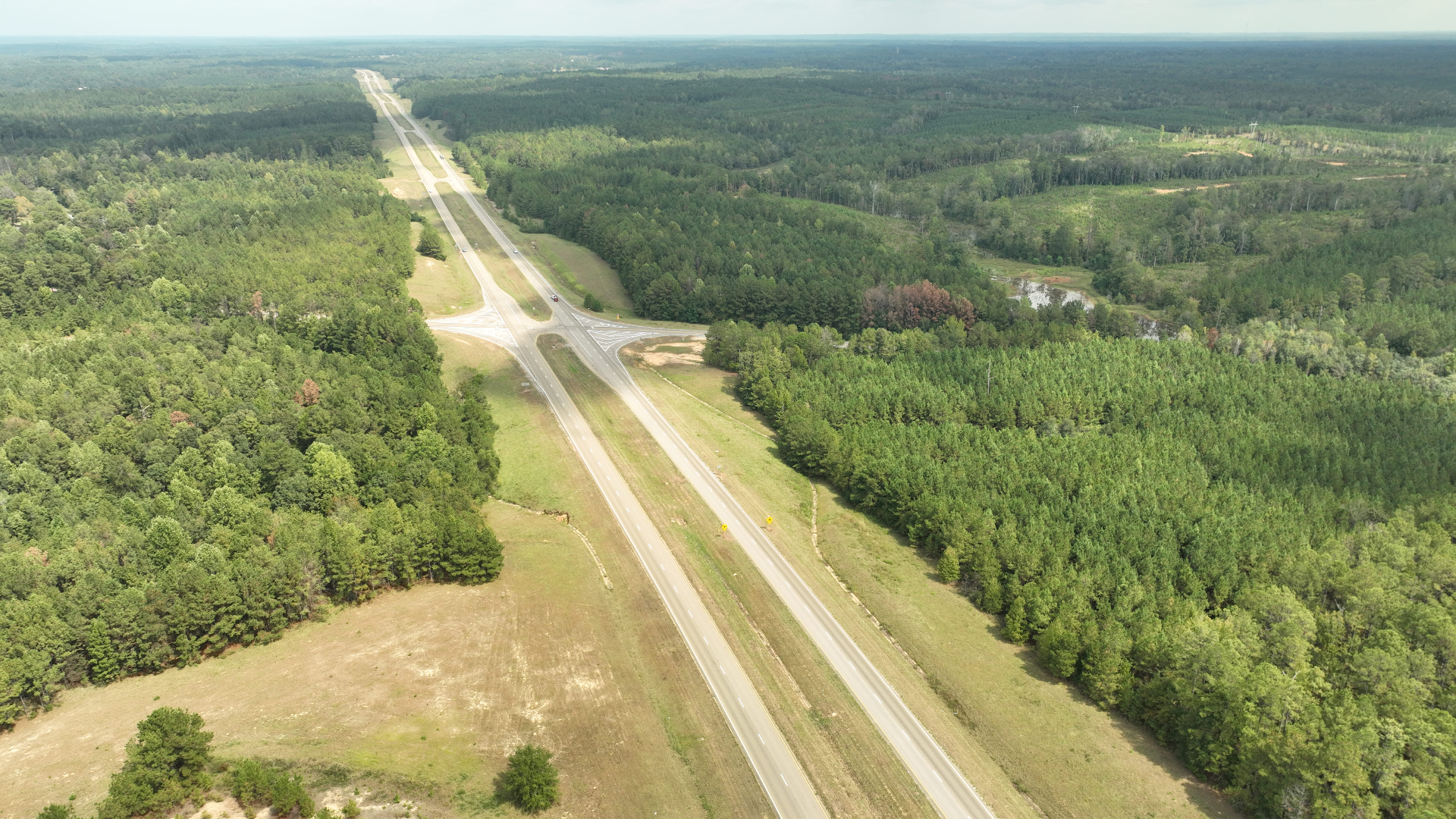
Jefferson Davis County is good pine ground, and the market position is one of the better ones in the state — Hattiesburg and Laurel pull from here easily, and the southern OSB and chip mills are well within haul. The terrain is gentle around Prentiss and Bassfield, with the Bouie and Leaf River drainages running through, and most tracts I walk here are loblolly plantation in some stage of rotation.
I work with Jefferson Davis landowners on timber sales, cruises, appraisals, and reforestation planning. The recurring questions here are familiar ones: when's the right thinning window, is the stand carrying enough sawtimber yet to justify a final harvest, and what's the property worth right now if it had to sell.
Forestry Consulting Services in Jefferson Davis County, MS
Every property is different. So are the goals behind it. We work with landowners to evaluate their timberland, explain realistic options, and provide guidance that supports both immediate decisions and long-term stewardship.
Example from the field: On a mid-rotation loblolly tract between Prentiss and Bassfield, the standing offer was a flat lump sum. A cruise and a competitive bid round to mills pulling north out of Hattiesburg moved the final number substantially, and the contract was rewritten to protect the road system the family used for hunting access.
Timber Sales Guidance & Harvest Oversight
A Jefferson Davis timber sale usually turns on four questions: what product classes the stems actually carry, which mill haul directions are open, how the tract will hold up in wet weather, and whether the contract holds the logger accountable for roads, gates, and hunting access.
The prep sequence is straightforward:
- Walk the property, mark boundaries, and lay out streamside management zones along the Bouie and Leaf drainages.
- Cruise the stand and break volume out by product class.
- Expose the sale to every qualified bidder in the Hattiesburg, Laurel, Monticello, and Bogalusa pull.
- Award on the sealed bids and stay on the ground through closeout.
Forestry Management Plans & Timber Stand Improvement
A written plan on Jefferson Davis ground is worth more than the paperwork suggests — it ties thinnings, burns, and reforestation to a rotation calendar the family can hand down. Where planted loblolly has run past its thinning window, a marked thinning resets basal area and lets the residual crop trees put diameter on. Where a stand has already been through two thinnings, the plan usually points at a final harvest window, replant species, and site-prep sequence.
Prescribed burning and selective herbicide work slot into that calendar for fuel reduction and hardwood control. The point is a plan that gets used, not one that sits in a drawer.
Timber Appraisals
Appraisals on Jefferson Davis tracts most often come up around estate settlement, partition, casualty loss, or before a sale where the family wants an independent number to check an offer against. A field-cruised appraisal, priced against current regional stumpage and broken out by product class, gives a CPA, an attorney, or an insurer a document they can rely on.
Tree Farm Certification & Property Monitoring
American Tree Farm System certification is a good fit for Jefferson Davis families running working pine ground through multiple generations. We handle the qualifying plan, the field inspection, and the paperwork. FAA-approved aerial imagery from Eric's Part 107 drone work adds a current, high-resolution view for boundary review and harvest planning.
Where Jefferson Davis Sits in the Regional Timber Market
Jefferson Davis sits at a useful spot in the south-central Mississippi Pine Belt. Hattiesburg–Laurel pulls east easily, Monticello draws to the west, and Bogalusa is within reach on the right product class. That regional position is why a properly exposed Prentiss or Bassfield tract rarely sees a single number on the bid sheet.
Neighboring counties matter here as much as the local geography. When a tract is close to a shared line, the timber market in a neighboring county is often the more accurate reference point. The counties below are discussed here as nearby timber markets that shape Jefferson Davis bid rounds — not as the subject of this page:
- Covington County (to the east, around Collins) sits in the heart of the Pine Belt with a deep mill pool. A Jefferson Davis tract on the east side of the county usually prices closer to Covington numbers than to Marion numbers.
- Lawrence County (to the west, around Monticello) is where the Pearl River mill cluster begins. West-side Jefferson Davis tracts often draw the same buyers that work Lawrence County ground.
- Marion County (to the south, around Columbia) pulls buyers into the Pearl River and Bogalusa markets. South-end Jefferson Davis tracts frequently share the same haul lanes as Marion County stands.
The point is straightforward: a sealed-bid process that reaches into all three of those pull directions is how a local tract gets priced at what it is actually worth, not at what the first buyer at the gate is willing to pay.
What a Landowner Should Evaluate First
Before signing a Jefferson Davis timber sale, it is worth understanding stand age and product class, wet-weather operability, road and hunting-access language in the contract, and the depth of the buyer pool the sale will reach. Southeast Forestlands represents the landowner, never the mill.
Local Forestry Guidance You Can Rely On
Every tract is different, and every landowner is working toward something slightly different. The approach I use is straightforward — walk the property, look at the timber and the access, explain the options in plain numbers, and let you make the call.
Prentiss and Bassfield sit close enough to the Hattiesburg–Laurel mill pull that a properly exposed Jefferson Davis sale typically draws more than one number on the bid sheet. The tracts that leave money on the stump here are the ones where the wood went to whoever called first, not whoever paid most. A cruise, a sealed bid, and three or four real buyers on the same terms in the same week — that’s what the county’s market position is actually worth.
Contact Southeast Forestlands to walk a Jefferson Davis County tract.
Related Services and Nearby Counties
Most Jefferson Davis County work threads through the same core service stack — Timber Sale, Timber Appraisal, Management Plan, Reforestation, and Timber Stand Improvement. When a tract straddles county lines or a neighboring landowner has the same questions, we work across the line into Lawrence County, Covington County, Marion County, Forrest County, Jones County, and Jasper County.

