
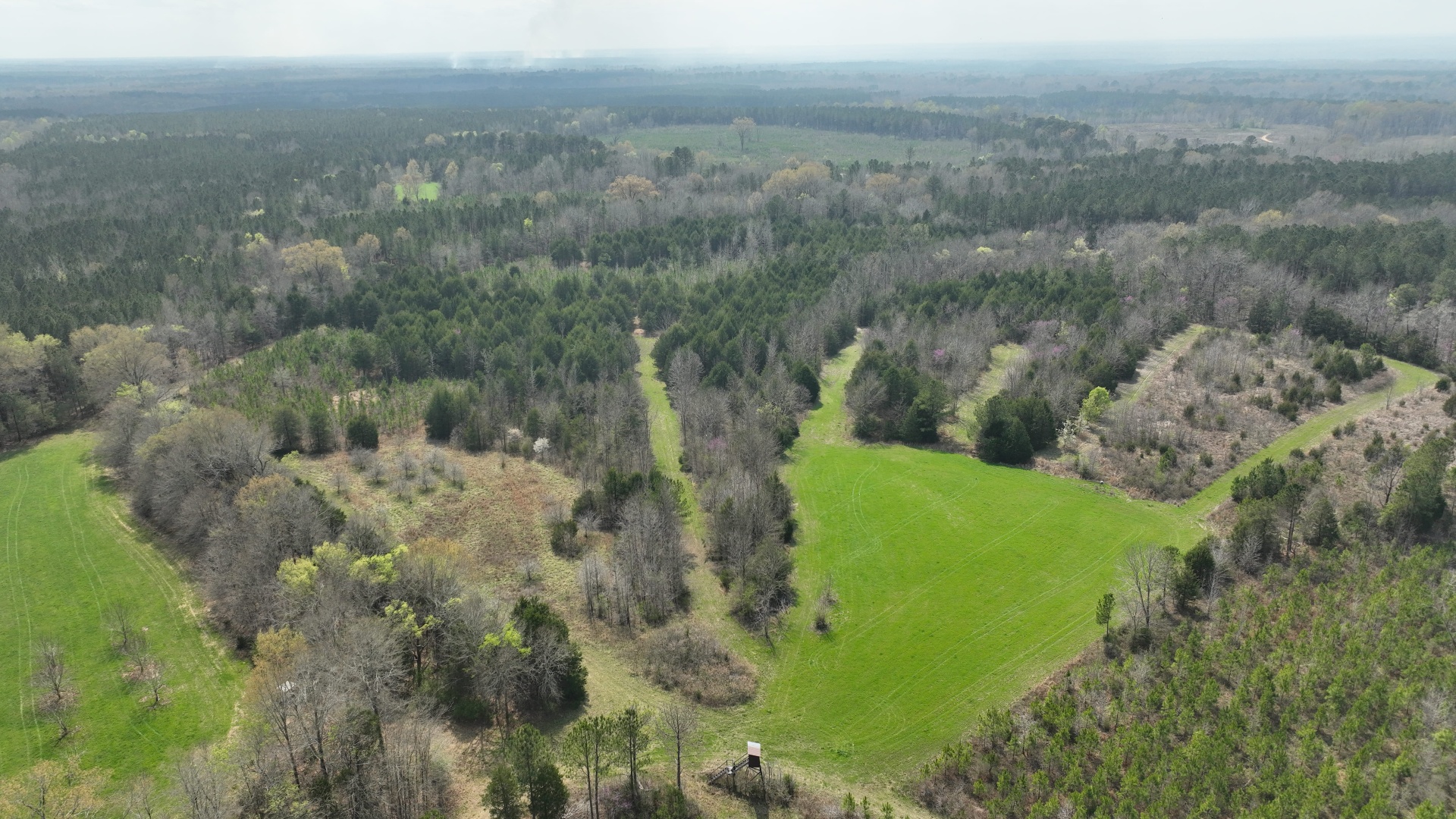
Prescribed burning timing in Mississippi and Alabama is driven by the prescription, not the calendar. The right burn window for a given stand depends on fuel condition, weather, smoke management constraints, certified-burner availability, and the management objective — reducing fuel loads, controlling hardwood sprouts, releasing longleaf, or maintaining wildlife habitat all point to different windows.
This Field Note covers the practical decision framework for when to burn pine stands in our service area, the dormant vs. growing season trade-offs, and the rules that govern certified burning under Mississippi and Alabama law.
Dormant Season vs. Growing Season — the Real Difference
Dormant-season burns (late December through mid-March in our region) are the default for most pine stands. Cooler weather, lower humidity at the right windows, predictable fuel moistures, and minimal damage to the residual stand. Dormant burns reduce fuel loads, knock back small hardwood stems, and prepare a stand for harvest or planting access.
Growing-season burns (April through early September, with mid-summer typically avoided in many prescriptions) are the strongest tool for actually killing hardwood rootstock and resetting the understory. Hardwoods top-killed in growing season often die outright rather than sprouting back. Growing-season burns are essential for longleaf maintenance and quail habitat management.
The decision is rarely "dormant or growing" — many well-managed Mississippi and Alabama stands rotate between both, using dormant for fuel reduction and growing for hardwood control.
The Burn Prescription Drives Timing
A written burn prescription specifies:
- Acceptable air temperature range.
- Acceptable relative humidity range.
- Acceptable wind speed and direction range.
- Acceptable fine-fuel moisture range.
- Acceptable mixing height and transport wind for smoke management.
- Required equipment and crew size.
- Firing technique (head fire, backing fire, flanking fire, strip-head).
The right burn day is the day all parameters fall inside the prescription. That can be a 2-week window in a normal year or a 2-day window in a difficult year. Burning outside the prescription — even by a little — is how stand damage, escape, and smoke complaints happen.
Certified Burner Requirements
Mississippi and Alabama both have certified-burner programs that protect landowners and burners who burn under an approved prescription and follow notification procedures.
- Mississippi: The Mississippi Prescribed Burn Act provides liability protection when a certified burner conducts the burn under a written prescription and notifies the Mississippi Forestry Commission as required.
- Alabama: The Alabama Prescribed Burning Act provides parallel liability protection for certified burners following the program's notification and prescription requirements.
Landowners who burn without a certified burner and without following the act lose much of the statutory liability protection. The cost of certified burner involvement is small compared to the exposure of an uncertified burn that escapes.
Smoke Management — the Real Constraint
The single most common reason a planned burn does not happen is smoke management. Wind direction that puts smoke over a highway, town, hospital, school, or sensitive neighbor will close the burn window for the day even if every other prescription parameter checks out.
Smoke management considerations:
- Identify smoke-sensitive targets (SSTs) before the burn season starts.
- Establish acceptable wind directions for each burn unit.
- Maintain notification list and pre-burn contacts for nearby SSTs.
- Use transport wind, mixing height, and atmospheric stability to predict smoke behavior, not just surface wind.
Fuel Moisture and the Window Inside the Window
Even on a "good" burn day, the right firing window may only span a few hours — typically late morning into early afternoon — when fine fuels are dry enough to carry fire and humidity has dropped from overnight peaks. Starting too early produces a creeping fire that doesn't carry; starting too late, especially in winter, runs into evening inversion and smoke trapping.
What a Good Burn Year Looks Like in Mississippi and Alabama
- December–February: Dormant-season fuel reduction burns on most pine stands.
- February–April: Late-dormant and early growing-season burns. Hardwood control begins.
- April–June: Growing-season hardwood-control burns, longleaf maintenance burns.
- July–September: Growing-season burns continue selectively; many prescriptions avoid mid-summer due to fuel moisture and stand stress concerns.
- October–November: Pre-dormant fuel checks, equipment maintenance, prescription updates for the next season.
Cost-Share Support
NRCS EQIP cost-shares prescribed burning (Practice 338) in most Mississippi and Alabama signups, particularly where the burn supports wildlife habitat, fuel reduction, or longleaf maintenance. NRCS CSP rewards documented burn rotations as part of the stewardship score. Most cost-shared burning requires an approved forestry management plan and a written burn plan.
Where Burning Is Easiest — and Hardest — in Our Service Area
Burning is most straightforward on larger, well-buffered tracts away from highways and population — typical conditions across much of Jasper, Kemper, Greene, Perry, and the Pine Belt generally, plus large portions of west Alabama. Burning is hardest near the urban interface — around Hattiesburg, Meridian, Tuscaloosa, Mobile, and growing rural-suburban transition zones — where smoke management constraints close burn windows faster.
The Bottom Line
The right burn day is the day every prescription parameter aligns and a certified burner is available to execute under the burn plan. The schedule is a target; the prescription is the rule. Building the burn plan, securing the certified burner, and tracking the windows is the work covered under our prescribed burning service.