
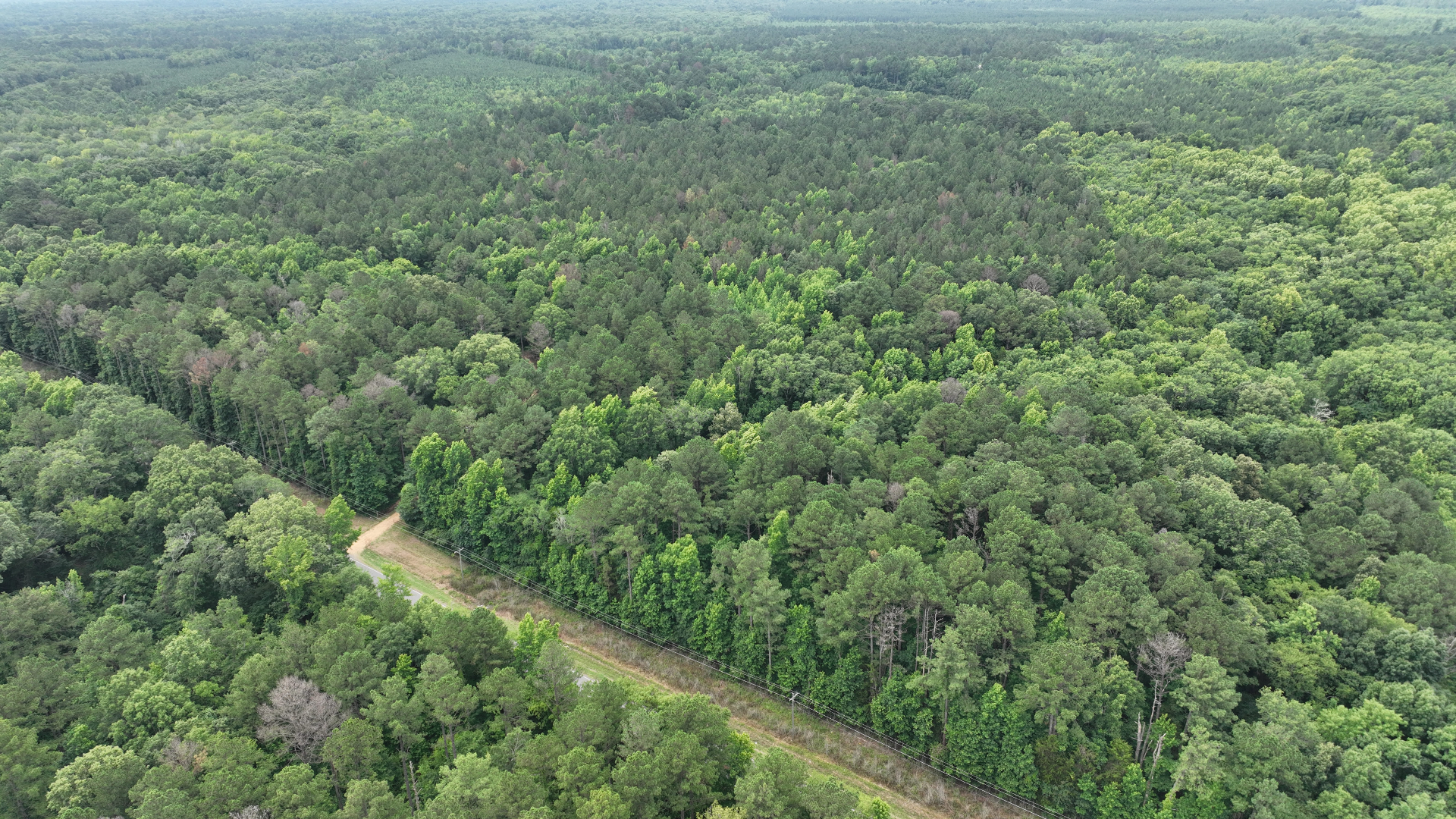
A southern pine beetle (SPB) outbreak does not wait. Once an active spot is established in a Mississippi or Alabama loblolly stand, it can expand outward by tens of trees per day during warm months. The first week of response sets the cost of the entire outbreak.
This Field Note walks through identification, containment, and the salvage decision — the steps a landowner and a registered forester should take in the first seven days after an SPB spot is confirmed.
How to Identify a Southern Pine Beetle Spot
Five field signs, in order of usefulness:
- Fading crowns in a tight cluster. SPB spots show as 5 to 50+ adjacent trees with crowns moving from green to yellow to red over days to weeks.
- Popcorn-sized white or yellow pitch tubes on the bark in the mid- to upper-bole. These are the trees' defensive response.
- S-shaped galleries under the bark when you peel it. This pattern is diagnostic for SPB and distinguishes it from Ips beetles, which produce straighter "Y" or "I" patterns.
- Boring dust in bark crevices and at the base of the tree.
- An expanding edge. An active spot has fresh fades on the outside, red dead trees in the middle, and woodpecker-flaked bark on the oldest dead trees.
Ips vs. SPB — and Why It Matters
Ips beetles attack stressed and damaged trees, typically a few at a time, and rarely cause spreading mortality in healthy stands. SPB is the one that expands aggressively into green, healthy timber. The first-week response below is the SPB protocol. If the spot turns out to be Ips, the response collapses to "remove the stressed trees, address the underlying stress, and monitor."
First Week: Day-by-Day
Day 1 — Confirm and Document
Walk the spot with a registered forester or a Mississippi Forestry Commission / Alabama Forestry Commission field forester. Confirm SPB through gallery pattern. Map the spot perimeter — GPS the outer edge of fading trees, count active and dead trees inside, and photograph the leading edge.
Day 2 — Decide the Containment Strategy
For active SPB spots, two control options are recognized in the South:
- Cut-and-leave. Fell all active and dead trees plus a buffer of green trees on the leading edge. Leave on the ground. Cheapest option; effective on small spots in inaccessible areas.
- Cut-and-remove (salvage). Fell and remove all infested trees plus a green-tree buffer. Captures salvage value where mills are within haul.
Cut-and-remove is the strongly preferred option in Mississippi and Alabama where mill access is available, because the wood still has value and removal eliminates the brood source rather than just dispersing it.
Day 3 — Engage a Logging Contractor
SPB salvage is small, fast, and time-critical. Loggers who do this work routinely understand the urgency. The contract is a short-form salvage agreement — per-ton pricing, days-not-months performance, and clear residual stand protection language. See contract clauses that protect landowners for the core terms.
Day 4 — Mark the Buffer
The buffer of green trees ahead of the leading edge is what stops spot expansion. The typical Southern prescription is to extend the cut 50–100 feet beyond the leading-edge active trees, depending on stand density and the buffer width an experienced forester recommends for the outbreak. The buffer trees are usually merchantable and sold with the salvage.
Days 5–7 — Cut, Haul, and Inspect
Salvage crews move from the leading edge inward. The landowner's forester is on site during the operation, not just before and after. Final inspection confirms that the cut perimeter matches the marked perimeter and that no infested trees were left standing inside the buffer.
Why Thinning Is the Only Real Defense
SPB outbreaks in Mississippi and Alabama almost always start in overstocked, unthinned, or under-thinned loblolly stands — basal areas above 120 sq ft/acre, especially on droughty or stressed sites. The single most reliable defense is keeping stand stocking inside the recommended thinning prescription and removing thinning targets on schedule. A post-thinning stand at 70–90 sq ft basal area is not immune, but it is dramatically less attractive to SPB and far less likely to support spot expansion.
The full thinning strategy is covered in First Thinning vs. Second Thinning.
Cost-Share Help for Beetle Suppression
USDA NRCS programs (EQIP) sometimes cost-share suppression cuts and post-outbreak thinnings on tracts with documented beetle pressure. Eligibility depends on the active program signup and the landowner having an approved forestry management plan. The state forestry commission can also provide rapid technical assistance and is often the fastest first call alongside your consulting forester.
Where SPB Pressure Runs Highest in Our Service Area
Beetle pressure varies by year, but east-central Mississippi (Neshoba, Jasper, Kemper, Newton), the Pine Belt (Jones, Forrest), and west-central Alabama see recurring outbreaks during dry summers in overstocked stands. Thinned, managed stands in the same counties often weather the same conditions without spotting.
When to Call a Forester — Not Tomorrow, Today
The cost difference between a contained 1-acre spot and a 30-acre runaway is dramatic. Same outbreak, different response time. If you see clustered fading crowns in a pine stand, the right next call is to a registered forester for confirmation and a containment plan — covered under our Mississippi consulting forester practice.