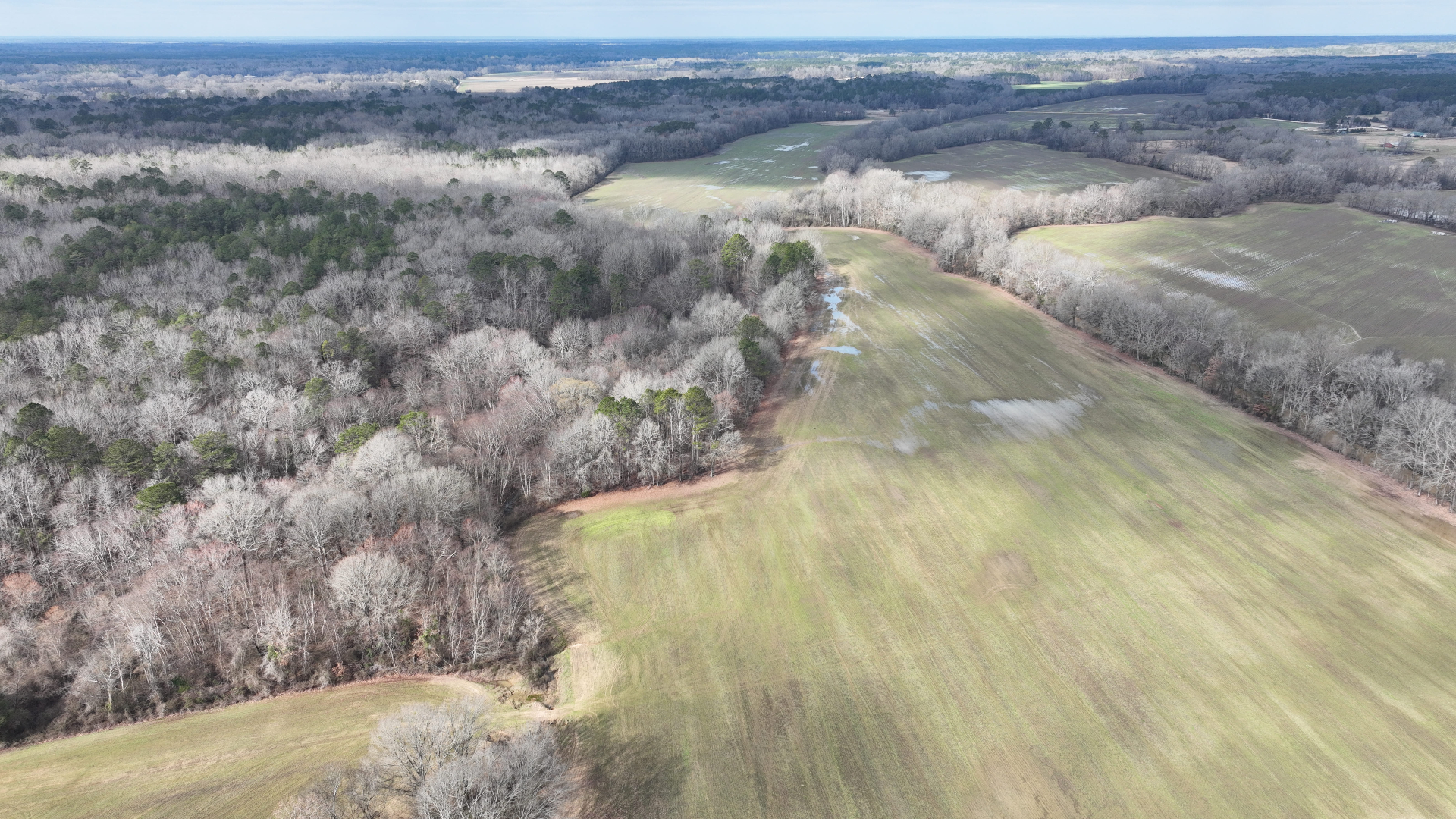
Tate County sits on silty loess ground east of the Delta, around Senatobia. The forest here leans hard to hardwood, and that shapes how timber gets sold.
Southeast Forestlands works only for the landowner. We do not buy timber and we are not paid by mills.
This Is Hardwood Country
Forest inventory estimates put about two thirds of the county's forest land in oak and hickory. Pine is a small minority.
If you own woods in Tate County, you most likely own a hardwood stand, and it should be handled like one.
Silty Ground Behaves Differently
The loess soils here are silty. They hold together when dry and turn slick fast when wet.
That is a scheduling problem more than a soil problem. The same trail that hauls fine in September will not in February.
Nearly a Third Floods
Soil survey mapping puts close to three acres in ten in an occasional flood class, mostly along Hickahala Creek and the flats around it.
Those acres grow hardwood well. They are also the first place a job goes wrong in a wet year.
Selling Hardwood Properly
Hardwood is sold by species and grade, not by one number per ton.
A sale that lumps white oak, red oak, and sweetgum together is a sale that leaves money behind.
Managing What You Have
Most tracts here do not need clearing. They need the poor stems taken out so the good ones have room.
That is slower than a clearcut and it is usually the better decision on hardwood ground.
Nearby Counties
We also work with landowners in nearby counties, including DeSoto, Marshall, Panola, and Lafayette.
General Guidance
For more on how we handle each part of the work, start with these guides:
- What a timber cruise measures
- How a sealed-bid timber sale works
- How we sell timber
- Wet-weather logging and BMPs
- Thinning decisions
- Regeneration and replanting
- All forestry services
Talk It Over First
Talk with a forester before deciding anything. Contact us to discuss your goals; the first review of your property generally happens online.