
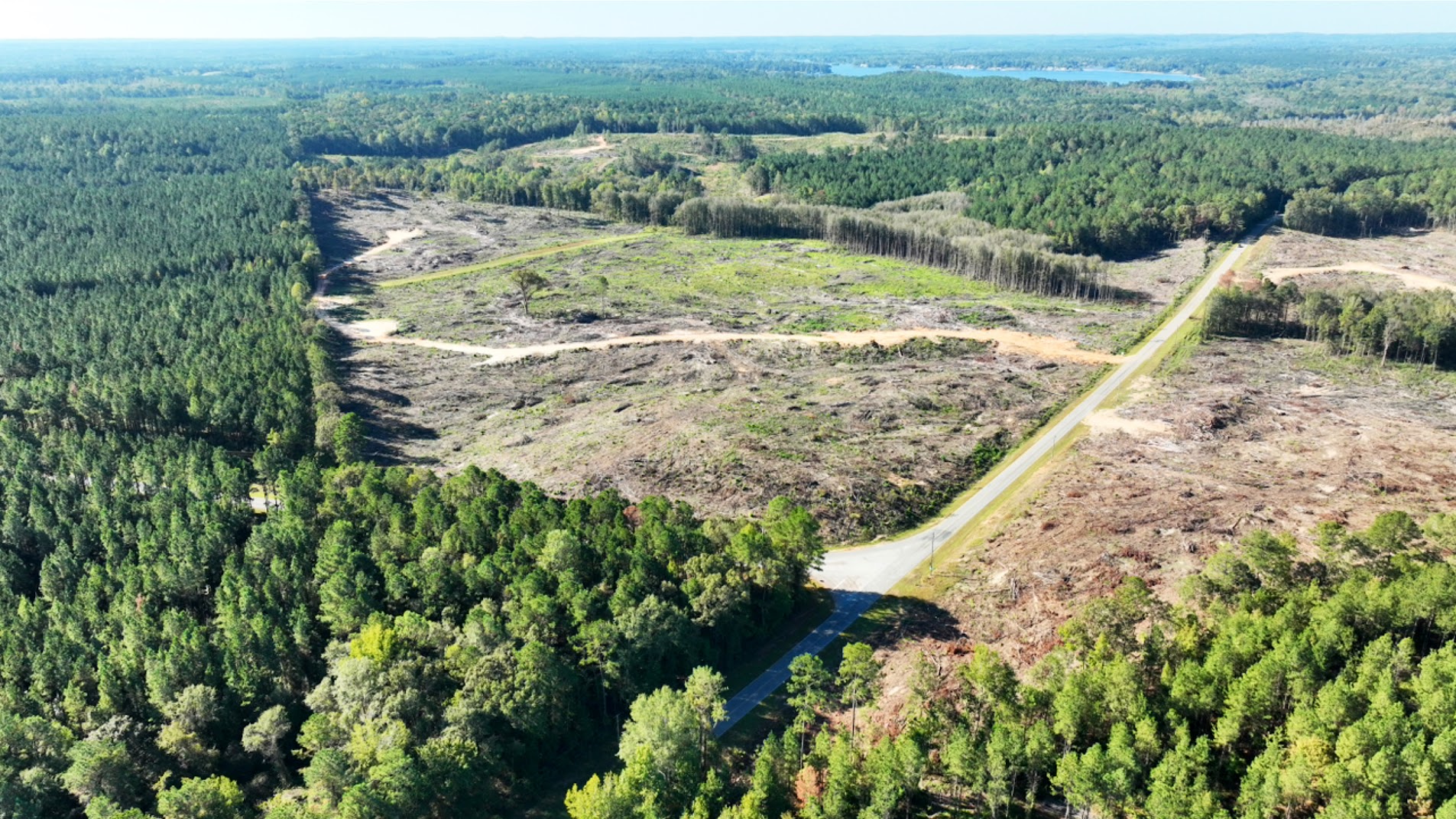
Lowndes County, Mississippi centers on Columbus in the northeast corner of the state, where the Black Prairie edge meets rolling hills and the Tombigbee Waterway carries mill traffic north and south. Timberland here often runs from loblolly plantations on the hill country to mixed pine-hardwood on the slopes and rich hardwood bottomland along the Tombigbee. Selling and managing that ground generally favors decisions that treat the uplands and the bottoms as separate marketing questions rather than one blended offer.
The recurring practical question on a Lowndes County tract is not whether there is a market. Columbus, West Point, and Aliceville-area mills across the Alabama line generally create a workable buyer pool for pine, and quality Tombigbee bottomland hardwood can attract a separate set of hardwood sawlog buyers when the volume is there. Whether that pool shows up at the sale depends on how the tract is prepared and how the invitation goes out.
How the Columbus Mill Draw May Shape a Lowndes County Sale
Buyer interest on a Lowndes County tract is generally shaped by the Columbus and West Point mill cluster to the west and by Aliceville and broader Tuscaloosa-area mills across the state line. Pulpwood, chip-n-saw, and pine sawtimber may all have qualified outlets, and Tombigbee bottomland hardwood can add a distinct grade-hardwood pool when the stand carries merchantable stems. Which buyers in fact engage on any given sale depends on product class, haul distance, current mill activity, and how far in advance the sale is exposed.
Because few buyers pursue every product class, the gap between the lowest and the top qualified bid tends to be where realized value is either captured or left in the woods. A single walk-up offer rarely represents the full pool on the day the tract is offered, and testing an offer against a properly exposed sealed-bid process is often the difference between an average sale and a strong one.
Where the Tombigbee Bottom Meets the Uplands
Most working Lowndes County timberland sits in one of three broad settings: loblolly plantations on the hill uplands, mixed pine-hardwood on the transitional slopes, and hardwood bottomland along the Tombigbee, Luxapallila, and Buttahatchee. Marketing all three on the same terms may cause bottomland hardwood to be valued as pine pulp, which is generally the single largest source of avoidable value loss on a mixed tract. Product-class separation before the cruise leaves the pickup is a defensible starting point.
Educational scenario — not a completed Southeast Forestlands project. Consider a Lowndes County tract east of Columbus that carries both upland loblolly plantation and a bottomland hardwood stand along the Tombigbee. Marketing the tract as a single lump-sum pine offer may value the hardwood stems as pulp; cruising the pine and the grade hardwood as two products on the same sealed-bid sale may draw interest from both a pine buyer pool and a separate hardwood pool. Whether that pattern applies to any given tract depends on the actual species mix, stem quality, and current buyer activity, which only a cruise will confirm.
Access, Haul Distance, and Wet-Weather Planning
A meaningful share of Lowndes County tracts sit off narrow county or gravel roads, and river-bottom tracts along the Tombigbee may involve creek crossings, streamside management zones, and seasonally soft ground. Access questions generally belong in the pre-sale decision rather than the post-sale complaint. When the sale is structured around a dry-weather harvest window and the contract pins down road maintenance, gravel commitments, and BMP compliance, buyers can price the tract against known conditions instead of pricing in operational risk.
How Sale Preparation Protects Value on the Ground
A well-prepared Lowndes County sale generally begins with a cruise that segregates product classes across the uplands and the bottoms, followed by a written bid package, an invite list that spans both the Mississippi and Alabama mill sheds, and an exposure window long enough for qualified buyers to respond. The contract that follows should address the residual stand, the road system, riparian buffers along the Tombigbee and its tributaries, weather-related work restrictions, and payment timing. Harvest supervision and a post-harvest inspection close the loop.
Long-Term Stand Decisions on Lowndes County Ground
Not every conversation is about a sale. A written forestry management plan tied to the tract's actual stand conditions can help sequence thinning, timber stand improvement, prescribed burning where it fits, and reforestation after harvest. On the uplands, thinning timing generally depends on stocking and age; on Tombigbee bottomland, decisions may be shaped more by drainage, hardwood species mix, and marketing windows than by planted-pine schedules.
Independent Representation
Southeast Forestlands works exclusively for landowners in Lowndes County. The firm does not buy timber, log timber, or accept referral fees from buyers or loggers, which is what allows the cruise, the sale prospectus, the bid opening, and the harvest oversight to be run on the landowner's behalf without conflict. Independent forestry consulting is the entire offering.
Multi-County Ownership Around Columbus
Mill draws, buyer participation, and haul economics in Lowndes County may reach across county lines into Clay County, Oktibbeha County, Noxubee County, and Monroe County. When a landowner holds acreage in more than one of those counties, a single coordinated marketing package may hold up better than a sequence of separate sales.
Start With a Conversation
If you own timberland in Lowndes County, the first step is generally a conversation — no obligation, no buyer in the room, and an honest read on whether selling, thinning, holding another growing season, or writing a management plan first is the right call for the tract this year.
Reach out when you are ready, or read more about our independent forestry consulting services for Mississippi landowners.
Recent regional stumpage information is generally worth a look before the offer goes out. Product-class pricing shifts through the year, and a current read on the market can help calibrate whether an existing offer is inside the qualified range for the tract's product mix or below it.
Where a tract has aged past its last thinning, a stocking read may show whether one more thinning entry produces a stronger final harvest or whether the stand is closer to a regeneration decision. On mixed pine-hardwood ground, the same question applies to hardwood release cuts and understory management. These calls generally live inside the management plan so they are made before a buyer arrives rather than after an offer is on the table.

