The question a landowner usually asks first is simple:
"When is fire helping my timberland, and when is it just a risk?"
That is the right question. Prescribed burning is one of the most useful tools in southern forestry, and it is also one of the easiest tools to misuse. A good burn on the right stand at the right time can reduce wildfire risk, improve wildlife habitat, and help a pine stand grow the way the landowner wants. A burn on the wrong stand, in the wrong weather, with the wrong preparation, can damage timber, push smoke onto a neighbor or a highway, and create a problem the landowner did not sign up for.
This page walks through how Southeast Forestlands looks at prescribed burning on landowner tracts in Mississippi and Alabama — what fire is good at, what it is not good at, and what needs to be in place before a burn is planned.
What prescribed burning actually is
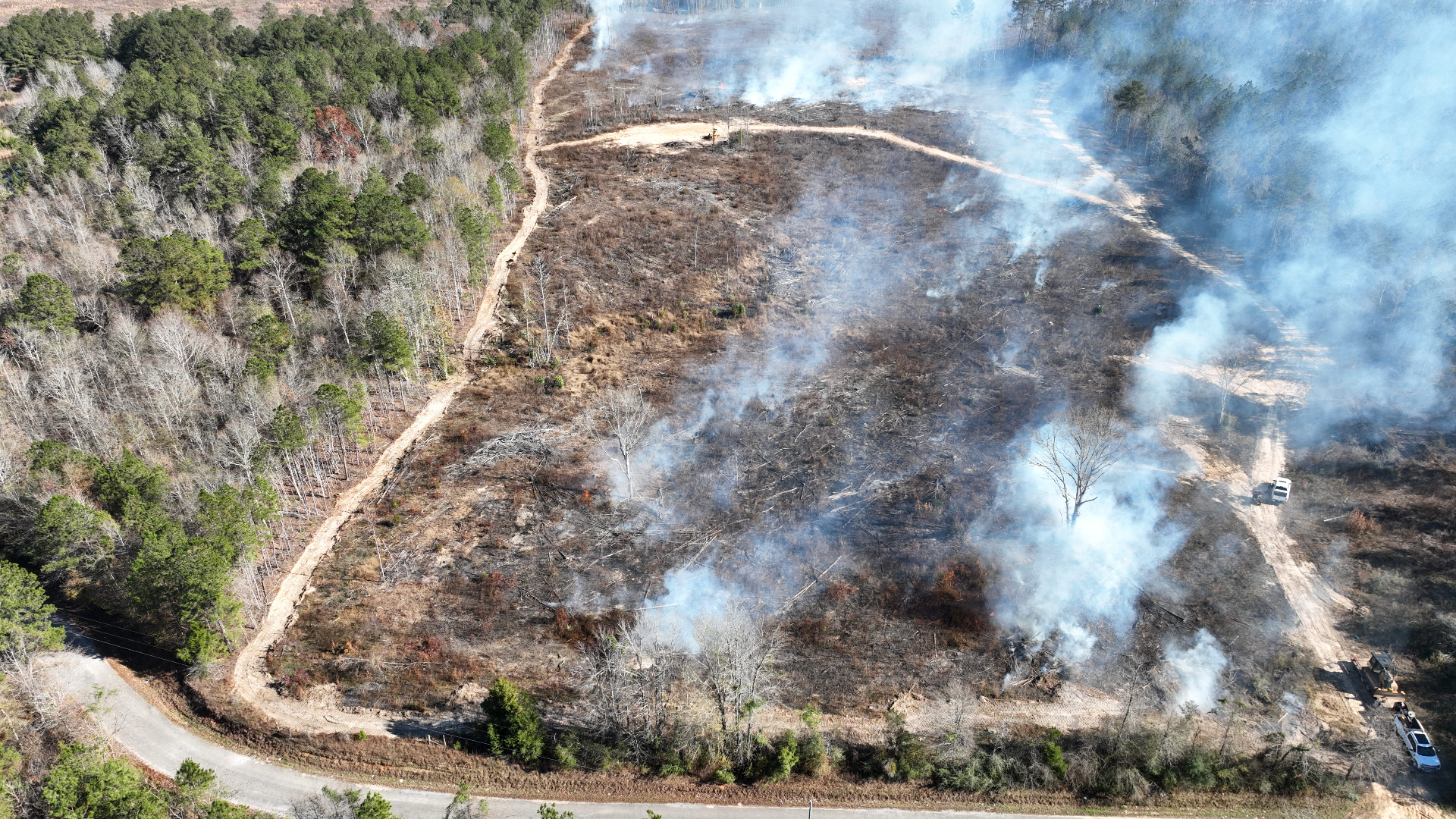
A prescribed burn is a planned, controlled fire set under specific weather and fuel conditions to accomplish a specific objective on a specific piece of ground. It is not a brush fire. It is not a clean-up burn. It is a forestry practice with a written plan, defined firebreaks, the right crew, the right equipment, and a clear understanding of what the fire is supposed to do.
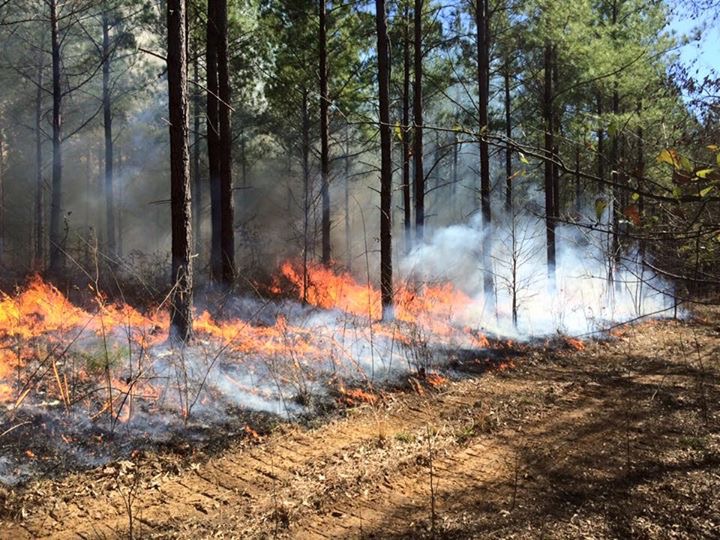
A prescribed burn on a pine stand looks nothing like a wildfire. The flames stay low, the heat stays manageable, and the fire moves the way the burn boss expects it to move because the conditions were chosen for that result.
Why landowners use fire
Most landowners who burn are after one or more of these outcomes:
- Reduce the fuel load on the forest floor so a future wildfire is less destructive.
- Improve wildlife habitat for deer, turkey, quail, and songbirds by opening up the understory and stimulating native grasses and forbs.
- Control hardwood competition in a pine stand that is starting to lose ground to sweetgum, oak sprouts, and other woody invaders.
- Maintain or restore a longleaf pine stand, which is a fire-dependent ecosystem.
- Prepare a site for planting, in combination with mechanical or chemical site prep.
- Improve access and visibility on the tract.
Fire is not the only way to reach any one of these goals. But it is often the cheapest, most natural, and most stand-appropriate tool available — when the stand is ready for it.
Wildlife habitat benefits
A pine stand with a thick layer of leaf litter, fallen limbs, and a wall of woody understory is a poor wildlife stand. Deer cannot move through it easily, turkey cannot nest in it, and quail will not use it at all. Periodic fire resets that understory. Native grasses, legumes, and soft mast plants respond quickly to burning, and the stand starts to function as habitat instead of just timber.
For landowners whose goals mix timber income with hunting and wildlife, prescribed burning is usually part of the plan.
Fuel reduction and wildfire risk
Every year that fuel is allowed to accumulate, the next wildfire on that tract gets worse. Prescribed burning removes that fuel on the landowner's schedule, under the landowner's conditions, instead of on a hot August afternoon during a drought. That is the trade most landowners are making when they burn: a small, controlled fire today instead of an uncontrolled fire later.
Longleaf pine restoration
Longleaf pine evolved with fire. Without periodic burning, a longleaf stand fills in with hardwoods, the grass stage seedlings struggle, and the stand loses the open structure that defines it. Any serious longleaf restoration effort on a Mississippi or Alabama tract will include prescribed fire as a recurring tool — not a one-time event.
Pine plantation management
In planted loblolly and slash pine stands, fire is used to control understory hardwoods, reduce fuel, and improve stand access. The timing matters. A first burn that is too hot, too early, or in the wrong conditions can damage the very trees the landowner is trying to grow. The first burn on a young plantation is usually the most sensitive decision in the whole rotation.
Hardwood competition and understory control
Fire is good at controlling small woody stems. It is not as good at controlling large, established hardwoods. On many tracts, the right sequence is herbicide first, then fire — not fire on top of a problem that fire alone will not solve. Knowing the difference is part of why stand evaluation comes before any burn plan.
Firebreaks
A burn is only as safe as its firebreaks. Firebreaks are the constructed or natural barriers that hold the fire inside the burn unit. On a typical Mississippi or Alabama tract, firebreaks may be plowed lines, existing roads, streams, or a combination. They have to be wide enough, clean enough, and connected enough to actually hold under the conditions the burn is planned for. A burn plan that does not take firebreaks seriously is not a burn plan.
Weather windows
Prescribed burning lives and dies on weather. Temperature, relative humidity, wind speed, wind direction, mixing height, and recent rainfall all decide whether a given day is a burn day or a stay-home day. The weather window on any given stand may only be a handful of days a year. That is why prescribed burning is planned around conditions, not around calendars.
Smoke management
Smoke is the part of prescribed burning that most often creates a problem with neighbors and roads. Wind direction, smoke-sensitive areas (houses, highways, hospitals, airports, schools), and atmospheric mixing all have to be checked before the burn. A burn that runs clean on the tract but pushes smoke onto a state highway at sundown is still a problem. Smoke management is part of the plan, not an afterthought.
When burning should not be done
Some tracts are not ready for fire. Common reasons to wait:
- Firebreaks are inadequate or non-existent.
- The stand is too young, too dense, or too stressed to take a burn safely.
- Hardwood competition is too established for fire alone to control — herbicide should come first.
- The stand needs to be thinned before fire will produce the intended result.
- Smoke-sensitive neighbors, roads, or structures are too close without a clear wind plan.
- The landowner does not yet have the right crew, equipment, notifications, or risk-management plan in place.
Saying "not yet" is not the same as saying "never." It usually means the tract needs another step first.
Fire is a tool, not a cure-all
This is the part most landowners benefit from hearing directly.
- Some stands need burning.
- Some stands need herbicide first.
- Some stands need thinning before fire makes sense.
- Some tracts should not be burned at all until access, firebreaks, smoke management, and risk planning are resolved.
Prescribed burning works because it is matched to the stand. When fire is used as a default answer instead of a chosen tool, results get inconsistent fast.
Mississippi and Alabama landowner considerations
In both states, prescribed burning is a widely used forestry practice, but the details matter: notification, weather, smoke management, certified burn manager requirements, and risk planning should all be checked before a burn is scheduled. The practical realities on the ground vary tract to tract: longleaf country in south Mississippi and south Alabama burns differently than pine plantations in the central pine belt, and rural tracts burn differently than tracts that share fence lines with subdivisions, poultry houses, or major highways. Each tract gets evaluated on what it actually is.
Why prescribed burning needs planning, not guesswork
A prescribed burn looks simple from the outside. A drip torch, a firebreak, and a stand of pines. What is not visible is the planning behind it: the stand evaluation, the burn objective, the firebreak layout, the weather prescription, the smoke screening, the crew, the equipment, the contingency plan, and the framework around it.
That planning is the difference between a prescribed burn and a fire that just happened on purpose.
Before you burn
Before putting fire on a tract, it helps to know what the stand needs, what the fuel looks like, where smoke will go, and whether burning fits the landowner's long-term timber and wildlife goals.
If a landowner is thinking about a burn — first burn, follow-up burn, longleaf maintenance, plantation cleanup, or wildlife habitat work — the most useful first step is usually a stand walk and an honest conversation about whether fire is the right tool for that tract right now.
Southeast Forestlands can help with that evaluation, the burn plan, and the coordination, or simply with the question of whether burning belongs on the tract at all.